





Chasing my Dream Career – Why studying in the UK is absolutely worth it
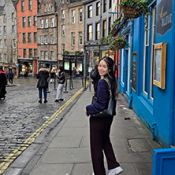
Taking the Chance
One question I have been asked many times is: Why did you choose to study abroad in the UK?
If you had asked me a few years ago, I would never have imagined that I would be living and studying in Edinburgh, Scotland. At the time, my decision seemed fairly straightforward. There are only a limited number of universities in Canada that offer my programme, and unfortunately, the competition was extremely high. I could have spent several more years upgrading my academic profile and applying multiple rounds, hoping to eventually secure a place in my dream programme. However, looking back now, I realize that my decision to study abroad was about much more than simply finding a university that offered my programme. It was about taking a chance and fulfilling my aspirations for the future.
I have always wanted to challenge myself and step outside of my comfort zone. Moving thousands of kilometres away from my family and starting a new life in another country was the definition of that. Someone once told me to seek discomfort, and I have come to appreciate that the experiences that scare us the most are the ones that help us grow the most.
I often thought to myself that if I wanted to study abroad, now would be the time to do it. I knew that if I let this opportunity pass, I might look back years later and wonder, what if I had taken the chance?
For a few years after finishing my undergraduate degree, I felt like I was standing at a crossroads. I could stay in Canada, where I was comfortable, surrounded by my family and friends, and choose another programme that I knew I might not be completely satisfied with. Or, I could take a risk and pursue the career I had always dreamed of, which was becoming an occupational therapist.
I also used to compare my journey with the people around me and felt like I was starting later than everyone else. In fact, I now believe that studying abroad at this point in my life was the perfect decision. If I had done it a few years earlier, I don't think I would have had the same confidence, independence, or sense of direction that I have today.
Why Occupational Therapy?
I am currently studying a Masters in Occupational Therapy at Edinburgh Napier University, and I am incredibly proud to be pursuing a career that I am genuinely passionate about. My interest in occupational therapy began during a practicum placement in Canada, where I had hands-on experience working with children with neurodevelopmental disorders. That experience showed me how occupational therapy can make a meaningful difference in people's lives by supporting them to achieve their goals and participate in the activities that matter most to them. I am excited to continue developing those skills through placement and one day use them to support people in my own community.
Growing Independence
Living abroad has allowed me to become more independent and resilient. Balancing university, work, and full-time placement has pushed me to become much better at managing my time, staying organised, and taking responsibility for myself. There were so many things I took for granted when I lived at home in Canada that I now realize require a lot of effort when you're living alone. From cooking and cleaning to managing finances, keeping track of deadlines, and making sure I am looking after myself, there is always something to do. At first, it could feel overwhelming. But eventually, you develop a routine, and things that once seemed difficult become second nature.
Making the Move
Once I decided that I wanted to study abroad, I began researching and applying to various master’s programmes across the UK. The application process initially felt overwhelming, which is why I found Across the Pond particularly helpful. They helped me narrow down which universities I should consider, provided guidance on application processes and deadlines, and helped me weigh the advantages and disadvantages of different universities and cities.
Eventually, I decided on Edinburgh Napier University. One of the things that attracted me was the large international student community in Edinburgh and knowing I can meet alike people who are in the same boat as me. Edinburgh is also known for its breathtaking architecture, rich history and culture, and unique atmosphere which was somewhere I could truly see myself living in.
After making my decision, the next stage was probably the most stressful: getting everything organised before moving abroad. There was a lot of paperwork to complete, including the visa application, finding and securing accommodation, arranging student funding, and registering as a new student at the university. Again, Across the Pond was incredibly helpful in guiding me through what needed to be completed. If you're considering studying abroad, my biggest piece of advice is start early. Don't leave everything until the weeks before you fly. Some processes involve waiting for documents and approvals, so giving yourself plenty of time can make the entire process less stressful.
If you feel overwhelmed before you leave, remember that that's completely normal. I definitely felt nervous before moving to the UK but there was also excitement into knowing that I will be an occupational therapist in two years. I can assure you that once you settle into your new home, begin your programme, and start meeting new people, you will start to feel that this new city will slowly become your second home. So, if studying abroad is something you've been thinking about, don't be afraid to ask yourself: “What if I actually took the chance?” You might just realize that the decision that scares you today becomes one of the things you are most proud of tomorrow.
- Olivia
Drama School, But With Swords
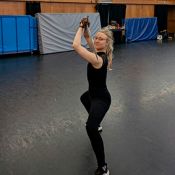
There are not many university degrees where hitting someone over the head with a breakaway bottle can technically count as studying. Mine is one of them. I study Acting and Fight Performance at East 15 Acting School, combining professional actor training with stage combat and physical performance. For me, it was almost suspiciously perfect. I came from martial arts and dance, but acting was what I ultimately wanted to pursue. When I discovered a course where I could train seriously as an actor without giving up the physical side of performance, I knew I had found something special.
Drama school is a full-time job
Before East 15, I had already experienced a more traditional university education. Drama school is very different. Most days start around 9am and do not officially finish until nearly 6pm, with rehearsals often stretching well into the evening. There are scenes to prepare, fights to practise, songs to learn, accents to train and texts to analyse. It is also physically demanding. Depending on the term, a significant part of the week can involve combat, movement and other physical work. It can be exhausting, but I love the intensity. I did not come here because I wanted acting to be something I occasionally studied between lectures. I wanted to train.
It is much more than fighting
The first thing people usually ask about my course is the combat. And yes, there is plenty of it. We train in armed and unarmed stage combat and explore everything from smaller moments of physical conflict to full choreographed fight scenes. But the important part is that the fighting never replaces the acting. Alongside combat, I train in voice, movement, singing, accents, scene study and classical text. I have worked on Shakespeare, Tennessee Williams, devised original performances and explored areas of theatre I knew very little about before starting. That balance is what makes the course special to me. A fight should never only look impressive. It still has to tell the story.
Learning by watching each other
One thing I particularly enjoy about East 15 is being able to see so much of the work happening around me. Practical assessments can often be watched by other students, and later productions are performed publicly. That means you are not always performing only for an examiner. You have an audience that reacts. I also watch work from courses completely different from mine. Physical theatre, puppetry, devised performance and other forms of storytelling all exist alongside actor training. It makes you realise how broad the performance industry actually is.
Discovering where acting can take you
Before drama school, I had a much narrower idea of what an acting career might look like. During my training, I have been exposed to areas such as immersive theatre, motion capture, devised performance and professional fight work. We also work with tutors, directors and practitioners who are active in the industry. One particularly memorable experience was seeing one of my own Shakespeare tutors performing professionally at Shakespeare's Globe. There is something motivating about watching someone onstage and then returning to class knowing they are the person teaching you. Drama school cannot teach you everything you will ever need. But it can show you how many directions there are to explore.
Finding my kind of people
Perhaps the thing I underestimated most was how good it would feel to be surrounded by people who care about the same strange things I do. People who voluntarily spend their evenings rehearsing a sword fight. People who get excited about Shakespeare. People who will happily discuss why a movement worked, why a line did not or how to make fictional violence look truthful without actually hurting anyone. It is wonderfully nerdy. And I love it. You also become close quickly because actor training requires trust. You see each other exhausted, nervous and frustrated. You watch each other fail, improve and try again. Being one of the few international students in my class has added another dimension to that experience. English is not my first language, so sometimes I need to ask about an expression, a cultural reference or an accent. My classmates have been incredibly supportive, and those moments often become part of the fun.
Starting later worked for me
I came to East 15 in my mid-twenties, after already completing a different degree and taking a less direct route into acting. Rather than feeling like I had arrived late, I found that I was bringing something useful with me: a clearer sense of what I wanted, more confidence in my own choices and a stronger appreciation of the opportunity to train. There is no one ideal route into drama school. Some people arrive straight from school, others take a few detours first. For me, those detours turned out to be part of the journey rather than time lost.
This is why I chose it
I spent my first two years studying in Southend-on-Sea and will complete my final year in Colchester, but I realised quite early that the location itself was never what mattered most to me. What mattered was finally getting the chance to train in something I had wanted to pursue for a very long time. There are exhausting days at drama school. There are days when a fight refuses to work, an accent disappears the moment a teacher starts listening or a line you knew perfectly suddenly vanishes from your head. But then a scene clicks. A fight finally works. Or you are standing backstage with people who have become your friends, about to perform something you created together. That is when I remember why I chose this path. I wanted a place where acting, movement and the physical side of storytelling could belong together. At East 15, they do.
- Octavia
So You Want to Act?

When I started applying to drama schools in the UK, I thought the difficult part would be the audition. I quickly discovered that the application process itself can feel like a full-time project – especially when you are applying internationally. I applied to a wide range of schools and courses before eventually accepting a place at East 15 Acting School. Looking back, there are quite a few things I wish I had known before I started.
Start earlier than you think
My first piece of advice is simple: give yourself time. Some of my applications went through UCAS, which I found incredibly useful, but not every drama school uses the same system. I had to keep track of different portals, deadlines and requirements, as well as references, monologues, self-tapes and interviews. For East 15, I also submitted physical performance material because I was applying for Acting and Fight Performance, showing some of my background in martial arts, dance and weapon work. If I were applying again, I would organise every deadline and requirement before recording anything – and I definitely would not leave one of my favourite applications until last, which is exactly what I did with East 15.
Apply wider than you think
I applied for Acting, Musical Theatre, Foundation courses and more specialised programmes. Foundation training was something I had not really encountered in the same way in Germany, but many students I have met in the UK completed one before starting their degree. Applying broadly also helped me work out what I actually wanted. For me, that was Acting and Fight Performance. I came from martial arts and dance and wanted to combine physical performance with acting without giving up traditional actor training such as voice, movement, singing, accents and Shakespeare. East 15 offered exactly that combination.
Check the visa first
International applicants also need to ask one very practical question early: Can this school and course support the visa you need? I discovered that not every programme I was interested in would work for me because of its visa arrangements. You also need to budget beyond tuition. Applications, auditions, travel, language testing, visas and moving abroad can all add to the cost. It is not a reason not to do it – just a reason to plan ahead.
Self-tapes are a skill too
This is something I would prepare for differently now. At the time, I focused almost entirely on the acting. After studying alongside British actors and seeing how some of my classmates approached their applications, I realised I could have researched UK self-tape conventions much more carefully. Always follow the school's instructions, but also look at available guidance and ask someone you trust to watch your tape before submitting it. Eventually, you have watched yourself perform the same monologue so many times that a second opinion becomes very useful.
Audition in person if you can
My East 15 application was completed through self-tapes and an online interview, so travelling to the UK is certainly not essential. However, some of my favourite audition experiences happened in person. Compared with my previous experiences at German drama schools,I personally found many UK auditions surprisingly relaxed and welcoming. At one school, a later round involved almost a full day of workshops, monologues and working with tutors.
It taught me also that an audition is not only the school deciding whether they want you. It is also your chance to decide whether you want them.
Get comfortable with hearing “no”
Drama-school applications involve rejection. I did not progress at every school, and several years earlier I had already applied to acting schools in Germany without being accepted. For a while, I thought acting simply was not going to be my path. I completed another degree, lived some life and eventually realised the desire to act had never actually disappeared. Looking back, I am grateful for that time. Acting is about telling stories about people. Meeting more people and having more experiences did not make me late for drama school. It gave me more to bring with me when I tried again.
You do not have to be eighteen
I was in my mid-twenties when I started drama school and initially worried that I might be too old. I was not. Some students arrive immediately after school; others study, work or do something completely different first. For me, starting later meant knowing myself better and being much more certain about why I was there. So, if acting is something you still want to pursue, I would not let age be the thing that stops you.
Speaking English is not acting in English
English is not my first language, and studying acting in English brought challenges I had not completely anticipated. Speaking English confidently is one thing. Analysing Shakespeare, learning accents and discussing specific voice and movement techniques in another language is something else. I have a vocabulary notebook. I ask questions. Sometimes I have to ask people to repeat an expression everyone else understood immediately. But that challenge is also part of why I chose the UK. I wanted the possibility of working internationally, and training in English felt like an important step towards that.
One last thing
Applying to drama school can be exciting, expensive, tiring and, at times, disheartening. There are no guarantees, and almost everyone will hear “no” somewhere along the way. But if this is what you really want to do, do not let one rejection convince you to stop. My own East 15 application was the one I submitted last – and it ended up being the course I wanted most. So, if you are currently preparing your monologues, recording yet another self-tape or nervously waiting for an audition result: good luck. And if you have already received an offer – congratulations. You have done the hard part of getting through the door. Now the real adventure begins and have a lot of fun! You’ve got this!
- Octavia
Turning a Dream into a Plan: How I Made Studying in the UK Possible

My journey towards studying a master’s degree in the United Kingdom actually began after returning from the UK itself. I had spent two months here taking an English course, and if I had already dreamed of living in England before, I returned to Mexico even more in love with the country and with a much cleared idea in my mind: I wanted to come back.
At the same time, I had another important personal and professional goal, to study a master’s degree and begin building a career with an international perspective. So, I thought, why not bring both dreams together? I could pursue my master’s degree while also taking the first step towards the life and international career I wanted to build in the UK.
The first thing I did was simply start moving. I attended university and study-abroad fairs, researched programmes online, and explored the different possibilities available to turn this idea into a real project. It was during this search that I found Across the Pond.
I contacted them and, from the beginning, received guidance about different universities and finance-related programmes. Whit their help, I narrowed down my options to three universities: one in London — because London had always been part of my dream — and two outside the capital.
Each university offered different modules, characteristics and approaches. Going through this process helped me think not only about where I wanted to live, but also about the type of education and experience I wanted to receive.
Then came probably one of the most important and difficult questions of the entire process: How was I going to finance it?
Studying in the UK represents a considerable financial investment, and that was a reality I had to face. At one of the student fairs, I discovered FIDERH, a financing option for postgraduate studies. I researched the conditions, received advice and began the application process. Across the Pond was also incredibly important during this stage and helped guide me through the process.
I will not pretend that I was not scared. I was very scared. It was the first significant loan under my name, and it meant taking on a considerable financial responsibility. I worried about whether it would be approved, while also thinking about my future responsibility to repay it. Even today, I remain conscious of that commitment. However, I also came to understand that I was investing in an academic and professional project that I had wanted to pursue for a very long time.
The process itself turned out to be much easier than I had imagined. Collecting all the required documentation took time and organisation, but I never felt that it was impossible. Eventually, the financing, together with a scholarship I received from the university, allowed me to make a project that had once seemed like only a dream become a reality.
Then came the final decision: Kingston University, I chose Kingston not only because it is in London, but because I found a combination of the place where I wanted to live and the type of education I was looking for. I fell in love with South London, with its more peaceful atmosphere and beautiful areas near the river, but academically I also found many of the elements that were important to me.
I wanted a master's degree that was not limited to theory and research, but one that would also allow me to develop skills that could be applied in a professional environment. During my programme, I have had the opportunity to work with tools such as Excel and use the university's Bloomberg Terminals, as well as access Bloomberg certifications. I was also attracted by the university's connection with professional qualifications (ACCA, CIMA, CFA) and its focus on entrepreneurship, start-ups and Future Skills, particularly as the professional world continues to change rapidly with the development of artificial intelligence.
If I could go back to the moment when I was in Mexico trying to organize applications, financing and all the documents required to move to another country, I would probably tell to myself something very simple: relax and trust a little more.
I wish I had known that I did not need to understand or control every single step from the beginning. There will be documents, decisions, uncertainty and moments when you ask yourself, “What if this doesn't work?” But one thing leads to another. First, you research, then you ask questions, you find people who can guide you, you evaluate your possibilities, and little by little, something that once seemed enormous begins to turn into a plan.
Today, I am still building that path. There are still uncertainties and responsibilities ahead, but if there is one thing I have learned throughout this process, it is to trust myself more, to trust the decisions I make, and to understand that every stage arrives at the right time. For me, this experience has also meant learning to trust deeply in God and remembering that His timing is perfect.
My advice to anyone who dreams of studying in the United Kingdom but does not know where to begin would be start by asking questions. Attend fairs, research universities, ask about scholarships, explore financing options and seek guidance. Do not give up on a dream simply because you do not yet know how to make it possible.
I did not know exactly how I was going to do it either.
I simply started.
And step by step, the dream became a plan, and the plan eventually brought me here.
With love,
- Nehie
More Than an MBA: My Experience at Bayes

I chose Bayes Business School for several reasons, but, in short, I felt it was the school that offered me the best value for money. When you start researching MBAs in the UK, you realise the investment can end up being excessively high, so it was important for me to find a programme with a strong academic standard that, at the same time, represented an investment I could justify.
Bayes also holds triple accreditation, known as the "triple crown", and has a very good reputation specifically in the MBA world. But beyond the rankings and accreditations, what ultimately convinced me was the connection I felt from the very first interviews with people at the school. From the start I felt a very close and genuine approach, and that made a big difference for me when it came to making the decision.
One of the things I enjoyed most about the programme was precisely the way it combines theory with practice. Yes, it's an MBA and there's a lot of theory, but you constantly get the chance to bring what you've learnt into real situations. At the end of each module, much of the knowledge was applied to real companies and to situations that were happening at that very moment. We also had an international week in which we worked directly with a company, and, finally, our dissertation project is also carried out in collaboration with a real company. I felt we were constantly moving from learning concepts in the classroom to thinking about how we would apply them in the working world.
I also loved the variety of the programme and the calibre of the lecturers. Each one has impressive experience and specialisation, and it was very enriching to be able to learn from people who are genuinely leaders in their field.
However, if I had to pick just one thing as the best part of my experience at Bayes, it would definitely be the people. I was enormously fortunate to be part of an incredibly diverse cohort, with people from different countries, cultures, industries and career paths. We were a very varied group, not only because of our backgrounds, but also because of our personalities and ways of thinking, and I believe that is precisely what made us learn so much from one another. More than classmates, I'm coming away with friends for life and a network of people I hope to stay in touch with for many years to come.
Bayes also gave me many opportunities to develop outside the strictly academic sphere. We constantly had networking events, workshops and activities focused on skills such as public speaking, giving better presentations, building confidence, working on our emotional intelligence and strengthening our resilience. We also had a leadership programme that pushed us a great deal to step outside our comfort zone. I particularly liked that the MBA didn't focus solely on preparing us professionally, but also on developing the personal skills you need to be a good leader.
Another thing I found amazing is that, by becoming part of Bayes, you truly become part of a community. I didn't expect to build such important relationships during the MBA, nor that the lecturers, alumni and classmates would become a network that could stay with you even after graduating. You even have the chance to take one elective module per year for life as part of the Bayes community, which I think is an extraordinary opportunity to keep on learning.
And that's precisely one of the most important things I'm taking away: understanding that the MBA isn't the end of your learning, but the start of a stage in which you have to keep studying, learning and developing. For me, the programme also gave me much greater professional versatility. It allowed me to get to know different areas, industries and ways of working, and to understand that my experience can be applied across many different fields.
In the end, I think that's what made my experience at Bayes so special: it wasn't just about earning another qualification. It was about learning from people completely different from me, facing situations that pushed me out of my comfort zone, developing new skills and becoming part of a community that I hope to keep carrying with me long after finishing the MBA.
- Rocío