





Image

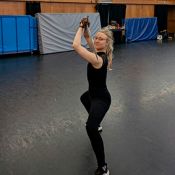
There are not many university degrees where hitting someone over the head with a breakaway bottle can technically count as studying. Mine is one of them. I study Acting and Fight Performance at East 15 Acting School, combining professional actor training with stage combat and physical performance. For me, it was almost suspiciously perfect. I came from martial arts and dance, but acting was what I ultimately wanted to pursue. When I discovered a course where I could train seriously as an actor without giving up the physical side of performance, I knew I had found something special.
Before East 15, I had already experienced a more traditional university education. Drama school is very different. Most days start around 9am and do not officially finish until nearly 6pm, with rehearsals often stretching well into the evening. There are scenes to prepare, fights to practise, songs to learn, accents to train and texts to analyse. It is also physically demanding. Depending on the term, a significant part of the week can involve combat, movement and other physical work. It can be exhausting, but I love the intensity. I did not come here because I wanted acting to be something I occasionally studied between lectures. I wanted to train.
The first thing people usually ask about my course is the combat. And yes, there is plenty of it. We train in armed and unarmed stage combat and explore everything from smaller moments of physical conflict to full choreographed fight scenes. But the important part is that the fighting never replaces the acting. Alongside combat, I train in voice, movement, singing, accents, scene study and classical text. I have worked on Shakespeare, Tennessee Williams, devised original performances and explored areas of theatre I knew very little about before starting. That balance is what makes the course special to me. A fight should never only look impressive. It still has to tell the story.
One thing I particularly enjoy about East 15 is being able to see so much of the work happening around me. Practical assessments can often be watched by other students, and later productions are performed publicly. That means you are not always performing only for an examiner. You have an audience that reacts. I also watch work from courses completely different from mine. Physical theatre, puppetry, devised performance and other forms of storytelling all exist alongside actor training. It makes you realise how broad the performance industry actually is.
Before drama school, I had a much narrower idea of what an acting career might look like. During my training, I have been exposed to areas such as immersive theatre, motion capture, devised performance and professional fight work. We also work with tutors, directors and practitioners who are active in the industry. One particularly memorable experience was seeing one of my own Shakespeare tutors performing professionally at Shakespeare's Globe. There is something motivating about watching someone onstage and then returning to class knowing they are the person teaching you. Drama school cannot teach you everything you will ever need. But it can show you how many directions there are to explore.
Perhaps the thing I underestimated most was how good it would feel to be surrounded by people who care about the same strange things I do. People who voluntarily spend their evenings rehearsing a sword fight. People who get excited about Shakespeare. People who will happily discuss why a movement worked, why a line did not or how to make fictional violence look truthful without actually hurting anyone. It is wonderfully nerdy. And I love it. You also become close quickly because actor training requires trust. You see each other exhausted, nervous and frustrated. You watch each other fail, improve and try again. Being one of the few international students in my class has added another dimension to that experience. English is not my first language, so sometimes I need to ask about an expression, a cultural reference or an accent. My classmates have been incredibly supportive, and those moments often become part of the fun.
I came to East 15 in my mid-twenties, after already completing a different degree and taking a less direct route into acting. Rather than feeling like I had arrived late, I found that I was bringing something useful with me: a clearer sense of what I wanted, more confidence in my own choices and a stronger appreciation of the opportunity to train. There is no one ideal route into drama school. Some people arrive straight from school, others take a few detours first. For me, those detours turned out to be part of the journey rather than time lost.
I spent my first two years studying in Southend-on-Sea and will complete my final year in Colchester, but I realised quite early that the location itself was never what mattered most to me. What mattered was finally getting the chance to train in something I had wanted to pursue for a very long time. There are exhausting days at drama school. There are days when a fight refuses to work, an accent disappears the moment a teacher starts listening or a line you knew perfectly suddenly vanishes from your head. But then a scene clicks. A fight finally works. Or you are standing backstage with people who have become your friends, about to perform something you created together. That is when I remember why I chose this path. I wanted a place where acting, movement and the physical side of storytelling could belong together. At East 15, they do.
- Octavia

When I started applying to drama schools in the UK, I thought the difficult part would be the audition. I quickly discovered that the application process itself can feel like a full-time project – especially when you are applying internationally. I applied to a wide range of schools and courses before eventually accepting a place at East 15 Acting School. Looking back, there are quite a few things I wish I had known before I started.
My first piece of advice is simple: give yourself time. Some of my applications went through UCAS, which I found incredibly useful, but not every drama school uses the same system. I had to keep track of different portals, deadlines and requirements, as well as references, monologues, self-tapes and interviews. For East 15, I also submitted physical performance material because I was applying for Acting and Fight Performance, showing some of my background in martial arts, dance and weapon work. If I were applying again, I would organise every deadline and requirement before recording anything – and I definitely would not leave one of my favourite applications until last, which is exactly what I did with East 15.
I applied for Acting, Musical Theatre, Foundation courses and more specialised programmes. Foundation training was something I had not really encountered in the same way in Germany, but many students I have met in the UK completed one before starting their degree. Applying broadly also helped me work out what I actually wanted. For me, that was Acting and Fight Performance. I came from martial arts and dance and wanted to combine physical performance with acting without giving up traditional actor training such as voice, movement, singing, accents and Shakespeare. East 15 offered exactly that combination.
International applicants also need to ask one very practical question early: Can this school and course support the visa you need? I discovered that not every programme I was interested in would work for me because of its visa arrangements. You also need to budget beyond tuition. Applications, auditions, travel, language testing, visas and moving abroad can all add to the cost. It is not a reason not to do it – just a reason to plan ahead.
This is something I would prepare for differently now. At the time, I focused almost entirely on the acting. After studying alongside British actors and seeing how some of my classmates approached their applications, I realised I could have researched UK self-tape conventions much more carefully. Always follow the school's instructions, but also look at available guidance and ask someone you trust to watch your tape before submitting it. Eventually, you have watched yourself perform the same monologue so many times that a second opinion becomes very useful.
My East 15 application was completed through self-tapes and an online interview, so travelling to the UK is certainly not essential. However, some of my favourite audition experiences happened in person. Compared with my previous experiences at German drama schools,I personally found many UK auditions surprisingly relaxed and welcoming. At one school, a later round involved almost a full day of workshops, monologues and working with tutors.
It taught me also that an audition is not only the school deciding whether they want you. It is also your chance to decide whether you want them.
Drama-school applications involve rejection. I did not progress at every school, and several years earlier I had already applied to acting schools in Germany without being accepted. For a while, I thought acting simply was not going to be my path. I completed another degree, lived some life and eventually realised the desire to act had never actually disappeared. Looking back, I am grateful for that time. Acting is about telling stories about people. Meeting more people and having more experiences did not make me late for drama school. It gave me more to bring with me when I tried again.
I was in my mid-twenties when I started drama school and initially worried that I might be too old. I was not. Some students arrive immediately after school; others study, work or do something completely different first. For me, starting later meant knowing myself better and being much more certain about why I was there. So, if acting is something you still want to pursue, I would not let age be the thing that stops you.
English is not my first language, and studying acting in English brought challenges I had not completely anticipated. Speaking English confidently is one thing. Analysing Shakespeare, learning accents and discussing specific voice and movement techniques in another language is something else. I have a vocabulary notebook. I ask questions. Sometimes I have to ask people to repeat an expression everyone else understood immediately. But that challenge is also part of why I chose the UK. I wanted the possibility of working internationally, and training in English felt like an important step towards that.
Applying to drama school can be exciting, expensive, tiring and, at times, disheartening. There are no guarantees, and almost everyone will hear “no” somewhere along the way. But if this is what you really want to do, do not let one rejection convince you to stop. My own East 15 application was the one I submitted last – and it ended up being the course I wanted most. So, if you are currently preparing your monologues, recording yet another self-tape or nervously waiting for an audition result: good luck. And if you have already received an offer – congratulations. You have done the hard part of getting through the door. Now the real adventure begins and have a lot of fun! You’ve got this!
- Octavia
Where do you live when studying abroad? Do universities in the UK offer student housing? How much does student accommodation cost? Did you know that as an international student, you are guaranteed on-campus accommodation for the first or all your years studying at most of our UK universities? You will need to apply by the housing application deadline, and of course the best student accommodation in the UK goes first - so that is a good reason to apply early! There are several different student accommodations, price levels and facilities to choose from!
Most students choose to live on campus in their first year. This is social and a fantastic way to get to know students from all over the world! After that, most students choose to move into privately rented accommodation with their new friends. We recommend everyone to live in university accommodation in their first year, as it is a great way to get to know other students (and not just those on your degree).
Learn more about the different options, on-campus accommodation, how to arrange private accommodation and everything you need before applying for student accommodation in the UK via this webinar!
Do you want to study in the UK and are wondering if you need a visa? Maybe you have applied to British universities already, or are considering applying to university in London or elsewhere in the UK, but would like to know more about the UK student visa for European students? This webinar recording is about the UK Student Visa for students who will be starting their studies at a British university and are from European countries. We cover everything regarding the CAS, the application process, cost and other practicalities worth thinking about when applying for a student visa.
Did you know that all non-UK students need a visa to study in the UK? How much does a student visa cost? Is it difficult to get a student visa if you want to study in England, Scotland, Wales or Northern Ireland? For most European students in the UK, a student visa is now a fact.
After the UK left the EU, student visas have now become a reality for the vast majority of international students. It is therefore important to familiarise yourself with this process as early as possible, so that you are well prepared when the time comes to submit an application for a student visa. In this webinar recording, we will go through useful information about student visas, when to apply, what you need for the application, costs, and other tips and tricks that can make the process easier. This webinar is suitable for those who have already applied, those who have accepted an offer, but also those who are considering studies in the UK and want to know more about the visa process.
We have the information and tools most people need to be able to go through the visa process without the need for individual follow-up/advice beyond the general information and guide from us. Remember that Across the Pond cannot provide individual advice on your visa application, only certified immigration staff can. In this webinar recording, you will learn about a number of important points that are good to be aware of when you familiarise yourself with the visa process.

It's no secret that getting out of your comfort zone is not an easy process and when I moved to England to start my university life, it was more complicated than I thought.
My dream as a child was always to become an actress or a Tae Kwon Do world champion, but for some reasons, my career as an athlete did not bear fruit. So, I decided to follow my other dream, and what I am studying is "Acting and stage combat”. When I read the name of the career I fell in love because it was like putting together my two dreams, Tae Kwon Do and acting. This career is basically acting, but they also teach you the basics concepts of safety to act in a fight without hurting your teammates, you also learn to handle different weapon systems such as swords, knives, shields, firearms or just your own body for unarmed fights.
The selection of the university was relatively simple, since the University of Essex (East 15 Acting School) was the only one in the world that offered the degree I wanted, so we can say that I did not have many options.
I'm not going to lie I would have loved this degree to be here in Mexico or at least in a country with a Spanish-speaking language. I really did not want to leave, I am a person very attached to my roots, to my family, to mexican food, I love the sun, and on top of that, I’m shy and without the best English (literally I got the minimum qualification to enter university).
I am grateful of that day that I took the flight to London and even though there have been times when I felt very alone, what I have gained from this experience has been much more, especially personal-wise. If we talk about academics, my English is still not the best, but it has improved significantly, I can say that two of my teachers have been the best teachers I have ever had and I have learned to manage the money. But personal growth has surpassed academics, I have learned a lot from myself, and it has made me have to overcome challenges, thus giving me the necessary confidence to trust in my problem-solving abilities.
My advice to you is to give yourself the opportunity to be a beginner again, you will have to find new favourite places, new restaurants, new ways of comfort, even new food products when you go to the supermarket! And if you're not fluent in English and you're a shy person like me, it'll probably cost you a bit more, but once we learn in this life to be comfortable with the unknown, we'll be unstoppable in any field.
- Meeting Across the Pond before: I arrived a week late for my classes because the university had not given me a document that I needed to apply for my visa, but I met Across the Pond and they speeded the process, so if it wasn’t for them, I would have been a month late. They are very helpful and friendly, also it is always good to have someone who is guiding you in the process and to whom you can ask all the doubts that arise.
- Your English doesn't need to be the best to survive: The truth is that people are very patient and kind and have no problem with helping, so don't be afraid to ask. With my basic English I survived the train, airports, supermarkets, school services, etc.
- Take your favourite seasonings with you: There are certain seasonings that you will not find in the new country, or maybe they are from the same brand, but they will not taste the same. If they are fundamental to you, I really recommend you to bring them, for example, I filled my suitcase with spicy sweets and sauces.
- Accommodation: There are some student residences that offer three-year contracts and give you a discount for that. However, I recommend that you also take the option of living the first year in the student residence, meeting people and then moving out to a house with your same classmates and it will be much cheaper. Or rent an Airbnb for a month and then find a place to live.
- Clothing: Winter clothes are better to buy here, they are better prepared and probably with more quality.
- Airports: Keep in mind that some airlines if you buy a round trip and you miss the first flight, you also lose the return flight. So you can also evaluate the option of buying the flights separately or talk with the airline to see if they let you to take just the return flight.
- Banks: There are some places that only accept English cards for any deposits or payments. The Revolut bank can help you to get a British card fast and easy to process it, literally all the process is from your phone.
- Internet package: Something that helped me a lot was having internet on my phone to use Google translator, directions on Google Maps, to get ubers or taxis. I use Voxi because I can pay with my Mexican card without any problem and the price is very reasonable.
Good luck guys and enjoy your new experience! ?
- Daniela
Book an online session with an advisor with Across the Pond to learn more about studying in the UK!


Privacy & Data Protection Policy | Cookies Policy | Anti-Slavery & Human Trafficking Statement | Terms & Conditions | Agent Quality Framework (AQF) | Vacancies
2026
Copyright © Across the Pond - Study in Britain Ltd. All rights reserved.