





Image


Arriving in the United Kingdom for the first time was a completely new experience for me. I was not coming for a short holiday, a conference, or a brief visit. I was coming for a longer period, with a clear academic goal, personal expectations, and many questions about what life would look like away from everything familiar.
Before travelling, I had heard many stories about the UK. People talked about the weather, the quietness, the pressure of studying, and the difficulty of adjusting to a new environment. I expected challenges, and some of them were real. But what surprised me most was how quickly the UK started to feel less intimidating and more welcoming.
One of the first things I had to adjust to was the weather. In Manchester, the weather can change several times in one day. You may leave your room under a grey sky, meet rain on the way, and later find sunshine waiting for you in the afternoon. Experiencing the seasons from winter to spring and then summer made me appreciate that adapting to a new country is not only about studying. It is also about learning how people live, move, dress, relax, and enjoy life in their own environment.
As an introvert, I expected social life to be one of the hardest parts of my experience. I thought it would be difficult to meet people or start conversations. Surprisingly, I found that small moments can easily become meaningful connections. Sometimes, a simple compliment from a stranger in a restaurant, on the street, or at university can change your whole day. Someone may compliment your shoes, your trousers, or simply start a friendly conversation. From these small interactions, I began to learn that making friends does not always require a big event. Sometimes, it begins with one kind sentence.
Before coming, I also heard that life in the UK could feel like “all work and no play.” My experience has been very different. Of course, studying here requires discipline, commitment, and time management. But I also discovered that the work-life balance is part of the culture. There is always something happening: a club event, a society activity, a pub gathering, a student party, a football match, or a quiet place to relax with friends.
This balance has helped me mentally and emotionally. It reminded me that academic success is important, but enjoying the journey is also part of the learning experience. The UK gives you room to study hard, grow professionally, and still enjoy life outside the classroom.
One of my most unforgettable experiences has been football culture. Shouting in a stadium, chanting with thousands of supporters, and feeling the energy of Manchester City fans gave me a memory I will always carry with me. It was not just about watching football. It was about being part of a city, feeling its rhythm, and understanding how sport can bring people together.
My UK experience so far has been wonderful. I have learnt so much, made life-changing friendships, and discovered new parts of myself. I came with a goal, but I have gained more than academic knowledge. I have learnt independence, confidence, adaptability, and openness.
For anyone preparing to study in the UK, my advice is simple: do not only prepare for the course. Prepare for the experience. The weather, the people, the culture, the social life, and the unexpected small moments will all become part of your story.
- Steven

When I first joined the University of Manchester, I decided that I did not want to only pass through the university. I wanted the university to pass through me. For me, university life is not only about attending lectures, submitting assignments, and getting good grades. It is also about participating, exploring, meeting people, asking questions, and discovering new sides of yourself.
During my first week, I joined almost every club and society that caught my attention. I was surprised by how many options were available. There were clubs and societies for boxing, motorsport, Formula One, engineering, civil engineering, artificial intelligence, professional development, culture, leadership, and many other interests. At first, the number of choices was overwhelming, but it also made me realise how rich university life can be when you are willing to engage.
One of the most meaningful parts of my experience was becoming a student representative. This gave me the opportunity to listen to other students, understand their concerns, and contribute to discussions about improving the student experience. It also helped me build confidence in speaking, representing others, and taking part in decision-making spaces.
I also attended campaigns, student events, networking lunches, and university activities. Through these events, I met people I would never have met in a normal classroom setting. I even had the opportunity to meet local leadership in Manchester, which gave me a wider understanding of how the city connects with students and communities.
At one point, I ran my first campaign for a representative role in the School of Engineering. I did not win, but the experience was unforgettable. It taught me courage, communication, visibility, and resilience. It also made me realise that leadership is not only about winning a position. Sometimes, the real value is in standing up, presenting your ideas, and learning from the process.
University learning also happened outside formal lectures. Through societies and events, I joined conversations about artificial intelligence, engineering, future careers, and global challenges. In one society, we discussed AI and the issues students and professionals should start considering. These discussions helped me see that university is not only about what is written in lecture notes. It is also about being exposed to new ideas and preparing for a changing world.
The UK university environment also taught me something very important: safety and diversity are taken seriously. As an international student, this was reassuring. It gave me confidence that the university was not only interested in academic performance, but also in student wellbeing,
inclusion, and support. Knowing that there are systems looking out for students makes it easier to focus, participate, and succeed.
Another important part of my Manchester experience has been the career service. I explored the support available for CVs, applications, interviews, job searches, and career direction. This helped me think more clearly about my future after graduation and how to connect my academic experience with professional opportunities.
The university environment encouraged me to become more active, more open, and more intentional. I learnt that being a student is not only about receiving knowledge. It is about using every available opportunity to grow academically, socially, professionally, and personally.
Of course, student life also has its lighter side. There are events, gatherings, society activities, and sometimes free food everywhere. I often joked that I probably ate more free food from university events than meals I cooked myself. These small things may sound simple, but they make student life easier, warmer, and more enjoyable.
My advice to future students is this: do not limit your university experience to the classroom. Join societies. Attend events. Speak to people. Use the career service. Run for something, even if you are not sure you will win. Ask questions. Try new activities. Let the university challenge you, shape you, and expand your confidence.
The University of Manchester has given me more than academic knowledge. It has given me experiences, friendships, opportunities, and a stronger belief in myself.
- Steven

Many civil engineering students dream of becoming structural engineers. I was one of them. From the outside, structural engineering can look like the perfect course for someone who is good at mathematics, physics, calculations, and problem-solving. You look at the curriculum, see topics related to analysis, design, materials, and software, and immediately feel that this is the right path.
But studying MSc Structural Engineering at the University of Manchester taught me that structural engineering is much more than calculations. Mathematics and physics are important, but they are only part of the profession. The real foundation of structural engineering is understanding.
One of the strongest lessons from the programme was that a structural engineer should not only know how to calculate. A structural engineer must understand why a structure behaves in a certain way, why a particular design decision is safe, why a certain failure mode may occur, and why one solution may be better than another.
It is possible to plug values into formulas, use software, and produce results. But the real question is whether you understand what those results mean. Are they reasonable? Are they safe? Are the assumptions correct? Can the structure actually be built? Will it perform well during its life? Can it be maintained, repaired, or eventually decommissioned safely?
These questions changed the way I understood the profession. Structural engineering is not only about designing beams, slabs, columns, and foundations. It is about protecting life, supporting communities, and making decisions that must remain safe under real conditions.
During the programme, we used engineering tools and software, including finite element analysis. In finite element studies, we carried out stress analysis and learnt how to set up models using software such as ANSYS. However, the most valuable part was not simply pressing buttons or generating colourful results. The real learning was understanding how the software works, what assumptions it makes, and how to judge whether the results can be trusted.
This is extremely important in the modern engineering world. With the rise of artificial intelligence, automation, and advanced digital tools, engineers may be tempted to trust outputs without questioning them. My studies taught me that software is powerful, but it is not a replacement for engineering judgement. The engineer must still verify inputs, check assumptions, interpret results, and confirm that the output makes sense.
The programme introduced us to several advanced areas, including fire engineering, earthquake engineering, finite element analysis, and advanced structural analysis. These subjects showed me that the same problem can often be solved in many ways. However, not every solution is equally safe, efficient, economical, or practical.
For example, a structure may be strong enough under normal loading but still require careful assessment under fire or seismic conditions. A design may work mathematically but may not be the most efficient or buildable solution. A software model may produce results, but if the boundary conditions, load paths, or material assumptions are wrong, the conclusion can be misleading.
This is where structural engineering becomes a discipline of responsibility. The engineer must combine technical knowledge, practical judgement, safety awareness, and ethical decision-making.
My biggest lesson from studying Structural Engineering at the University of Manchester is that the best engineers are not those who only know formulas. The best engineers are those who understand principles. They ask why. They check. They question. They connect theory with reality.
This programme has changed how I see structures. I no longer look at buildings, bridges, stadiums, or towers as static objects. I see load paths, materials, stability systems, risks, decisions, and human responsibility. That is what makes structural engineering both challenging and inspiring.
- Steven

Coming from Singapore, I had mentally prepared for a lot of things before moving to Manchester. The cold. The accents. Finding decent food. What I had not prepared for was the complete weight of freedom that lands on you the moment you move into your accommodation and realise that nobody is coming to check on you.
University independence is not just about going out when you want or staying up late. It is standing in a supermarket aisle genuinely unsure how to cook rice without a rice cooker. It is realising that no one will remind you to do your laundry, and that a bathroom does not clean itself. I am not in catered accommodation, so all of that landed on me from day one.
The academic side of that freedom was the bigger adjustment. Back home in Singapore, my school had a very interactive learning environment. Teachers knew your name, there was discussion, you were challenged in real time. At the University of Manchester, Aerospace Engineering is a large cohort. You can sit in a lecture hall with hundreds of students and the professor will not know if you showed up. Attendance is your responsibility entirely.
I am someone who does not learn well from passive listening. I need to be doing something, discussing something, building something. If I am just sitting and absorbing, my brain switches off. That meant I had to figure out very quickly how I actually learn and build my own structure around the university's, rather than relying on the university to do it for me.
What genuinely saved my first year was joining Manchester Stinger Motorsports, the university's Formula Student team. The goal of the team is to design and build a racing car from scratch over the course of the academic year and compete at Silverstone. I joined knowing essentially nothing about automotive engineering. People just started teaching me anyway.
That team gave me everything the lectures were not giving me at that stage: real problems, real stakes, real collaboration. I started as a junior engineer, worked my way to team engineer, and next year I will be sub-team leader for intake, cooling and exhaust. None of that came from a course description. It came from showing up and being willing to start at the bottom.
If you are considering an engineering degree in the UK, find your equivalent of this as early as possible. Your degree and your society work best together.
Get a local bank account sorted before or immediately after you land. Have a system set up with your family for receiving money in pounds. It sounds trivial but sorting out finances in your first week, while also trying to make friends and find your lecture rooms, is genuinely stressful. Remove that stress before it arrives.
Be deliberate about your accommodation choice too. Think about how social you actually want your living environment to be. If you want quiet, do not pick the most social halls. If you thrive on people around you, do not isolate yourself in a studio. I would also strongly recommend an ensuite if you can make it work. Small thing, big quality of life difference.
Most importantly: university is a marathon. The people who get the most out of it are not the ones who sprint hardest in week one. They are the ones who stay consistent, make intentional choices about where their time and energy goes, and do not burn out trying to do everything at once.
- Alexis

Before I left Singapore for Manchester, people kept warning me about the rain. I grew up in Singapore, where it rains heavily and often, so those warnings never really landed. I figured the weather would be fine. I was mostly right about that part.
What I was not prepared for was everything else.
The first thing that genuinely threw me off was understanding people. I have lived an international life, I am used to different varieties of English, and I still struggled with some Manchester accents in my first few weeks. There were entire conversations where I smiled and nodded and had genuinely no idea what had just been said.
That gets better with time. You adjust, your ear tunes in, and eventually it becomes second nature. But I want to be honest with future students: it is a real adjustment, not a minor one, especially in the first month. Just be patient with yourself and do not be embarrassed to ask people to repeat themselves.
The second thing that caught me out was being greeted with "you alright?" and quickly realising that is not an invitation for an honest answer. In Singapore, if someone asks if you are alright, they want to know if you are alright. In Manchester, "you alright?" means "hello." The expected response is "yeah, you?" and then you both keep walking.
I spent the first couple of months giving full answers to a question nobody was asking. It felt ridiculous in hindsight, but it also illustrates something real: even between English-speaking countries, social norms can be very different. The language is the same. The unwritten rules are not.
Singapore sits near the equator. There are two seasons: hot, and slightly less hot. The sun rises and sets at roughly the same time every day, all year round.
Nothing prepares you for November in Manchester, when it is dark by four in the afternoon. I had genuinely never experienced anything like it before. The seasonal shift in mood that comes with it is real, and I say that as someone who did not think they were the type to be affected by daylight. You will want to get outside during the daylight hours when you have them, and you will want people around you who are going through the same adjustment. Both of those things help.
The cold itself was manageable. Coming from Singapore I had no winter wardrobe at all, so buying that was its own experience, but you figure it out.
Once I settled in, Manchester gave back. I live near Rusholme, which most people know as the Curry Mile, and it is genuinely one of my favourite things about where I ended up. The food, the atmosphere, the range of restaurants all packed onto one road. It is always an experience.
Whitworth Park and Platt Fields are close by and I run there regularly. The University of Manchester campus has that rare quality of feeling like its own neighbourhood inside a real city. You have the campus community and you have access to everything a major city offers, without having to choose between them.
My friend group here is what I am most proud of from my time so far. We joke that we look like a university brochure because between us we cover so many different countries and backgrounds. Africa, Asia, America, the UK, everything in between. That level of internationalism creates a very specific kind of closeness. Everyone is figuring out the same place from a completely different starting point, and that shared experience of being new somewhere bonds people faster than I expected.
If I had one piece of advice for a student from Singapore or anywhere in Southeast Asia specifically: do not be put off by the cultural differences you have heard about. They are real but they are navigable, and they make you more adaptable in ways you will appreciate long after you have left.
Manchester was not the culture shock I expected. The real adjustments were smaller and stranger than anything I had anticipated. And they were completely worth it.
- Alexis
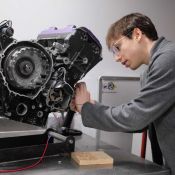
When I was applying for Aerospace Engineering at the University of Manchester, I pictured a degree packed with hands-on projects, CAD software, workshops, things you could build and test and iterate. The reality of first year is more theoretical than that picture suggests.
The fundamentals come first: maths, physics, mechanics, thermodynamics. The content is rigorous and it absolutely matters, but if you are coming in expecting to spend your early semesters designing things, you may need to recalibrate. There is less computer-aided design than the course description might lead you to expect, and more derivations and problem sets. This is not a criticism, it is just the honest picture. Application comes later. Concepts come first.
That gap between what I was looking for and what lectures were delivering is exactly why I joined Manchester Stinger Motorsports within my first few months at university.
Stinger is the university's Formula Student team. Every year, the team designs and builds a full racing car from scratch and competes at Silverstone. The scale of collaboration involved is genuinely impressive: mechanical engineering, aerodynamics, electronics, project management, all happening in parallel, all needing to come together into something that actually works on a track.
I came in with no specific automotive background. I told the team that upfront. They took me on as a junior engineer and people just started teaching me things. That is the environment: if you are willing to put in the work, the knowledge flows freely.
Over the course of my first year I moved from junior engineer to team engineer. Next year I will be sub-team leader for intake, cooling and exhaust. That did not happen because I had a particular skill set coming in. It happened because I showed up consistently, asked questions, and took responsibility for things.
The honest lesson here is that a lot of what makes a UK degree valuable is not in the lecture hall. The lecture hall gives you the theoretical foundation you need. The extracurricular work gives you the environment to apply it, make real mistakes, and work toward a goal that actually matters to the people around you. The combination of the two is where the real learning happens.
For anyone considering engineering at Manchester specifically, Stinger is genuinely worth your time. You do not need to know about cars. You just need to want to build something.
Beyond the motorsport team, Manchester runs regular careers fairs which are genuinely useful for seeing what is out there and starting to build connections earlier than you might think to. I also picked up a part-time job during my studies, which has helped both financially and in terms of building a different kind of network outside of university.
I am also a Global Student Advisor at the University of Manchester, which means I help provide feedback on the international student experience and contribute to how the university shapes its programmes for students coming from abroad. It is a meaningful role and another reminder that if you look for ways to contribute to the university community, the opportunities are there.
The world is your oyster if you are willing to show up for it. Most of it is just showing up.
- Alexis

My first five minutes in Manchester did not go to plan. I landed at the airport with heavy bags, a head full of nerves, and absolutely no idea that the luggage trolleys required coins to release. Everyone around me seemed to know exactly what they were doing, grabbing trolleys and heading off, while I stood there trying to figure out what I was missing. I had just flown in from India and did not have a single British coin on me. A kind older person nearby noticed, came over without being asked, and sorted it out for me. We exchanged a few words, they smiled, and off they went. It took less than two minutes. But standing there with my bags finally loaded, feeling the cool Manchester air for the first time, I thought to myself: this is going to be alright.
That small moment turned out to be a good introduction to the city. Manchester has that quality about it. People are straightforward and warm in a way that does not feel performative. I have thought about that stranger at the airport more than once since then.
Choosing where to study took me a long time. I had been working in engineering and project coordination back home in India, and I knew that to move into senior roles internationally, I needed a postgraduate qualification that was both rigorous and genuinely respected. The University of Manchester kept coming up in my research. Its engineering faculty has a long and distinguished history, and the MSc in Engineering Project Management specifically stood out because it bridges technical knowledge and leadership in a way that most programmes do not. It was not just another management degree.
There was also a scholarship opportunity attached to my offer, and that mattered. Studying abroad is a significant financial commitment, and knowing that Manchester had recognised my application with funding support made the decision feel right in more ways than one. It felt like the university was investing in me, and I wanted to invest back.
One of the first things that genuinely surprised me about Manchester was how large and visible the South Asian and Indian community is here. I had prepared myself for homesickness, for missing the food, the familiarity, the small daily things you do not even notice until they are gone. What I found instead was a city where I could walk down certain streets and feel an unexpected sense of recognition. Indian grocery shops, restaurants serving food that actually tasted right, communities with their own events and spaces. It did not make Manchester feel like home in a shallow way, but it did make the transition far gentler than I had anticipated.
I still missed my family and the particular comfort of food cooked by someone who loves you. That kind of homesickness does not really go away, it just settles into something manageable. But knowing I could find a familiar meal or a familiar face nearby made the harder evenings easier.
The MSc in Engineering Project Management has challenged me in all the right ways. We cover risk management, stakeholder engagement, infrastructure planning and construction project delivery, and every module pushes you to apply the theory to real situations. What makes the learning environment genuinely valuable is the diversity of people in the room. My classmates come from across Europe, Africa, the Middle East and Southeast Asia, and when we work through project case studies together, the range of perspectives is remarkable. In India my engineering education was excellent, but this kind of cross-cultural, cross-disciplinary thinking was new to me and has changed how I approach problems.
The teaching style here is also different from what I was used to back home. There is a much stronger emphasis on forming your own arguments, questioning what you read, and thinking independently. At first that felt unfamiliar. Over time it has made me a more confident thinker and a better communicator, and I think that will serve me well professionally long after the course ends.
If someone had asked me before I left India what I expected to gain from this experience, I would have said a qualification and better career prospects. Those things are happening, but what has surprised me most is how much I have grown as a person. Living independently in a new country, navigating everything from university bureaucracy to figuring out which bus to take, building friendships from scratch with people from completely different backgrounds, it all adds up to something I did not have a word for before. Confidence is part of it. Perspective is another part. A quieter kind of resilience is probably the most accurate description.
The friendships have been a big part of that. I expected polite course mate relationships and got something much closer. We have explored the Northern Quarter together, cooked each other food from our home countries, travelled to the Peak District and beyond, and spent long evenings in the library getting through difficult assignments. There is a particular bond that forms when you are all equally far from home at the same time.
Before I arrived I knew Manchester mainly for football and its music history. What I found was a city with genuine texture. The industrial past is visible everywhere, but alongside it is a creative, forward-looking energy that feels alive rather than preserved. Walking through Ancoats or the Northern Quarter, you get the sense of a city comfortable in its own identity. It does not need to be anything other than what it is.
Getting around the rest of the UK from here is also easy and affordable, which I did not fully appreciate before coming. Liverpool, York, Edinburgh and London have all been part of my time here. The variety packed into a relatively small country still catches me off guard. It is probably something people who grow up here take for granted.
Without hesitation. This experience has given me far more than I came here for. If you are a student from India considering a UK master's, my honest advice is to research carefully, choose a programme that genuinely fits where you want to go, and then back yourself. The hard moments are real but they pass quickly. What stays is everything you gain.
And if you land at Manchester Airport and find yourself staring at a coin-operated trolley with empty pockets, do not panic. Someone will help you out. That, more than anything, tells you what kind of city you are arriving in.
- Joel

It’s the cliché of all cliches, leaving your small town and watching the horizon broaden. Writers way above my paygrade have relished in watching your life disappear in the rearview and waiting for your bones to grow old enough that you want to come back. Regardless, it was indeed my lived experience. University was always the dream, and I was around eight years old when I realized that I wanted to go to the United Kingdom. I was young, had unsupervised internet access, and used it to browse the QS world rankings. This lead me to the conclusion that I belonged in a big, bustling city of academics, and once my youth was on the cusp of expiration, a quaint town consisting of nothing but perhaps a Tesco and bridges between castles. The Boris Brexit Escapade was none of my concern because I was to study the stars. Freshly nineteen, I did indeed make it to the University of Manchester to complete an integrated master’s in physics. Disheveled I stumbled off my Ryanair flight, overwhelmed and my pockets deep in debt. I arrived, like many students, to the Fallowfield campus where my journey began.
I didn’t know what to expect, and I certainly didn’t know to expect Fallowfield. A cultural embroidery with south-Asian silk, and so undeniably run by and for students; I’d never seen anything like it, nevermind lived it. The campus itself stuck out like a sore thumb with the backdrop of Rusholme, and small-town life had grossly underprepared me in terms of scale. Everything felt few and far between, even though I’d never been surrounded by more options and diversity in my life. As I came back from my first official day of university and said my teary goodbyes to the family that had helped me move, it dawned on me that for the first time, I didn’t have any friends. Yet, anyway. A massive yet; I’ve found that being alone in Manchester attracts experiences, friends, and opportunities pretty immediately. My wide eyes and annoyingly American accent was a flame that few welcoming northern moths could resist. I signed up for lacrosse, a sport where the extent of my knowledge was that it was Regina George’s true calling in Mean Girls, I started volunteering and I cemented my love for astrophysics with a membership at “astrosoc” and a trip to the UNESCO World Heritage Site, third biggest radio telescope in the world, international headquarters in an interferometry project; the Jodrell Bank. This is where I met one of my best friends, a lovely five-foot scouse girl that has carved a home into my heart forever. She and I have been inseparable since; she introduced me to British (northern, rather) drinking culture, small-talk, and showed me grace when I repeatedly exclaimed “I don’t do if buts and maybes, I do absolutes”, sounding more Irish if anything. It was like my heart settled into every nook and cranny of Manchester, but my anxiety still ran wild regarding the actual degree aspect of it all.
I had absolutely no idea what it meant to “have A-levels” and I was absolutely sick to my stomach to learn that people sat three papers per subject. I also realized that a difference in syllabus, regardless of how slight, could really impact your enjoyment of a module, and unfortunately your view on a lecturer. I’m actually quite glad to say that first semester was a humbling experience. It was hard to adjust to exams and the way they were conducted; I suppose anyone pursuing a university degree can relate to that, but studying in the UK means you also have to accept that everyone else has actually sat exams of this time crunch before. I was used to the Nordic five hours; snacks decorating the desk, computers and textbooks front and center, but restricted internet access. The most valuable thing I learned in Manchester in January was that it was okay to be a little more lost than you thought you were. I learned that regardless, I couldn’t lose my spark. I stayed a student rep, and even joined the EDIA (equality, diversity, inclusion, and accessibility) committee. If there is ever a moment of darkness, the best support will be immersing yourself in what you love and what you know. I adapted my study methods to improve how much information I retained and reduce how much content needed proper revision once the spring exam time arrived. I swear by the Cornell method and even though the sound of stylus hitting iPad screens is becoming evermore deafening in the Engineering building, you can pry my paper notebooks from my cold, dead hands. With even more challenging material, I found myself improving in second semester and being excited to see what second year has in store.
Unfortunately, I can’t claim that this is transferable to anyone else. I can’t guarantee that you develop a strange fondness for the Sainsbury in Fallowfield but a preference for Morrisons, or that your local Costa coffee will be where your pre-uni de-briefs take place. All I know is that studying at a world leading university, at such an accredited and famous department, in a city so vibrant, is going to change your life. I’m forever grateful for the massive suitcases my family and I dragged across the sea, the lecturers I’ve met so far, and for the nights I’ve spent in both libraries and club lines. Fear, uncertainty and imposter syndrome can turn into something so truly exciting and beautiful. I am so glad I had the chance to refresh my email on the beach, and to see that UCAS confetti in the backseat of our family car- it altered the course of my life, and it can yours too.
- Ajla
Where do you live when studying abroad? Do universities in the UK offer student housing? How much does student accommodation cost? Did you know that as an international student, you are guaranteed on-campus accommodation for the first or all your years studying at most of our UK universities? You will need to apply by the housing application deadline, and of course the best student accommodation in the UK goes first - so that is a good reason to apply early! There are several different student accommodations, price levels and facilities to choose from!
Most students choose to live on campus in their first year. This is social and a fantastic way to get to know students from all over the world! After that, most students choose to move into privately rented accommodation with their new friends. We recommend everyone to live in university accommodation in their first year, as it is a great way to get to know other students (and not just those on your degree).
Learn more about the different options, on-campus accommodation, how to arrange private accommodation and everything you need before applying for student accommodation in the UK via this webinar!
Do you want to study in the UK and are wondering if you need a visa? Maybe you have applied to British universities already, or are considering applying to university in London or elsewhere in the UK, but would like to know more about the UK student visa for European students? This webinar recording is about the UK Student Visa for students who will be starting their studies at a British university and are from European countries. We cover everything regarding the CAS, the application process, cost and other practicalities worth thinking about when applying for a student visa.
Did you know that all non-UK students need a visa to study in the UK? How much does a student visa cost? Is it difficult to get a student visa if you want to study in England, Scotland, Wales or Northern Ireland? For most European students in the UK, a student visa is now a fact.
After the UK left the EU, student visas have now become a reality for the vast majority of international students. It is therefore important to familiarise yourself with this process as early as possible, so that you are well prepared when the time comes to submit an application for a student visa. In this webinar recording, we will go through useful information about student visas, when to apply, what you need for the application, costs, and other tips and tricks that can make the process easier. This webinar is suitable for those who have already applied, those who have accepted an offer, but also those who are considering studies in the UK and want to know more about the visa process.
We have the information and tools most people need to be able to go through the visa process without the need for individual follow-up/advice beyond the general information and guide from us. Remember that Across the Pond cannot provide individual advice on your visa application, only certified immigration staff can. In this webinar recording, you will learn about a number of important points that are good to be aware of when you familiarise yourself with the visa process.

Privacy & Data Protection Policy | Cookies Policy | Anti-Slavery & Human Trafficking Statement | Terms & Conditions | Agent Quality Framework (AQF) | Vacancies
2026
Copyright © Across the Pond - Study in Britain Ltd. All rights reserved.