





Things I Wish I Knew
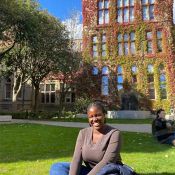
I always knew I wanted to study abroad. I had lived my whole life in one of the busiest, most populous cities in the world, but I wanted more. I wanted a chance to experience different cultures, environments, and people. I constantly thought, "the world is too big for me not to try to see more of it," and I chose to study abroad.
I picked a city that was different enough, but not so different that I would feel the full weight of being over 5,000km away from home. Manchester was that city. I knew I would love it and would be happy there. I also knew I was privileged to win a scholarship to study at the University of Manchester. I found my home away from home. Looking back on my time as a student, here are 40 things I wish I knew earlier:
1. You deserve to be here.
2. It is okay to feel like you do not know what is happening in class; if you had all the answers, you would not need to be here.
3. Ask questions. You're in the presence of the greatest minds in their fields, so ask as many as you can and use office hours.
4. Treating university like a 9-to-5 actually works, and it's solid advice.
5. The university has resources — the library, financial support, careers, wellbeing and health, etc. Use them. Serving as the Academic Representative for my cohort showed me exactly how much support is waiting for you if you just speak up.
6. The student union has resources too — financial support to join societies, careers advice, groceries, housing, clothing. Use those as well.
7. Ask for help. You might be struggling, but simply speaking up often reveals that someone already has a solution.
8. Do as much as you can during Welcome Week. From getting free kimchi to pimple patches and tote bags (you'll end up with far too many). It's the calm before the storm. It doesn't matter if you're 20 or 50, you're a student, and it was organised for you.
9. Say yes to as many things as you can, that is how great stories are made.
10. Create the community you desire and show up for people.
11. Join a society and be an active participant.
12. Go to as many society taster sessions as you can.
13. Make friends with people outside your culture and share meals together.
14. There is always something happening in your city, go to as many events as you can.
15. Volunteer. Giving back is extremely rewarding and helps you connect with the community.
16. Volunteer for research studies. Not only do you help other students and staff but you could also get compensated for your participation.
17. Have boundaries. Experiences are great, but not at the expense of your physical and/or mental health.
18. Find a creative outlet.
19. Find an active or physical outlet that requires no cognitive load. I chose to garden at the community hall.
20. Find out what makes a good sleep routine for you and stick to it. Sleep is important.
21. Eat well.
22. There is no reward for suffering.
23. Build self-care into your weekly routine and stick to it.
24. Learn the different kinds of rest and practice them. You can't do good work if you're constantly on edge.
25. Practice self-compassion. You do not have to force yourself to be positive all the time.
26. You make the rules. Be flexible and adaptable when things don't go the way you planned; no need to dwell on it.
27. A year goes by really fast.
28. If no one talks to you, be the one to talk. People yearn for connection.
29. The place and people you live with have the power to make or break your experience.
30. You do not need to drink alcohol to have a good time. If you don't drink and get invited out, go anyway and get a non-alcoholic drink.
31. You can always say "no."
32. Take advantage of as many student discounts and perks as you can.
33. Learn to manage your finances.
34. Our parents were right, sometimes it really is the phone. You have nothing to gain from knowing everything happening everywhere in the world all the time.
35. Enjoy the sun while it's out (wear sunscreen).
36. Call your family frequently, even if you have nothing to say.
37. You will feel alone, but you are not alone in feeling this way. Almost everyone does.
38. Have a good birthday. Do something you enjoy. It's just one day, and your schoolwork will still be there tomorrow.
39. You will probably cry, but that's okay, we all do. Just remember:
40. You deserve to be here.
- Vanessa
Why I Chose to Study Organisational Psychology at the University of Manchester

11 months ago, I moved abroad to pursue higher education, not realising that the decision would shape far more than just my academic path. It came with countless personal changes, and deciding to study away from home has shaped me in many ways. In just these few months, I’ve learned how to cook (and occasionally burn) my food, do my own laundry, unclog a shower drain, adapt to a new education style, connect with people from incredibly diverse backgrounds, and find comfort in my own company; all of which have helped me understand myself better. Oddly enough, all of this began with a simple curiosity about understanding other people.
I realised early on that I loved observing people and trying to understand what drives them. I completed my bachelor's degree in Psychology, where I was introduced to many areas within the field; however, organisational psychology is what spoke to me. I’ve always believed that the workplace is where we experience the full spectrum of life. It’s where we succeed and fail, build trust, navigate conflict, lead others, pursue ambitions, and continuously redefine ourselves. Even if we technically “clock out” at the end of the day, the psychological experiences we have at work rarely stay confined to those hours. Given how much of our lives unfold within organisations, I began asking a simple question: why not design these spaces intentionally? Organisational psychology appealed to me because it views the workplace not merely as a site of productivity, but as a powerful psychological environment. It recognises that leadership styles, team dynamics, and organisational culture shape how safe people feel to contribute, how motivated they are to grow, and how resilient they become when facing challenges.
Wanting real-world exposure before further study, I chose to work as a soft-skills trainer at a startup organisation. I worked closely with professionals and executives, helping them build emotional awareness, manage team conflicts, communicate more clearly, and articulate their ideas with confidence. I saw how individuals could grow with the right tools and support, but I also began to notice patterns. Similar challenges kept coming up across roles and industries, and I began to realise that many of these weren’t just individual struggles. They were shaped by how organisations were structured, how leadership functioned, and how workplace culture influences behaviour. I was keen to explore this further, but at first, I was a little hesitant about pursuing a Master’s degree. I’ve always believed that hands-on experience teaches you skills outside the classroom, and continuing to develop these skills was fundamental to my decision-making. I began shortlisting universities based on QS rankings, course content, faculty, and, most importantly to me, how practically driven the programme was. The University of Manchester stood out across all of these. Speaking to alumni helped too, especially hearing about the case-based discussions, research-led teaching, and how closely the course connects theory with real organisational challenges. The strong career support at AMBS, from dedicated career services to career fairs and job opportunities, was another big factor in my decision.
Once I knew what I was looking for, the application process itself was manageable. I kept a simple list of the documents and details I needed to submit, along with key deadlines, especially for scholarships, which helped me stay organised throughout. The university also reached out regularly through emails and calls, guiding applicants on what needed to be submitted and by when. Whenever I had a question, it was easy to find the right contact details, and I received clear responses within a short time, which made the whole process feel less stressful.
I’d definitely recommend anyone who applies to join the Pre-arrival Zoom sessions, which cover everything from what kind of duvet you would need to how to manage coursework and exams in the UK system. What really helped was that many of these sessions were led by current students, which meant I could speak to people who had gone through the same process I was about to.
After receiving my offer, I also attended an offer-holder session in Delhi, and that was honestly the first time the whole journey started to feel real. It gave me the chance to speak with alumni from past years, students who were currently in the course, as well as admissions officers and career consultants from the university. I even met other students who were about to start at UoM the same year as me, a great networking opportunity for me before I’d even taken my first step onto campus. I felt like part of the University of Manchester community, and it gave me a genuine sense of what student life and the academic environment would be like. Looking back now, the experience here has truly lived up to what I felt that day.
Now that I’m further into the academic year, what has stood out most is how the first semester has deepened my understanding of organisations as systems rather than collections of individuals. Through research-led teaching and case-based discussions, we are encouraged to question assumptions and examine the structural roots of workplace challenges. Conversations around leadership, psychological safety, and work design have reinforced the idea that sustainable change requires more than individual effort; it requires supportive cultures and intentional organisational design. The academic rigour has been challenging, but purposeful. Each assignment pushes us to move from theory to application, analysing real organisational problems and proposing evidence-based solutions. Over time, I’ve noticed a shift in how I think: I now instinctively look for systemic influences behind behaviour. That intellectual transition has been one of the most valuable aspects of my experience so far.
Only a few months in, Manchester already feels like home. Between the welcoming environment at the university, the support systems in place, and a city that makes settling in easy, the transition has been smoother than I ever imagined. Looking back at how uncertain I once felt, I’m really glad I took the leap; it has shaped me not only academically, but personally.
- Sanjana
A Student's Guide to Manchester

So, You've Chosen Manchester—Now What?
Moving to a new city for university can feel overwhelming. When I first arrived in Manchester from Pakistan, there was so much I had to figure out for myself: how to get around, where to study, where to eat, how to meet people and, perhaps most importantly, how to make a completely unfamiliar city feel like home.
After two years at the University of Manchester, I have picked up a few things that I wish someone had told me before I arrived. So, if you are about to become a student in Manchester, here is my unofficial guide to making the most of your time there.
Getting Around: Manchester Is Easier Than It Looks
One of the first things I learnt was that you do not need a car to explore Manchester, or even much of the UK.
The city has a good network of buses and trams, and a lot of the places you need as a student are accessible without driving. I also found myself walking much more than I expected, particularly around the university and city centre.
And Manchester is a fantastic base for travelling further afield. One of my favourite things about studying here has been how easy it is to turn a free day into an adventure. I have travelled with friends and on my own, explored different cities and villages, and gone hiking in places such as the Peak District and the Lake District.
My advice? Don't wait until the holidays to explore. Some of the best trips can happen spontaneously when you realise you have a free weekend or even just a free day.
Finding Your Perfect Study Spot
University life is not just about attending lectures. You will spend a lot of time studying independently, so finding places where you actually enjoy working can make a huge difference.
The Alan Gilbert Learning Commons quickly became one of my favourite places to study. Having access to a study space that is open around the clock is particularly useful when deadlines start approaching, and yes, I have experienced the occasional all-nighter there!
The University of Manchester campus itself also has plenty of places to work, meet friends and take a break between classes.
My biggest piece of advice is to experiment. Try different libraries, study spaces, and cafés; believe me, there are plenty of options until you find somewhere that works for you.
Eating, Coffee and the Student Life Essentials
Food is a surprisingly important part of settling into university life.
Coming from Pakistan and living in catered university accommodation, I didn't suddenly become a master chef! Most of my meals were provided, but on weekends I would alternate between getting a takeaway and making something simple for myself. Sometimes it was an easy meal, sometimes just a snack, but having that little bit of independence in the kitchen was another small part of learning to look after myself.
I also loved how easy it was to find food that reminded me of home while still discovering something new. Manchester's food scene is incredibly diverse, from the famous Curry Mile, with its huge variety of South Asian restaurants, to Chinatown, where you can explore a completely different range of cuisines. For an international student, having so many different cultures and flavours within easy reach makes the city feel even more welcoming.
And then there is coffee.
I quickly developed a habit of finding new coffee spots and trying different drinks. Joining the Coffee Society at university gave me another excuse to explore this interest while meeting people at the same time.
Sometimes university memories really are built around something as simple as getting coffee with a friend between lectures.
How to Make Friends in a City Full of Students
One of the biggest questions international students have is probably: How am I going to make friends?
My answer is: put yourself in places where friendships can happen naturally.
Join societies. Go to events. Volunteer. Try a competition. Talk to the person sitting next to you in a workshop. Say yes to plans, even when you are nervous.
The University of Manchester has hundreds of societies, so you are very likely to find something that interests you, even if it has nothing to do with your degree.
And don't worry if you don't immediately find your people.
I actually missed Freshers' Week because my visa arrived late, which made settling in socially more difficult at first. But eventually I found people I connected with. My friends and I have celebrated birthdays together, had game nights, cooked together, gone for late-night sweet treats and supported one another through exams.
Friendships don't always happen immediately. Give yourself time.
Student Discounts: Your New Best Friend
One of the best things about being a student is learning just how many student discounts are available. Before paying full price for something, it is always worth checking whether there is a student offer on UNiDAYS or Student Beans. Discounts can make everything from food and shopping to entertainment and travel a little more affordable.
After two years, I have become so good at finding discounts that my friends now message or call me before buying practically anything! Whether they are about to make a big purchase online or are sitting in a restaurant or coffee shop wondering if there is a student deal, I have somehow become the unofficial student-discount expert of the group.
My advice? Always ask. The worst that can happen is that there isn't a discount, and you never know when simply showing your student ID might save you some money.
Manchester After Your Lectures
Manchester is a student city, so there is always something happening.
You can spend an afternoon walking around the city, meet friends for coffee, explore a park, attend a society event or simply find somewhere to sit and talk for hours.
And you do not always need a big plan.
Some of my favourite memories have been the simplest ones: sitting in the park with friends, going for coffee, walking around campus, watching the sunset or spontaneously deciding to go somewhere for the day.
You can also explore Manchester on your own. One of the most valuable things I learnt after moving abroad was that you don't have to wait for someone else to be free before doing something you want to do.
Your Accommodation Can Become Your Community
Where you live can have a huge impact on your university experience.
I lived in university accommodation, and my room became my own little space. I decorated it with pictures, posters and things that reminded me of home, alongside memories I collected in Manchester.
But what made the experience special was the community around me.
Having friends living nearby meant that there was almost always someone to have dinner with, study alongside, go for a walk with or make a spontaneous plan with.
University accommodation is not just somewhere to sleep. For many students, it becomes the first place where they build a community in a new country.
Don't Forget to Explore Beyond Manchester
One of my strongest recommendations to any student moving here is to explore beyond the university and the city itself.
Manchester is a great starting point for discovering more of the UK. Some trips can be carefully planned, while others can be as simple as waking up and deciding that you want to see somewhere new.
Travelling has also helped me become much more comfortable doing things independently. I have travelled both with friends and on my own, and both experiences have given me completely different memories.
You do not need to travel far to feel like you have had an adventure.
My Biggest Manchester Tip
Don't spend your entire university experience waiting for the “right time” to do things.
There will always be another assignment, another lecture, another deadline or another reason to stay in your room.
Study hard—but go for the coffee too.
Prepare for your workshop—but take the day trip.
Apply for the opportunity—but join the society just because it sounds fun.
And if you are new to Manchester and everything feels unfamiliar, remember that it will not always feel that way.
Two years ago, I arrived knowing very little about the city. Now, I can walk across campus, meet friends for coffee, jump on a bus for an adventure, settle into my favourite study space and feel completely at home.
Manchester started as the place where I came to study.
Somewhere along the way, it became the place where I built a life.
- Aisha
Law School: The University of Manchester Version

From Suits to the Real World of Law
I have wanted to study law and become a lawyer for as long as I can remember. Part of that came from witnessing first-hand how legal issues can affect people's lives and wanting to be in a position to help. And, if I am being completely honest, watching the glamour, ambition and fast-paced world of law on shows like Suits probably made the decision a little easier too!
So, when I arrived at the University of Manchester to study law, I thought I had a reasonable idea of what I was getting myself into. I had studied Law at A-level, after all. I quickly discovered that university law was a completely different experience.
Law School Is More Than Memorising the Law
The first thing that surprised me was the amount of reading.
There is a lot of it. Really, a lot.
It became completely normal for me to open my laptop whenever I had a spare few minutes and continue reading: between lectures, while waiting for friends, or even while I was cooking. At university, you quickly realise that simply knowing what the law says is not enough.
The examinations and essays require much more than memorisation. You are expected to analyse the law, question it and form your own arguments. Why does a particular rule exist? Is it effective? Are there problems with it? Should it be changed? How have judges and academics approached the issue differently?
That shift, from learning what the law is to understanding why it works the way it does, is one of the biggest differences I noticed between A-level and university.
My Biggest Tip: Learn How Your Course Works
If there is one thing I would tell a prospective law student, it is this: understand what is expected of you before you start trying to excel.
Every module can be slightly different, and so can its assessments. It is tempting to focus entirely on memorising cases, legislation and legal principles, but understanding how you will actually be assessed makes a huge difference.
Lectures are important, even when attendance is not compulsory. They allow you to engage with the material rather than simply reading it afterwards. And if you genuinely cannot attend, recordings are usually available.
For me, however, workshops have been just as important. Preparing beforehand, turning up ready to participate and discussing problems with other students helped me move from simply recognising a legal concept to actually understanding it.
And when something still does not make sense, ask.
Speaking to lecturers and tutors during office hours can be incredibly useful. Sometimes a difficult concept becomes much clearer simply by talking it through with someone who understands it from a completely different perspective.
Law School Doesn't End at the Lecture Theatre
One of the things I love most about studying law at UOM is that the degree opens doors far beyond your academic work.
Law is a competitive field, and getting good grades is important, but so is discovering what kind of lawyer you might want to become. University gives you the chance to explore that before you have to make those decisions.
At Manchester, there are countless opportunities to do this through careers fairs, society events, guest lectures, networking opportunities and legal competitions.
I have taken part in mooting and mock-trial competitions, volunteered through the Pro Bono Society, completed a summer school with Greater Manchester Law Centre and worked as a student advisor with a legal advice centre. I have also volunteered with Amicus and the Pankhurst Project.
Each experience has taught me something different. Some have strengthened my advocacy and communication skills; others have given me a better understanding of access to justice and the practical impact of law.
Most importantly, they have helped me figure out what I actually enjoy.
Find Opportunities Outside Your Comfort Zone
One of my favourite things about university is that you do not have to wait until graduation to start building experience.
There are opportunities to compete, volunteer, research, write, network and gain practical experience throughout the year. The University of Manchester has hundreds of student societies, including numerous law-related societies, so there is plenty of scope to find something that suits you.
And you do not have to know exactly what you want to do with your degree.
University is a good time to try things simply because they sound interesting. You might discover a passion for advocacy through mooting, an interest in human rights through volunteering, or an area of law you had never considered before.
Don't Forget to Be a Student
With an academically demanding degree, career applications, competitions, volunteering and everything else that comes with university life, it is very easy to feel as though you should always be doing more.
But you also have to live your life.
Join a society that has nothing to do with law. Take up a hobby. Play a sport. Go for a walk. Cook something you have never made before. Get coffee with your friends. Take a day trip. Have a completely unproductive afternoon without feeling guilty about it.
For me, some of my favourite university memories have had nothing to do with law.
The friends I have made, the places I have travelled to, the spontaneous plans, the late-night conversations and the little moments in between everything else have been just as important as my academic achievements.
The Real Lesson of Law School
Studying law at Manchester has taught me that university is not simply about getting a degree.
It is about learning how to think independently, discovering what you are capable of, trying things that scare you, building relationships and figuring out what kind of future you want.
Yes, there will be enormous reading lists, difficult workshops, demanding exams and moments when you wonder why you ever thought studying law was a good idea.
But there will also be competitions you never imagined entering, opportunities you never expected, people who become lifelong friends and experiences that make all those late nights worth it.
And perhaps the most important thing I have learnt is that you do not have to choose between working hard and enjoying university.
- Aisha
Home away from home

A New City, A New Me
I travelled alone from Pakistan to the United Kingdom, stepping into a completely different country where I knew no one, all by myself. It felt both exciting and scary at the same time, but I did it; I navigated studies, currency, finances, transport, food, and everything that comes with settling into a new place. Attending university felt very different from high school, as I transitioned from mostly textbook-based learning to a fully digital format. I also learned to enjoy my own company by taking myself out on dates. I not only figured out the challenges but also embraced the joy of being by myself.
More than a law degree
When I began my course at the University of Manchester, I quickly realised that my experience would encompass much more than just pursuing a law degree. I immersed myself in various societies, attended numerous events, and actively engaged in activities. One of the highlights was participating in a moot court competition held in a room designed to resemble a real courtroom in my law school building; this made me feel deeply connected to the legal profession.
In addition, I volunteered with a homeless outreach group, which deepened my understanding of social issues. I also took on a part-time job at the university, and with so many activities happening daily, I never felt bored. I discovered a wealth of opportunities, socially, academically, and for professional development. I also indulged in personal interests, such as trying out new coffees at the student union with the coffee society.
One of my favourite aspects of my experiences was the opportunity to travel extensively, whether with friends or on my own. I appreciated how simple it was to catch a bus to explore new cities or quaint villages. I also enjoyed hiking in the Peak District and spending peaceful evenings by the lake in the Lake District.
My own space and friends like family
Living in university accommodation, I had a personal room that allowed me the freedom to express myself through decoration. I adorned the walls with pictures, posters, and mementoes from home, as well as new memories I created along the way. I resided on the Fallowfield campus, which felt like a little community of its own, featuring multiple halls of residence, green spaces, a cafe, a library, and study areas. Having all my friends living nearby made the experience even more enjoyable; we often ventured out for late-night sweet treats at Insomnia, had friendly game nights or picnics by the pond. I truly cherished my time there.
Finding my people wasn’t easy, especially since I missed Freshers' Week due to my visa arriving late. However, the diversity at the university allowed me to meet individuals from various countries and cultures. We celebrated birthdays, supported one another during exams, and were there for each other during festivals and important occasions back home. We grew to be more like family than just friends, cooking and spending time together. Everything happens in its own time, and eventually, I was fortunate to meet some incredible people, forge valuable connections, and create wonderful memories with them.
How Two Years Have Flown By
As I sit back today and reflect on my experience in the UK, I can hardly believe how quickly the first two years of my degree at the University of Manchester have passed. From cooking my own meals and going on coffee runs with friends to pulling all-nighters at the AGLC, or just walking around the beautiful campus, catching sunsets and embarking on spontaneous trips, I am so glad I decided to come to Manchester. I have truly fallen in love with this city, the university, and its people. With the snow, sunshine, and rain, Manchester no longer feels strange to me; it feels like home, a place where I truly belong. Although I don't want my time at university to end, I am looking forward to starting my third year.
- Aisha