




An incredibly multicultural experience

My name is Daniela. I am a Mexican film editor, and I studied an MA in Editing for Film and Television Production at the University of York in the United Kingdom. I decided to study at the University of York because it is one of the leading universities in the UK and one of the few that offers such a specialised programme in film and television editing.
The support I received from FIDERH was fundamental in making this dream possible. I primarily used the funding to cover the annual tuition fees for my master’s degree. In addition, thanks to the scholarship I received from the university, I was able to use some of the remaining funding to support myself during my first few months while I adapted to a new country and looked for work opportunities.
This year, I learned and experienced so many unique things that have had a profound impact on me, both personally and academically, and that I will always carry in my heart.
When I first arrived in York, I did not know exactly what to expect. It was my first time in Europe and also my first experience living in a fully English-speaking environment. I arrived feeling scared, nervous and full of questions, but at the same time with an incredible desire to embrace every experience that came my way.
One of the first things that shaped my experience was where I lived. I stayed at Wentworth College, one of the university’s accommodation colleges, where I had the opportunity to meet incredible people. Throughout that year, many of them became my family. We shared everyday moments, celebrations, difficulties and experiences that made a completely unfamiliar country gradually begin to feel like home.
It was also an incredibly multicultural experience. I had the opportunity to live alongside and become friends with people from different parts of the world, learn about other cultures and discover perspectives that were very different from my own. I even met someone very special who is now part of my life. I never imagined that coming to study a master’s degree would end up meaning so much to me, not only professionally, but also personally.
During my time in the UK, I also had the opportunity to work in retail. This was a very important experience for me because it meant entering the workforce of a completely new country for the first time, while studying for a demanding master’s degree and continuing to develop professionally in my field. Working in an English-speaking environment helped me gain confidence in communicating with others, interacting with different people and handling situations that could initially feel intimidating.
Although my main goal has always been to develop my career within the film industry, this work experience taught me the importance of adaptability, responsibility and perseverance. I learned that starting a new life in another country also means being willing to do different things and gradually build your way towards what you truly want.
Academically, the experience also exceeded many of my expectations. The University of York has excellent, modern facilities and equipment, and the lecturers have specialised experience in their respective fields. The master’s programme has a strong practical focus, which allowed me to develop my skills as an editor by working directly on film projects and collaborating with students from different disciplines.
During the programme, we made two short films. The first was called VAPE. For this project, I had the opportunity to work with a great Mexican friend and fellow student, as well as classmates from China and friends from England. For me, it was a very special experience because I had never worked in such a multicultural environment before. Everyone brought a different perspective on filmmaking, storytelling and the way we approach our work. This allowed me to learn not only from a technical perspective, but also on a human level.
The second short film, Root Bound, was particularly important to me, as it was also my thesis project. Once again, I had the opportunity to work with a Mexican director and classmates from China. This experience allowed me to bring together all the knowledge and skills I had developed throughout the year and apply them to a project that represented a very important part of my growth as an editor.
Working on these projects taught me that editing is not only about mastering software or knowing the technical tools. Editing also means listening, communicating, understanding different perspectives and working as part of a team to find the best way to tell a story. Doing this in an international environment helped broaden my perspective and allowed me to understand filmmaking through different cultural viewpoints.
Throughout the year, I also had the opportunity to get closer to the film industry in the UK, meet professionals and begin building a network of contacts that I hope to continue developing. These experiences made me realise that I want to continue building my career here and become part of the British film and television industry.
Beyond my academic education, studying in York allowed me to grow enormously as a person. I learned how to navigate life away from my home country, face new situations, step outside my comfort zone and trust myself much more. I arrived afraid that I would not be able to adapt to a new language, culture and way of life, and I ended up discovering that I could build a home far away from home.
For me, the support from FIDERH meant much more than simply having the opportunity to pay for a master’s degree. It gave me the opportunity to live an experience that changed the way I see my profession, my future and myself. Thanks to this support, I was able to study a specialisation that would have been very difficult to pursue in the same way in Mexico, develop my skills as an editor, meet people from all over the world and begin building the future I want.
Today, I am beginning a new chapter of my life in the United Kingdom. My intention is to continue developing professionally within the film industry, keep growing as an editor and make the most of the opportunities this country has to offer. At the same time, I am building a life here that goes far beyond my career: a life surrounded by people who have become important to me and experiences that I could never have imagined when I first left Mexico.
I am deeply grateful to FIDERH and Across the Pond for believing in me and helping me take this step. This opportunity did not simply allow me to earn a master’s degree; it allowed me to discover a new home, new people, new opportunities and a version of myself that I did not know I could become.
If I could go back to the day I was about to board the plane to the UK and speak to the Daniela who was scared and did not know what to expect, I would tell her not to be afraid. I would tell her to take the leap. Everything she was about to experience would be worth it.
- Daniela
FIDERH and FUNED: The Leap of Faith That Changed My Life
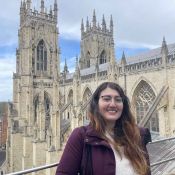
What motivated me to study in the United Kingdom?
I was deeply motivated by the idea of experiencing different educational systems and learning styles. I wanted to build my adaptability, a skill that is incredibly valuable and crucial in this day and age. I also wanted to gain the highly sought-after experience of working within multicultural and international teams. Studying in the UK was my way of pushing myself to grow. To be completely honest, the version of me that left Mexico and the one that finished her master’s degree are two entirely different people. The personal growth has been absolute.
Why did I decide to apply for a loan like FIDERH or FUNED?
I applied for both because the scholarships I had secured were not enough to cover the entire cost of my master's degree (it is important to remember that you don't just pay tuition fees, but also living costs and travel). At first, I was terrified. When you hear the word "debt", you automatically think of the worst-case scenario. The mere word stresses you out so much that you don't even want to apply. In fact, I postponed my application with Across the Pond for almost two years purely out of fear of losing money. But now that I have made it, I realize it was absolutely worth it, and if I could go back in time, I wouldn't let those two years slip away.
What was my experience during the application and funding process?
To my surprise, both processes were incredibly easy. FIDERH is extremely specific about what they require, and FUNED is mostly online, which makes it very straightforward and simple. Honestly, the paperwork was barely a hassle; both are super easy to get.
Fears and prejudices: How did I overcome them?
I was scared of being in debt, losing money, and, most of all, the fear of my family refusing to help me. It was not an easy step to take. How did I overcome it? By taking a leap of faith. There is a saying: "The 'no' is already guaranteed, so go after the 'yes'", and it is so true. I was deeply moved by how much my family supported and backed me up. This isn't just a cold administrative procedure; it carries a huge emotional weight because it makes you realize how much the people you love truly love you back.
Another fear was running out of money. However, the application process for FIDERH and FUNED forces you to calculate your actual needs. This really keeps your feet on the ground, helps you budget, and gets you so organized that having a clear financial reference actually gives you the confidence to take the next step.
Pro tip: I wanted to save as much money as possible, and I was shocked to find out that buying groceries in the UK costs practically the same as in Mexico, so don't stress too much about that! Also, keep in mind you will want to travel and make friends. Even if you feel you are on a tight budget, you will find a way to make it work and you will!
How did this support help make my postgraduate degree a reality?
This support covered absolutely everything I needed. In my case, FIDERH was the key pillar that allowed me to cover 100% of my tuition fees, while my scholarships took care of my day-to-day living expenses. It was the perfect combination to bring my dream to life.
Additionally, thanks to FIDERH and FUNED, you learn a lot about personal finances. In the end, I only accepted FIDERH because it suited my situation better, but both financing options are excellent and teach you so much about financial matters you might not have known before.
- Jaqueline
The Art of Questioning, Growing, and Becoming Independent
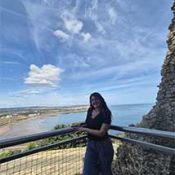
What motivated me to study in the United Kingdom?
I was always excited about the idea of living abroad; I wanted to learn how to stand on my own two feet and discover what I was capable of on my own. I chose the UK because of its impressive history, culture, and that unique architecture that always caught my eye. In addition, I was drawn by the prestige of its universities in world rankings, the language, and, above all, the multiculturalism. I knew that studying here would give me the opportunity to enrich myself by sharing experiences with people from all corners of the globe.
What is academic, personal, and cultural life like?
Academically, the experience has been incredible. At first, the pace seemed relaxed, and I even thought it might be easier than in my home country. But the British system is so well-organized that, almost without realizing it, you end up learning so much. What I valued the most was the immense academic freedom you feel here.
Personally, it has been a journey of complete growth. You grow by leaps and bounds when you realize you are on your own: nobody is going to cook for you or wash your clothes. However, there is a beautiful magic to it, because you become the sole owner of your time and your decisions.
Culturally, it has been a fascinating clash. I learned that what is normal for me is not normal for others, and vice versa, which leads you to question your own way of looking at life. You open up to the world so much that you end up cooking dishes from other countries, falling in love with new flavours, and celebrating our differences.
What did I learn in the UK?
Among the lessons I’m taking with me, I carry resilience, the self-discipline to stay organized, and the certainty that it is indeed possible to balance daily life while working on your own projects. But without a doubt, the most valuable lesson has been the way of thinking. The British system does not focus on memorizing how to calculate a parameter or conduct an experiment; it teaches you to reason, to doubt, and to question. That capacity for analysis is the true treasure of studying here.
What do I wish I had known before coming?
I would have loved to be better prepared for the cultural adjustment. English culture is very different from Mexican culture, which is much warmer. On a more practical level, it would have been amazing to know exactly what to pack in my suitcase and to have brought much more food from my country!
Pro tip: Bring food, it’s the most valuable thing you can pack!
Lastly, I wish I had mentally prepared for the emotional toll beforehand: knowing that, even though you are going to live wonderful experiences, you leave your family behind and there will be major moments in their lives that you will miss. It is a real sacrifice, but one that also gives immense value to every achievement you reach here.
- Jaqueline
Turning Hope into Reality
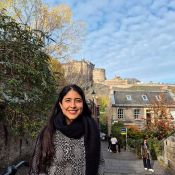
Since I was young, the UK has always made me very curious. For years, I had the hope of one day visiting and having an experience here, although for a long time it seemed very far away. Over time, that desire became a goal, and I finally had the opportunity to make it a reality.
My experience with Across the Pond was fundamental in helping me get here. The process of studying in the UK involves many steps and, especially as an international student, it can feel overwhelming. I did not know anything about these processes, and I did not have anyone I could trust to guide me. Having their support helped me understand my options, make decisions with more confidence and feel that this was truly possible. I never felt alone or afraid to ask any kind of question.
Studying my Master's at the University of York has been a real rollercoaster, both academically and personally. Academically, everything was new to me: studying in another language, adapting to a different education system and facing new ways of learning and participating in class. At the same time, the university's facilities and atmosphere often made me think, “all of this was worth it.”
I had the opportunity to learn from highly knowledgeable professors and to share the classroom with people from different countries and cultures. My previous professional experience in the private sector in Mexico allowed me to connect many of the concepts I learned with real-life situations and think about how I could apply that knowledge back in my country.
On a personal and cultural level, meeting people from different nationalities was one of the most enriching parts of the experience. I learned about different traditions, listened to perspectives that were very different from my own and, above all, learned to look at many topics from a broader perspective. The beginning was definitely a challenging period of adaptation, but I was lucky to find a great support network at the university and make friendships that meant I never felt alone.
If I had to summarise one of my biggest lessons in one phrase, it would be: “think globally.” I am taking home much more than a degree: international knowledge, new perspectives and a much deeper understanding of sustainability and what companies are doing in the UK and other countries. I am also taking home friendships, memories and the confidence to know that I can adapt to an environment completely different from the one I was used to.
If I could give one piece of advice to someone thinking about studying in the UK, I would tell them to be prepared for the first few days to feel chaotic, but to remember that everything is temporary and that it is also part of the process. So: “enjoy the process.” I would have liked to receive more practical advice for international students, such as how transportation works or how to deal with the small everyday things that can seem overwhelming at first.
But most importantly, I would tell them not to let fear or the number of steps involved make them think that it is not possible. I imagined it for years before making it happen. And today, I can say that the hope I had for so many years finally became a reality. It has been one of the most beautiful and transformative experiences of my life.
- Luisa
The Year
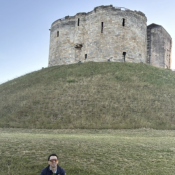
Deciding what to do with our future is not an easy decision. The simple act of growing up involves a whole set of actions that, in turn, trigger a reaction — one that can be good or not so good, but from which you always learn something.
In my case, deciding to pursue my master's degree was something that took time. There were doubts and excuses not to make the decision — family, work, and financial factors were the main ones. However, I was fortunate that, at the job I had at the time, I was told and advised that, in order to continue developing professionally — in my case, as a lawyer — I needed a master's degree, preferably from an English-speaking university. A few days after that conversation, the decision was made: without consulting or discussing it with anyone, I declared that I was going to study in the United Kingdom.
For reference, what I mentioned in the previous paragraph happened in January, which meant I needed to start the process as soon as possible, since I wanted to begin the course that same year. I remember that starting the process of researching universities, courses, scholarships, deadlines, and funding options was completely overwhelming — many questions and few immediate answers. During that search for information, which admittedly wasn't the most thorough in the first few days, I came across Across the Pond, and immediately got in touch with them by email and later in person, at events they held in Mexico City.
Once I met them, I realized that the support they provide — acting as "guides" — was exactly the complement I needed to keep moving toward this goal. With people assigned specifically to my case, I began deciding which university best suited the area of law I practice. The options were extensive, which is why I applied to more than 5 universities, some with Across the Pond's help and others on my own. After a process of roughly 3 to 4 months, I managed to gather all the required documentation for every application, and fortunately I was accepted at every university I applied to.
The decision was now mine, and it was time to start considering factors like which city I would live in, the costs, and finding something I genuinely liked. Despite all that, the University of York reached out to me from the very first moment and made me feel like part of their community — they followed up on my questions, kept me informed, and even offered me a scholarship. Taking that into account, the decision was made: I would pursue my master's in International Corporate and Commercial Law in the United Kingdom.
The next step was to look into funding, and once again, thanks to Across the Pond's support, I had the opportunity to apply for and secure the loan granted by FIDERH,which was essential in making this dream come true. On top of that, I was also fortunate enough to receive a scholarship from the Mexican government, and finding out I had gotten it was one of the best days of my life.
September was approaching, and this was going to be the first time I would be away from my home, my country, and my family for a long period. I was nervous and anxious about facing a new culture, climate, food, and so on, but very happy that I was fulfilling a goal, and that all the time and effort I had put into this process was finally paying off.
With a flight booked, saying goodbye to my loved ones was difficult, though they, too, were happy for me because of this experience. Before I knew it, I was in the United Kingdom, in the north of England: York welcomed me with classic rain and cold, letting me know that the shorts I was wearing had not been the best outfit choice for that day. Settling in wasn't as complicated as it might sound, since throughout the process the university also stayed in touch through a group of Latin American students who guided us on where to buy things we needed to get by in York.
Something I might have liked to know beforehand is that the university has support for pretty much everything. Sometimes you don't think certain things exist, but the university has them, and adapts to the needs of most students.
Once settled in, it was time to get to know the university, my classmates, and my professors. I hadn't set foot in a classroom in over 6 years, so it was something that excited me a lot, and that's how I started the year: eager to learn and to enjoy myself, because that was the whole point — that's what I had gone to the UK for, and I can confirm that I achieved it.
At first, I found it hard to understand some accents, and I was embarrassed to ask certain things, but that never stopped me from doing anything I wanted to do or asking about anything I was unsure of. To this day, I still sometimes struggle to understand people, but the embarrassment is gone. I wouldn't say it happened right away, but within the first few months I got to know the people who are now friends I'll have for life — some of them Mexican, others from various nationalities. All of them made my time there much easier and more enjoyable, and I'm grateful to all of them for the good times and for supporting me whenever I needed it.
Now, adapting to a new culture isn't easy, but it isn't impossible either. Fortunately, my love of music, football, and simple food helped me adapt quickly, and that's how the months started going by: lots of reading, classes, trips, hanging out with friends, rain and more rain — but I was enjoying all of it. From walking across campus to get to class, to going to fifth-division professional football matches, concerts in muddy fields, countless train rides, catching very cheap flights to other parts of the world, meeting people from countries I didn't even know existed, and plenty of video calls with people back in Mexico — all of these things came together to make one of the best years of my life.
Again, my goal was to learn as much as possible, to make the most of my classes, professors, and everything the university had to offer, but it was also to experience new things and have fun. Being part of a college football team at the university was a rewarding experience, since besides playing the sport, I got to meet and become friends with even more people.
I can't say I have countless stories from this year — that would be an exaggeration on my part — but I do have plenty to share, and enough to encourage more people to be brave enough to do something similar to what I did. The tools are within reach of anyone who sets their mind to it. Being in the UK wasn't easy at all: it took time, money, and giving up other things, but in the end the reward is huge. I couldn't say I regret anything, because honestly, this was the year I had imagined. Nothing in life is free; there will be situations that hold us back, but we have to keep trying until we get there.
If you're thinking about taking this step, take it. In the end, if you go after it, things will fall into place and they will happen. Don't miss out on one of the best years of your life.
- Juan Fernando