





Image


Choosing the UK for my MBA was a decision driven by both professional and personal reasons. I wanted to study in an international environment, challenge myself outside my comfort zone, and experience living in one of the world’s most dynamic financial and business centres. London was particularly attractive because of its diversity, career opportunities and the possibility of meeting people from so many different backgrounds.
My experience in the UK has been much more than an academic one. Academically, the MBA has pushed me to think differently, challenge my assumptions and approach problems from a more strategic perspective. Personally, living abroad has made me much more independent and adaptable. I have also really enjoyed the cultural side of the experience: discovering London, travelling around the UK and Europe, and sharing everyday experiences with classmates and friends from all over the world.
One of my biggest takeaways has been understanding how valuable an international network can be. The people I have met during this year have been just as important to my experience as the academic content itself. I have also learned that moving to another country can be challenging at times, but those challenges are often where the greatest personal growth happens.
If I could go back in time, I would tell myself not to overthink everything before arriving. You cannot plan every aspect of your experience abroad, and some of the best moments come from the things you did not expect. I would also tell myself to make the most of London from day one — not only academically and professionally, but also by exploring the city, meeting people and saying yes to new experiences.
Studying in the UK has ultimately been an experience that has helped me grow both professionally and personally, and I would encourage anyone considering it to embrace the opportunity fully.
- Benjamin

I chose Bayes Business School for several reasons, but, in short, I felt it was the school that offered me the best value for money. When you start researching MBAs in the UK, you realise the investment can end up being excessively high, so it was important for me to find a programme with a strong academic standard that, at the same time, represented an investment I could justify.
Bayes also holds triple accreditation, known as the "triple crown", and has a very good reputation specifically in the MBA world. But beyond the rankings and accreditations, what ultimately convinced me was the connection I felt from the very first interviews with people at the school. From the start I felt a very close and genuine approach, and that made a big difference for me when it came to making the decision.
One of the things I enjoyed most about the programme was precisely the way it combines theory with practice. Yes, it's an MBA and there's a lot of theory, but you constantly get the chance to bring what you've learnt into real situations. At the end of each module, much of the knowledge was applied to real companies and to situations that were happening at that very moment. We also had an international week in which we worked directly with a company, and, finally, our dissertation project is also carried out in collaboration with a real company. I felt we were constantly moving from learning concepts in the classroom to thinking about how we would apply them in the working world.
I also loved the variety of the programme and the calibre of the lecturers. Each one has impressive experience and specialisation, and it was very enriching to be able to learn from people who are genuinely leaders in their field.
However, if I had to pick just one thing as the best part of my experience at Bayes, it would definitely be the people. I was enormously fortunate to be part of an incredibly diverse cohort, with people from different countries, cultures, industries and career paths. We were a very varied group, not only because of our backgrounds, but also because of our personalities and ways of thinking, and I believe that is precisely what made us learn so much from one another. More than classmates, I'm coming away with friends for life and a network of people I hope to stay in touch with for many years to come.
Bayes also gave me many opportunities to develop outside the strictly academic sphere. We constantly had networking events, workshops and activities focused on skills such as public speaking, giving better presentations, building confidence, working on our emotional intelligence and strengthening our resilience. We also had a leadership programme that pushed us a great deal to step outside our comfort zone. I particularly liked that the MBA didn't focus solely on preparing us professionally, but also on developing the personal skills you need to be a good leader.
Another thing I found amazing is that, by becoming part of Bayes, you truly become part of a community. I didn't expect to build such important relationships during the MBA, nor that the lecturers, alumni and classmates would become a network that could stay with you even after graduating. You even have the chance to take one elective module per year for life as part of the Bayes community, which I think is an extraordinary opportunity to keep on learning.
And that's precisely one of the most important things I'm taking away: understanding that the MBA isn't the end of your learning, but the start of a stage in which you have to keep studying, learning and developing. For me, the programme also gave me much greater professional versatility. It allowed me to get to know different areas, industries and ways of working, and to understand that my experience can be applied across many different fields.
In the end, I think that's what made my experience at Bayes so special: it wasn't just about earning another qualification. It was about learning from people completely different from me, facing situations that pushed me out of my comfort zone, developing new skills and becoming part of a community that I hope to keep carrying with me long after finishing the MBA.
- Rocío

I always knew that, at some point in my career, I wanted to study a postgraduate degree abroad. For me, studying outside Mexico always represented an opportunity for both professional and personal growth, and as I progressed in my career it became increasingly important for me to live that experience. I also think that, often, the longer you put it off, the more you feel you have at stake, especially your stability. That's why sometimes you shouldn't overthink it and should simply take the leap.
I chose the UK for several reasons. One of them was the language. Even though I already had an advanced level of English, it felt a little rusty, and I wanted to keep studying and practising it in an environment where I would genuinely have to use it every day. I also wanted to learn and become comfortable with professional terminology in English, something I consider extremely valuable for my career.
And, of course, there was London. I had visited the city a few years earlier and had loved it. I love the history, the culture, the sheer number of things you can do, the parks, the museums and, above all, the diversity of people you come across. Today, having lived here, I can say it was one of the best decisions I could have made.
But undertaking a postgraduate degree abroad also means facing a very concrete reality: the cost. Although during my five years of professional experience I had worked and saved, an international master's degree, combined with the cost of living in London, amounted to a sum I simply couldn't cover on my own. What's more, when you move to another country, all sorts of expenses start appearing that you hadn't even considered at first: paperwork, visa, flights, deposits, transport, setting-up costs and many other things that add up. My mum also supported me as much as she could, and without her it wouldn't have been possible either, but even putting together my savings and all the support I could gather, I needed an alternative source of financing.
That's why I decided to apply for a loan such as those offered by FUNED and FIDERH. For me, it wasn't just another option, it was what made it financially viable to study in the UK.
My application process was, to be very honest, fairly chaotic. I also acknowledge that this was partly down to me, because I decided rather late that I wanted to do the master's and ended up doing a lot of things in quite a rush. If I could go back in time, I would definitely start the process earlier and more calmly.
What's more, during the process I learnt something important: you won't necessarily receive the amount you initially had in mind. I had a budget and an amount I needed to cover my expenses, but the loans I could obtain ended up being lower than I expected. That made the process quite stressful and meant I had to find ways to supplement my funds through other means.
Despite that, my experience with the people at FUNED and FIDERH was very good. I always found people who were kind, attentive and willing to help me. In a process that can be overwhelming in itself, having that support made a big difference.
And once I arrived in London, the challenges were different. One of my main fears was speaking English, because knowing English is one thing, and quite another is taking part in a discussion, defending an opinion, or simply expressing yourself naturally in front of a room full of people.
I also had a lot of impostor syndrome. I was surrounded by extremely talented people, many of them with more years of professional experience than me, and at first I wondered whether I would really be up to the task.
Over time, I gained confidence. The MBA experience itself, the workshops and the support we received helped me enormously to open up. But, above all, I learnt that it isn't about who knows more or who has the most impressive track record. Everyone arrived with a different background and different skills, and that's precisely what made the experience so enriching. We all had something to learn from one another.
Ultimately, I can say with complete honesty that without this financing my MBA would not have been possible. Even with a scholarship and having chosen a school that, within the context of UK MBAs, was fairly affordable, the investment was still too high for me to cover on my own.
What I value most about this type of loan is that it's genuinely designed to support students who want to keep developing themselves. The terms are far more favourable than those of a traditional bank loan, and, above all, you don't have to worry about starting to repay it while you're studying. That allows you to focus on what really matters at that moment: studying, making the most of the opportunity, and living this enriching adventure to the full.
For me, this support didn't simply mean being able to pay tuition fees. It meant being able to seize an opportunity that, otherwise, I would probably have had to let pass by. Today I can say that studying my MBA in London was one of the most important experiences of my life, and I am deeply grateful to have found a financing alternative that allowed me to make it a reality.
- Rocío

Since finishing my degree in Visual Communication, I had always had the idea of pursuing a master’s degree abroad. However, I was not sure what I wanted to study, so I chose to develop my career professionally in Mexico for nine years before making that decision. During that time, I worked in a variety of roles related to traditional graphic design. Although I enjoyed design, I felt that these roles did not allow me to explore other areas that also interested me, particularly technology and business.
I decided to take a UX/UI design bootcamp, which helped me rethink my portfolio and eventually led me to a job at a startup in Mexico City. There, I felt that I had found the area of design in which I wanted to develop my career. I was able to grow within the same company and eventually became the head of the product design team. This experience helped me better understand the kind of work I wanted to specialise in, but it also made me realise how much I still did not know. Towards the end of that same year, the company's situation worsened and several colleagues and I were made redundant. I found myself facing a decision: I could use my redundancy payment as a deposit towards buying a flat and continue with my life as it was, or I could use it to pursue a master’s degree abroad and expand my professional and personal horizons. I chose the latter.
I then began looking for an agency that could help me with the process of studying in London. At first, I was interested in UAL, mainly because of rankings that placed it as the best school in the world for studying design. However, an unforeseen problem with the agency handling my application made me reconsider that option. I started looking for a more technical programme, less focused on the artistic side of design and more on its cognitive and technological aspects. Thanks to the advice of Across the Pond, I discovered the Human-Computer Interaction Design programme at City St George’s, University of London. Originally, I knew very little about the university, but I discovered that the programme had a strong reputation in the UK and was also considerably more affordable than other options I had considered. So far, I have found the course very good and demanding. More importantly, it has answered many of the questions I had about my profession and that originally led me to look for a specialisation.
Another major advantage has been being able to study in London, a city I thought I knew before coming here, but which, after only a short time living in it, made me realise that much of the image I had of it was rooted in the world of Mary Poppins. In reality, not everyone drinks tea, it does not always rain, and certainly not everyone speaks with a posh accent. London has also allowed me to better understand the cultural diversity of Europe. It is a continent with an enormous amount of history, and in the UK, much of that history still shapes the way the country and its society are understood. On top of that, there are the differences between generations, as well as the perspectives brought by tourists and migrants. Experiencing all these different ways of understanding life has probably been one of the most enriching parts of this experience. I would also add all the museums, streets and historic buildings, as well as the cultural heritage that comes from having been such an important country to the rest of the world for centuries.
To be honest, there is nothing I wish I had known before coming that I would now consider essential. Personally — and I know this may be very different for other people — migrating has been much easier than I expected. If I had to mention one thing, I would say that Europeans tend to be more introverted than Latin Americans and that Londoners, in particular, can be very indirect in order to avoid coming across as aggressive. At first, these differences can feel strange, especially when you come from a culture where communication tends to be more expressive and direct, but it is not difficult to get used to. In fact, I think many of them are drawn to the more open and outgoing character that we Latin Americans tend to have. Lately, I have even started seeing quite a few British couples practising salsa in the parks, although without quite the same amount of pulling and mischief that can come with learning to dance it in Latin America… so, for those coming here single, perhaps there is a small opportunity there.
Above all, I can say that this is a culture that is very welcoming to strangers, and where it is remarkably easy to feel safe. Almost everything you think you know about Britain is true and, at the same time, falls short of the reality. There are already far too many songs and poems trying to capture everything this culture has to offer, so perhaps the best thing to do is simply come and experience it for yourself.
- Daniel Andrés

As a professional in Electronic Engineering in Mexico with five years of experience working in various jobs and engineering fields, I realized that simply having a university degree was not enough to get the job I wanted or to start my own business, as I aspire to do. I lacked the knowledge or adequate experience provided by the companies that had hired me, so I decided to pursue a Master's in Renewable Energy.
Studying in Mexico was no longer an option for my growth and the path I wanted to take, so I chose to study in the United Kingdom because of the opportunities that open up when you have a Master's degree from the UK, as these are international opportunities. For example, even before finishing the program, I have already received job offers via LinkedIn for positions in the UK and even from other European countries like Poland or Germany.
I chose the UK because of the language, as English is an internationally required language. Personally, I have been learning English since I was very young, so it was easy for me to adapt, but even if you're not perfectly fluent, living here helps you acquire the ability to communicate with everyone. You should also consider that in the UK, there are people from all over the world, and everyone has different native languages, so you don't have to speak it perfectly to communicate well.
This university is located in the north of London, in a very accessible area close to major tourist and social attractions. In general, it’s a school that provides support in all the areas you need. The only thing I would recommend is to frequently ask questions and visit your program director, as they may sometimes forget about you or your situation if a problem arises. When you have a concern, insist on asking about all your doubts, and they will gladly respond within approximately 24 hours, as long as you insist.
The program I chose, MSc. Renewable Energy and Power Systems Management, focuses on the correct management of generation and demand, along with the electrical system, technical and financial aspects, and the regulations of the electricity market in the UK and Europe. This provides you with international opportunities. The program mainly covers areas such as Power Electronics, the Electricity Market, Smart Grid, Electrical Distribution, Wind Energy Generation, Solar Energy, Demand Optimization, among others.
The course is divided into eight modules, for which you have to take an exam that accounts for 50% of the grade and a written/practical project that accounts for the other 50%. After finishing and passing all the modules, you choose a project for your thesis, on which you will work for three months.
Staying in London is a bit more expensive compared to other cities in England. I considered living in London in the school’s student accommodations, but I also looked for options in the counties near London where there is direct access to the city. I found a room in a city 25 minutes by train from London on the UK website ‘SpareRoom,’ where you can interact directly with the people who are renting. You can search for options there and do video calls with potential landlords to find rooms that meet your needs.
I currently live in St. Albans City, a town 25 minutes by train from London. It’s a very beautiful, well-preserved, and quiet city that makes you feel at home. I can visit London whenever I want without having to live directly there, as it has a direct connection to King Cross in North London. It’s a peaceful city where you can find pubs, cafes, shops, supermarkets, etc., without needing to live in London, and the rent is more affordable.
For each module’s projects, I recommend working on them early, as soon as you know what you need to do. They may seem easy, but they are not, as each project requires research time. In the UK, they usually encourage you to research the topic on your own, and this can take time, so a well-organized agenda will always help you succeed. Social life happens naturally when you’re at ease, knowing that you have your tasks well organized. I don't recommend starting everything the last week, as you won’t have enough time to complete it.
My classmates are mainly from Asian countries. You spend most of your time with them, so they inevitably become your friends. If you want to meet different people or those aligned with your interests, it’s recommended to make friends through social media groups or events that you wish to attend based on your interests. That’s mainly where you can find people with whom you have things in common, and from different nationalities.
Financial:
It is very important to consider the costs and have an initial balance for essentials like food, rent, and transportation. Transportation is usually expensive, so if you plan to live far from the university, you must consider this significant expense. Stick to your budget as much as possible if it’s tight.
Transportation:
In the UK, transportation is quite expensive, and there are many train service strikes, so it’s crucial to consider this expense and the time it will take you to travel from your accommodation to the university if you plan to live far from it. This is a very important aspect because your mobility to classes or important events depends on it.
Grades:
In UK schools, grading scales are different. The minimum passing grade is 50/100, but lecturers grade more strictly than in Mexico, so a very good grade is 70. Don’t be alarmed if you pass a subject with 50-60, as this is average in the UK. For the modules, each has credits that you need to accumulate to obtain the degree; these credits are earned by passing the module, so the scale of the grade itself is not that important.
Across The Pond helped me a lot with the selection and application to the university. For the initial documents required to apply, they provide advice on how to improve your Personal Statement so that the university approves it. They also support you by sending available scholarships to help you as much as possible in achieving your personal goal.
They also assist by informing you about financial institutions that can support you, like FIDERH and FUNED. Without my advisor from Across the Pond, I wouldn’t have known about several opportunities available, like scholarships before starting the course. He also helped me with some doubts I had about the school even after the process.
- Stefanie
Where do you live when studying abroad? Do universities in the UK offer student housing? How much does student accommodation cost? Did you know that as an international student, you are guaranteed on-campus accommodation for the first or all your years studying at most of our UK universities? You will need to apply by the housing application deadline, and of course the best student accommodation in the UK goes first - so that is a good reason to apply early! There are several different student accommodations, price levels and facilities to choose from!
Most students choose to live on campus in their first year. This is social and a fantastic way to get to know students from all over the world! After that, most students choose to move into privately rented accommodation with their new friends. We recommend everyone to live in university accommodation in their first year, as it is a great way to get to know other students (and not just those on your degree).
Learn more about the different options, on-campus accommodation, how to arrange private accommodation and everything you need before applying for student accommodation in the UK via this webinar!
Do you want to study in the UK and are wondering if you need a visa? Maybe you have applied to British universities already, or are considering applying to university in London or elsewhere in the UK, but would like to know more about the UK student visa for European students? This webinar recording is about the UK Student Visa for students who will be starting their studies at a British university and are from European countries. We cover everything regarding the CAS, the application process, cost and other practicalities worth thinking about when applying for a student visa.
Did you know that all non-UK students need a visa to study in the UK? How much does a student visa cost? Is it difficult to get a student visa if you want to study in England, Scotland, Wales or Northern Ireland? For most European students in the UK, a student visa is now a fact.
After the UK left the EU, student visas have now become a reality for the vast majority of international students. It is therefore important to familiarise yourself with this process as early as possible, so that you are well prepared when the time comes to submit an application for a student visa. In this webinar recording, we will go through useful information about student visas, when to apply, what you need for the application, costs, and other tips and tricks that can make the process easier. This webinar is suitable for those who have already applied, those who have accepted an offer, but also those who are considering studies in the UK and want to know more about the visa process.
We have the information and tools most people need to be able to go through the visa process without the need for individual follow-up/advice beyond the general information and guide from us. Remember that Across the Pond cannot provide individual advice on your visa application, only certified immigration staff can. In this webinar recording, you will learn about a number of important points that are good to be aware of when you familiarise yourself with the visa process.

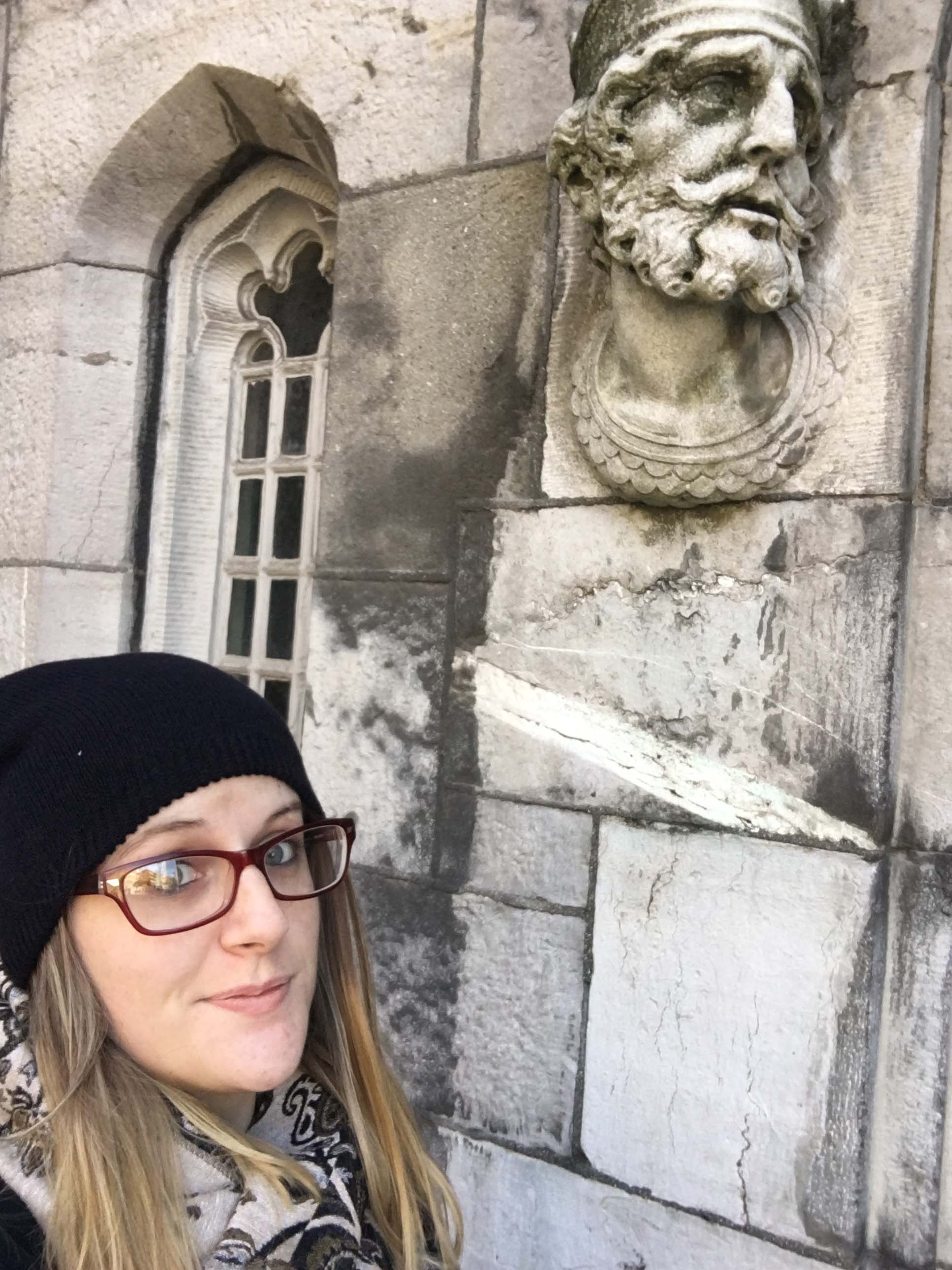
Starting off my search for a postgraduate degree was hard and, frankly, annoying. Schools in the States were so specific with what they wanted from students and it became such a hassle. When I stumbled upon Across The Pond's advertisement, I was curious. At that point, I knew that I wouldn't financially be able to go overseas for school, but I gave it a shot to see what they were about and what they offered.
The very next day I got a personal email from my advisor with a bunch of information that would help get me started with the process of looking overseas. I will admit it was overwhelming, but the enthusiasm of my advisor made me really start to look into the process of applying and searching for schools. Any time I had a question (which was very often), I got a prompt email back to help me find resources and links to help me answer my questions.
I was very nervous about moving overseas where I knew no one, and I think the influx of questions I started to ask gave away that I was nervous. My advisor became so reassuring with the process and about going traveling to the UK. The webinars and guides that were provided made everything so much easier, especially when it came time to apply for a visa. With the webinar, I was much less worried about the process and much more prepared for the application and everything that followed.
After settling into my accommodation and really taking a look around me, I felt so good! It was such a relief that after the several months of applying and waiting for responses paid off, and I was finally in London for my master's degree! City, University of London has become my second home, and I am glad I chose to go here. The general location of the school is what attracted me to the school as well as the program and since being here, there is so much the school offers, between the Student Union to the City Sports center, there is always something to do!
With the location, I am able to visit all over London in minimal time! The museums, theatre, parks, and just the ability to walk around have made my downtime so much fun! I try and discover something new every week with my classmates and friends and with our varied interests you can guarantee that we will always be able to discover something new!
- Rhea

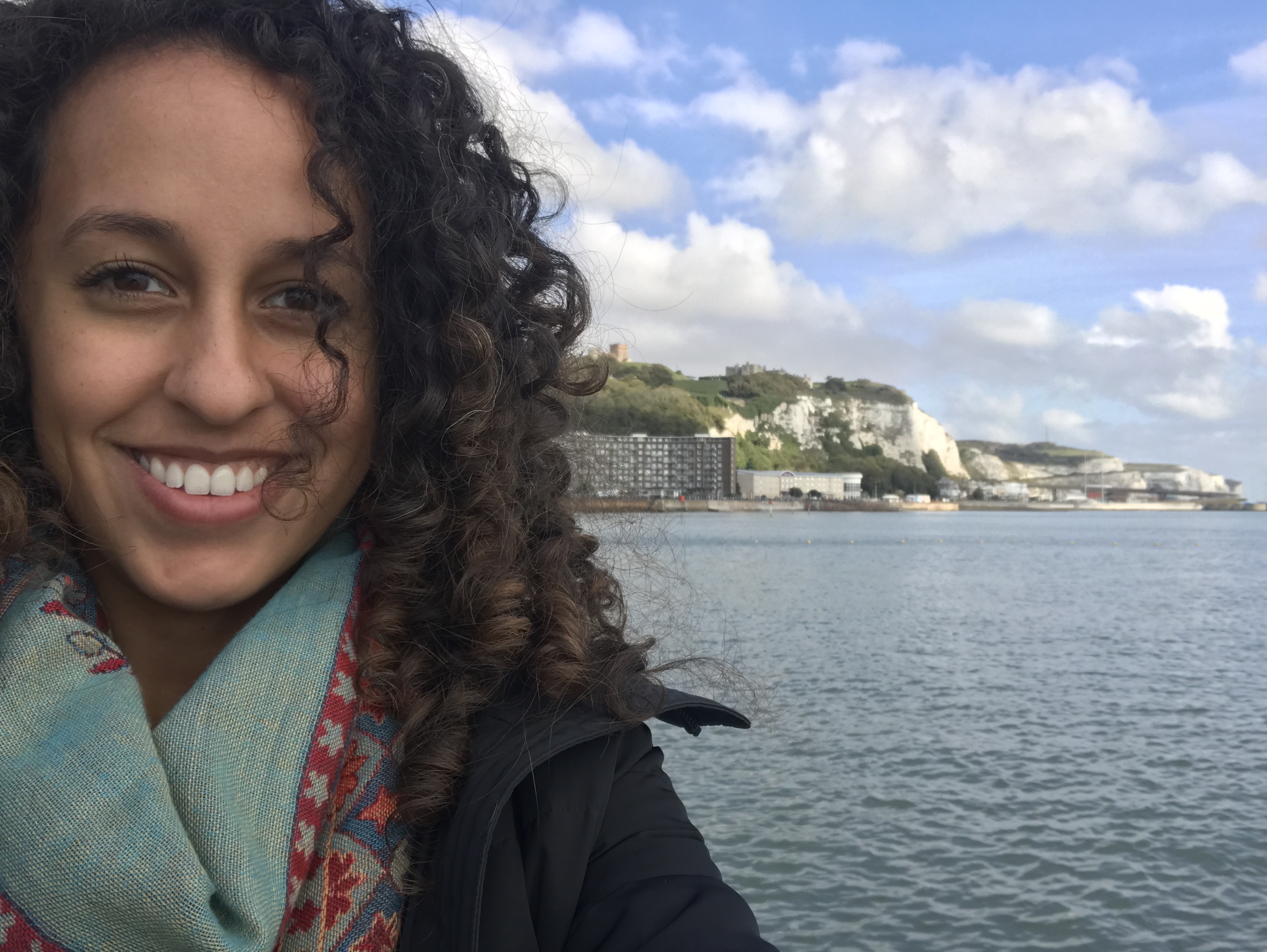
I chose City for several reasons. First and foremost because it is located in central London. I had been dreaming about returning to London ever since I studied abroad here during my undergraduate degree. City also contains the Centre for Food Policy, which perfectly aligned with my interests and the trajectory I wanted for my future career. After seeing that the professors were leaders in their field, often speaking at conferences, to media and policymakers, I realized that my academic learning would be complemented with access to this growing network of people interested in making change in the food system. The cost of tuition was also significantly less than in the US, and the support City gives to international students made it seem like a perfect fit for me.
My favorite aspect of this course is the interdisciplinary nature of the modules and the projects that teach real-world skills. I also appreciate that the assignments consider tasks we will be asked to do as future policy makers or researchers. I have learned to conduct an academic literature review, put together a governmental memo, analyze the value chain of a food item and recognize its place within the political economy, and of course, conduct a policy analysis.
The highlight of my time at City has been the connections I’ve made with fellow classmates, students, academics, and the community. City provides many opportunities to learn more about your chosen field or branch out and discover something new.
City offers a wealth of resources to help me develop my career readiness. The Careers Service initially helped me with translating my resumé into a CV that would be taken seriously by UK-based employers and directed me to a number of resources for finding a part-time job during my studies. They’ve graciously helped me look into the food and policy spheres to find the best places where I might find a full-time job after graduation, and they’ve kept me connected with a number of events centered on graduate schemes and internships. Most importantly, the International Student Advice Team was immensely helpful in helping me navigate the student visa application process.
- Monica


I chose City for the location and the academic reputation. City is located in the heart of London, which meant I would not only get to live in one of the most central areas in London but I would also get the opportunity to travel around Europe easily. City also has a tremendous history and very notable alumni, which was very appealing to me!
My favourite aspect of the course is getting to choose elective modules for third year from a wide range of courses that are rarely offered elsewhere. It allowed me to explore different areas of law, such as aviation law, medical law, family and child law, Canadian corporate law and Canadian constitutional law.
My highlight at City has been making friends from all over the world - City is home to students from over 160 countries. I have friends from the UK, Spain, Turkey, India, America, Canada and many other countries. I feel like I have learned so much about different cultures and countries by having friends that belong to these countries, and it also gives me a chance to be able to visit them one day.
As a Canadian student studying law, my goal is to go home and practice law in Canada. City has helped me by providing personal tutors as well as a Career Services department. City assigns personal tutors to students, allowing them to get the guidance they need in terms of their whole university career. My personal tutor has always been available to answer questions and guide me in the right direction. City’s Careers Service has helped me polish my CV, prepared me for interviews and assisted me in finding jobs and internships.
- Heena

Privacy & Data Protection Policy | Cookies Policy | Anti-Slavery & Human Trafficking Statement | Terms & Conditions | Agent Quality Framework (AQF) | Vacancies
2026
Copyright © Across the Pond - Study in Britain Ltd. All rights reserved.