





Experiences, Lessons, and Insights from my Life in the United Kingdom
What Motivated Me to Study in the United Kingdom?
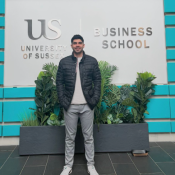
My primary motivation for pursuing further studies was to complement my background as an Industrial Engineer with specialized training in energy, climate change, and sustainability. Up to that point, my professional experience had been focused mainly on the technical aspects of the energy sector and on project management. However, I became increasingly interested in understanding the forces that shape the energy industry beyond engineering itself, including public policy, regulatory frameworks, investment mechanisms, environmental challenges, and the strategies that drive the transition toward cleaner and more resilient energy systems. Based on my professional experience, I had come to recognize that technical expertise alone is not sufficient; professionals must also be prepared to anticipate and adapt to external and regulatory changes that can significantly influence the sector.
After conducting extensive research and speaking with professionals from both the renewable energy industry and other related fields, I concluded that the time had come to complement my professional experience with an academic program that would not only strengthen my knowledge but also contribute to my personal growth. This realization led me to pursue a Master's degree. However, that decision raised a fundamental question: why study in the United Kingdom rather than continue my education in Mexico?
For me, the answer was never based on the belief that one country offers a better education than the other. Mexico is home to highly respected universities, outstanding professionals, and tremendous potential for the continued development of renewable energy, energy infrastructure, and strategic projects that support the energy transition. Rather, my decision was driven by the opportunity to complement my existing background with a more global perspective.
The United Kingdom represented a particularly attractive destination because of its role as a global leader in climate policy and energy transition. According to the International Energy Agency (IEA), the country has been recognized for its leadership in emissions reduction, renewable energy deployment, particularly offshore wind, and the implementation of innovative policies aimed at achieving long-term decarbonization goals. The UK was also among the first nations to legally establish a net-zero emissions target and to develop institutional mechanisms for monitoring progress toward those commitments. Furthermore, as one of the world's leading financial centers, it hosts many major banks and investment funds that play a critical role in financing sustainable development. As a result, studying in the United Kingdom offered the opportunity to learn in an environment where the energy transition is not only an academic subject but also an active component of the country's public, economic, and regulatory agenda. I believed that this experience would provide a valuable complement to my technical expertise and help me understand how the policies and institutions that enable energy system transformation are designed and implemented.
Beyond the academic and professional considerations, there were also important personal motivations. Studying abroad meant improving my English in both professional and everyday settings, interacting with people from diverse cultural backgrounds, strengthening my adaptability, and learning new ways of working and collaborating. I was fully aware that this experience would require me to step outside my comfort zone, adapt to a different educational system, and face significant personal and academic challenges. However, I also recognized that those challenges represented a valuable opportunity for both professional and personal growth.
Looking back, my decision was the result of a combination of academic, professional, and personal factors. I was seeking an education that would broaden my perspective as an engineer and energy professional, while also providing an international experience that would deepen my understanding of the global challenges associated with climate change and sustainability.
I believe that this objective was fully achieved. Not only did I earn a specialization in Energy and Climate Policy, but I also developed a much broader understanding of the energy transition as a multidimensional process that requires the integration of technical expertise, public policy, regulation, financing, environmental sustainability, and collaboration among governments, businesses, academic institutions, and civil society. In addition, I gained an international perspective that has enriched my understanding of contemporary energy challenges and the diverse opportunities available to contribute to their solutions from different professional contexts.
My Academic Experience
My academic journey in the United Kingdom began with a very clear objective: to complement my background as an Industrial Engineer with a broader understanding of energy, climate change, and sustainability. Studying the MSc in Energy and Climate Policy at the University of Sussex allowed me to approach these topics from a perspective that differed significantly from the one I had developed throughout my professional career. Up to that point, much of my experience had been centered on engineering and energy projects. However, the programme helped me understand that the energy transition is not driven by technology alone. It also requires effective public policy, strategic planning, sound regulation, investment, collaboration among multiple stakeholders, and, above all, a long-term vision.
The combination of my professional experience and academic training fundamentally changed the way I viewed the energy sector. I began to evaluate projects not only from a technical execution standpoint but also through the lens of their environmental, economic, and social impacts. This shift in perspective was particularly valuable because it helped me recognize that every energy project is influenced by a complex set of decisions and factors that extend far beyond engineering.
One of the aspects I valued most about studying in the United Kingdom was the international nature of the academic environment. Sharing classes, group projects, and discussions with students from diverse countries meant being constantly exposed to new perspectives. The same issue related to energy or climate change could be interpreted in entirely different ways depending on a person's country, professional background, or cultural context. This experience helped me develop a much more open mindset and taught me that there is rarely only one way to address a complex challenge.
I also had to adapt to a different educational approach. The academic system placed a much greater emphasis on independent research, critical thinking, and time management, which was initially unfamiliar to me because my previous academic experience in Mexico had been structured differently. At the same time, I was living independently and had to learn how to manage not only my studies but also my daily life: meeting deadlines, completing assignments, grocery shopping, fulfilling personal responsibilities, and still finding time to meet new people and enjoy the experience of living abroad.
At first, adapting to this style of learning was challenging. The experience was not simply about acquiring knowledge; it required understanding different viewpoints, questioning assumptions, and developing my own conclusions. All of this took place while operating in a language that was not my mother tongue. However, this challenge ultimately became one of the most rewarding aspects of my time in the UK, contributing significantly to both my personal and professional development.
I learned to place greater confidence in my own knowledge and in my ability to communicate ideas effectively in English. I also developed stronger discipline in managing my time, prioritizing responsibilities, and taking ownership of my work. These are skills that I have since applied directly in my professional career, particularly in projects involving multiple stakeholders, competing priorities, and demanding deadlines.
Another highly valuable aspect of the experience was learning from my fellow students. Working with individuals from different nationalities taught me that international teams contribute far more than technical expertise alone. Each person brings unique experiences, cultural perspectives, and approaches to problem-solving. In this environment, I had the opportunity to strengthen skills such as leadership, problem-solving, and, most importantly, the ability to find common ground and communicate effectively with people whose perspectives could be very different from my own.
One of the most important lessons I took away from this experience was learning to listen more carefully before making decisions. I came to appreciate the importance of considering different viewpoints and presenting ideas in a way that can be understood by people with diverse backgrounds and ways of thinking. I believe this is especially important in the energy sector, where projects are typically developed by multidisciplinary teams and involve a wide range of stakeholders.
In addition, studying in the United Kingdom allowed me to experience an environment where the energy transition and climate change are integral parts of academic, business, and policy discussions. I also had the opportunity to meet people with a wide variety of interests and professional aspirations. Some of my classmates were pursuing careers directly related to energy and sustainability, while others were working in entirely different fields. Several friends and colleagues later went on to work for international organizations and companies across Europe, and I had the opportunity to visit them and learn firsthand about their professional experiences. These encounters taught me an important lesson: we do not need to work in exactly the same field to learn from one another. In many cases, exposure to different disciplines and ways of thinking can lead to a deeper understanding of our own professional area.
Overall, this experience reinforced my commitment to continuing my professional development within the energy sector, particularly in renewable energy and energy infrastructure projects. At the same time, my academic experience taught me that engineering and energy cannot be examined in isolation. Energy projects must also account for environmental, regulatory, social, economic, and political considerations. This broader perspective has remained highly relevant throughout my professional career and continues to influence the way I understand and manage projects today.
For me, studying in the United Kingdom was far more than earning a postgraduate degree. It was a transformative experience that changed the way I think, work, and interact with people from different backgrounds. Ultimately, it became an invaluable complement to the professional experience I had already developed within the energy sector.
My Personal and Cultural Life
While my academic experience was a fundamental part of my time in the United Kingdom, my personal and cultural experience was probably what transformed my perspective on the world the most. Simply arriving in a new country involves much more than changing universities or cities. It means relearning many of the things we normally take for granted, such as how public transportation works, how people interact with one another, local customs, and even the subtle social norms that shape everyday life.
At first, everything felt unfamiliar. However, as the months passed, what initially seemed foreign gradually became part of my daily routine. Little by little, I began building a new life, and a significant part of that process was shaped by the people I met during my time there. One of the most enriching aspects of living and studying in the United Kingdom was the opportunity to interact with people from different nationalities, cultures, and religions. The university was a truly international environment, where it was common to share classes, projects, and conversations with students from every continent. Interestingly, some of my closest friends came from Somalia, India, and Indonesia. Despite our very different backgrounds, we developed strong and meaningful friendships.
All three were Muslim, and through them I gained a deeper understanding of cultural and religious traditions that I had previously known only at a superficial level. For example, I learned about the importance of prayer in their daily lives and how they organized many of their activities around prayer times. I also had the opportunity to spend time with them during Ramadan, allowing me to better appreciate the meaning of this period of reflection, discipline, and faith. In addition, I was fortunate to be invited to join some of the celebrations that mark the end of the fasting period. Beyond religious differences, what impressed me most was their strong sense of community and hospitality. We often gathered for dinners where each person prepared traditional dishes from their home country, creating a rich cultural exchange through food and friendship.
I also developed valuable friendships with people from other parts of the world, including Colombia, Austria, and England. Each of these relationships exposed me to different perspectives on topics as universal as family, work, education, and the way societies define success and quality of life. As a Mexican, I often discovered unexpected similarities. For example, my Colombian friend and I shared similar social dynamics, a comparable sense of humor, and a warm approach to personal relationships. In contrast, my friends from Austria and the United Kingdom came from cultures that tended to place a stronger emphasis on planning, personal independence, and respect for individual space. Neither approach was better nor worse; they were simply different ways of understanding life. Learning to appreciate and respect those differences became one of the most valuable lessons of my international experience.
During one stage of my studies, I shared accommodation with four local students. Initially, this was challenging because they were younger than me, and we had different habits, interests, and life experiences. It took time to adapt and find common ground, but as we got to know one another, we built a positive living environment based on mutual respect and coexistence. This experience allowed me to gain a deeper understanding of British culture beyond the classroom and gave me the opportunity to participate in the everyday lives of local students.
Another important lesson I learned was that building a social life from scratch requires initiative and effort. When you move to a new country, the family and friends who were once part of your daily life are suddenly far away. There are moments of homesickness and uncertainty, but there are also opportunities to create meaningful new connections. I learned to accept invitations, participate in activities, start conversations, and maintain an open attitude toward people whose life experiences were very different from my own. Of course, not everything was easy. I also faced several challenges, particularly related to finding accommodation and relocating from Brighton to London to pursue professional opportunities. One of the biggest challenges was finding a place that felt like home, fit within my budget, and allowed me to live with people with whom I felt comfortable. During my time in the UK, I moved house several times, and each move represented a new process of adaptation. New housemates, new routines, and new environments constantly pushed me outside my comfort zone. Over time, these experiences strengthened both my independence and my adaptability.
Outside of my studies and work, I tried to make the most of the opportunity to live in the United Kingdom. I enjoyed exploring London, visiting different cities, discovering new restaurants, attending cultural events, and spending time with friends from around the world. Many of the memories I value most are not necessarily major events, but rather simple moments shared with people who became an important part of my life.
Looking back, I believe this experience had a profound impact on my way of thinking. It allowed me to develop a more open mindset, learn how to live and collaborate with people from different cultural backgrounds, and understand that differences are not barriers but opportunities for learning. When I think about my life in the United Kingdom, I do not think only about my studies or the places I visited. I think about the friendships I built, the conversations that broadened my perspective, and the experiences that taught me it is possible to feel at home even when you are far from the place where you were born.
Ultimately, one of the most valuable lessons I learned is that cultural diversity is not something that can be fully understood through books; it is something that is experienced through people. It was precisely these friendships from Somalia, India, Indonesia, Colombia, Austria, and the United Kingdom that made my international experience far more meaningful, enriching, and transformative.
Work and the Pursuit of Professional Opportunities
One of the most important aspects of my experience in the United Kingdom was learning how to rebuild my professional career in a different country. When I moved to London, I was determined to continue developing my career within the energy sector and to build upon the experience I had already gained as an engineer and Project Manager. At the same time, I understood that arriving in a new country meant beginning a new adaptation process and that opportunities would not necessarily come immediately.
While searching for roles related to my professional background, I initially worked in bars and later had the opportunity to work for Levi's. Although these jobs were not directly related to my career, they were extremely valuable because they allowed me to remain active, generate income, and, most importantly, continue adapting to life in London. Looking back, I remember many occasions when I would finish a work shift, return home, and instead of resting, spend hours searching for vacancies, submitting applications, improving my CV, and preparing for interviews. In many ways, the job search became a second full-time job.
Over time, that perseverance began to pay off. I was given the opportunity to work at the Embassy of Mexico in the United Kingdom, where I gained experience in an institutional and international environment while supporting activities related to the Ambassador's office. This role was particularly valuable because it exposed me to another dimension of the British labor market and allowed me to work in a professional multicultural setting.
Subsequently, I joined the Environment Agency as a Project Manager working on projects related to Carbon Capture, Utilisation and Storage (CCUS). In this role, I became much more involved in the regulatory, planning, and public policy dimensions of the energy transition. My work included topics such as permitting, regulation, risk management, and project development. However, my position at the Environment Agency was offered as a fixed-term contract, and when the contract ended, I returned to Levi's while continuing the search for my next professional opportunity.
Returning to Levi's was something I had never imagined I would need to do. However, thanks to the positive relationships I had built with colleagues and managers, as well as my previous performance, I was welcomed back. This experience taught me an important lesson: you never know when a professional relationship or past experience may open a new door. At the same time, I once again had to balance shift work with an intensive job search. Many days involved working long hours and then returning home to send applications, prepare for interviews, research companies, and continue pursuing opportunities within the energy sector.
Throughout this entire period, I held a Graduate Visa, which enabled me to work and continue building my professional career in the United Kingdom while seeking a long-term opportunity. Nevertheless, I was aware that if I wanted to establish my future in the UK, I would eventually need to secure a position with an employer capable of offering visa sponsorship.
Finally, after submitting countless applications, attending numerous interviews, and participating in several unsuccessful recruitment processes, I was offered the opportunity to join Vattenfall as an Associate Project Manager in Heat Networks. This was a particularly significant milestone because it allowed me to fully return to the energy sector and once again apply my experience as a Project Manager.
At Vattenfall, I worked on district heating projects, participating in various stages of project development and delivery. My responsibilities included engineering coordination, managing interfaces with designers, EPC contractors, DNOs, ICPs, and IDNOs, as well as project planning, risk management, quality assurance, Health, Safety and Environment (HSE), Construction Design and Management (CDM) compliance, and coordinating activities required to progress projects through construction, commissioning, and handover.
This opportunity represented more than simply returning to my professional field. Vattenfall also enabled me to take the next step in my career within the United Kingdom. For the first time, I felt that I had found an organization that truly valued my experience and was willing to support my long-term professional development in the country.
Looking back, I believe this entire journey has been one of the most valuable learning experiences of my life. My professional path in the United Kingdom was far from linear. I moved from working in bars, to Levi's, then to the Embassy of Mexico, the Environment Agency, back to Levi's, and eventually to Vattenfall within the energy sector. While these roles were very different from one another, each one contributed something meaningful to my development. I learned how to adapt, work with people from diverse backgrounds, improve my communication skills in English, remain patient, and, most importantly, understand that working outside my profession for a period of time did not represent failure.
For me, the most important lesson was realizing that building an international career requires patience, flexibility, and perseverance. We cannot always control how long it will take for the next opportunity to arrive, but we can control how we use that time to prepare, learn, improve ourselves, and continue moving forward.
What Lessons Have I Taken Away?
After living through this experience, I came to realize that the most valuable lessons I learned were not only professional in nature. Equally important were the ways in which I learned to adapt, become more independent, and embrace change. Living in a new country taught me the value of resilience, perseverance, and the importance of continuing to move forward even when circumstances are challenging.
What I Wish I Had Known Before Arriving
If I could go back to the moment just before arriving in the United Kingdom, there are three things I would tell my younger self.
You Do Not Need to Have Everything Figured Out Before You Arrive
Before beginning an international experience, it is easy to believe that everything must be perfectly planned. We want to know where we will live, where we will work, how long we will stay, who we will meet, and what our next professional step will be. However, over time, I learned that many of these answers cannot be known in advance. Some of them only emerge while we are actually living the experience.
I wish I had understood from the beginning that it was completely normal for some of my plans to change. The place I initially imagined living in might not be my permanent home. The job I was searching for might take longer to find than expected. Even my professional goals could evolve as I met new people, organizations, and opportunities, and that is perfectly acceptable.
I also wish I had known that finding a job directly related to one's profession can take time, even when previous professional experience is already in place.
When I arrived in London, my reality was very different from what I had envisioned. I worked in bars and later at Levi's, while spending my evenings searching for professional opportunities, improving my CV, learning more about the UK job market, and preparing myself to return to my chosen field. At the time, it may have seemed as though I was moving away from my professional career. Looking back, I now understand the opposite was true. Those experiences helped me develop skills that are valuable in any profession: communication, customer service, teamwork, accountability, problem-solving, and, above all, adaptability.
Later, I had the opportunity to work at the Embassy of Mexico, and eventually I was able to continue developing my career within the energy sector. Looking back, I understand that my path was not linear, but every stage served a purpose.
For that reason, I would encourage anyone moving to the United Kingdom to arrive with a plan, but also with flexibility. It is important to prepare a strong CV, seek guidance from professors, mentors, and friends, research the job market, build professional networks, and understand the requirements of the country. However, it is equally important to accept that the next step may not be exactly what you originally imagined.
Comparing Yourself to Others Can Be Counterproductive
When we arrive in a new country, it is very easy to look at people who seem to have everything figured out: a good job, a comfortable home, a strong circle of friends, or a stable professional career. However, every person starts from a different position. Some people will find employment quickly, while others may require more time. Some will follow a straightforward professional path, while others will need to start over, change industries, or pursue opportunities they never originally considered.
The reality is that an international experience does not have to look the same for everyone. Each journey is unique, and comparing ourselves to others often prevents us from appreciating our own progress.
Enjoy the Journey More
When we are focused on studying, working, searching for jobs, completing administrative processes, and adapting to a new environment, it is easy to forget to pause and appreciate where we are. Time passes quickly.
For that reason, while it is important to think about future goals, it is equally important to enjoy the small moments: meeting new people, exploring the city, traveling whenever possible, participating in activities, talking with classmates, and simply appreciating the experience of living in another country. Eventually, I realized that an international experience is not only about what we achieve professionally. It is also about the person we become throughout the journey. Finally, if I could give my younger self one last piece of advice, it would be this: Arrive prepared, but do not try to control every detail of your experience and set clear goals, but allow the journey to surprise you, because some of the experiences you will remember most are likely to be the ones you never planned for.
My Advice for Future Students
To anyone considering studying in the United Kingdom, I would say that this experience is far more than an academic opportunity. It is an opportunity not only to learn, but also to discover more about yourself. The journey will include moments when everything seems to fall into place, as well as moments when patience and perseverance are required. Plans may change, and some opportunities may take longer than expected to materialize. Based on my own experience, I would offer the
- Gerardo
