




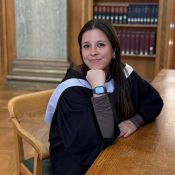
The Sign I Was Waiting For
A Dream That Never Disappeared
The idea of studying outside Mexico did not appear overnight. From the moment I began my undergraduate degree, I dreamed of having an international experience. Yet for many years there always seemed to be a reason to postpone it: finances, personal circumstances, emotionally difficult periods, or the insecurity of wondering whether I was capable enough to achieve it.
The dream never disappeared. After more than ten years of professional experience, I found myself at a different stage of life. I had been through significant changes, managed to save money and, above all, reconnected with myself. I realised I no longer wanted to wait for the perfect moment: I needed to turn that wish into a real plan.
I wanted to grow professionally, but I was also looking for something deeply personal. I wanted to prove that I could live on my own, support myself and start a life in another country through my own work, achievements and effort. More than earning a degree, I wanted to transform my life completely.
Why I Chose the UK
I explored programmes across Europe, but the UK had always been my first choice. I was attracted by the reputation of its universities, its academic rigour and the opportunity to study in an international environment.
There was also a more personal connection: I have always loved the British accent, I was interested in the culture, and much of the music that has accompanied me throughout my life comes from British bands. I knew that studying there would be a major challenge, but that was precisely why I felt it could transform me.
From Dream to Application
I discovered Across the Pond while researching how to study in the UK. I read testimonials from other students, looked through its social media channels and later encountered the organisation at education fairs.
When I contacted them, I had many doubts. I worried that I would not find programmes suited to me, that the time since my undergraduate degree might count against me, or that difficulties would arise and make it impossible to continue.
My advisor supported me throughout the process with warmth, patience and encouragement. She helped me explore programmes, understand the documentation and prepare my applications. I also received information about universities and cities, important reminders, invitations to webinars and opportunities to speak with university representatives and former students.
That support made a process that initially felt enormous begin to feel organised and achievable. When I received my offer from the University of Leeds, I was overjoyed. Knowing that a highly regarded university valued my experience and believed that I met its requirements gave me the confidence I needed to keep going.
The Email That Changed Everything
During the process, I also applied for several scholarships. I did so with great excitement, although deep down I thought they would be very difficult to obtain because I had never received an opportunity like that before.
One morning changed everything. An email had arrived during the night with "Tetley and Lupton Scholarship" in the subject line. I was so nervous that, for a few moments, I did not want to open it.
When I finally read that I had been selected, I could not believe it. I began to cry and called my mum to share the news. We cried and hugged as I tried to take in that the scholarship would give me tremendous peace of mind and financial stability while I was abroad.
I had promised myself that if I received it, I would take it as the definitive sign that I should go, and that is exactly what happened. From that moment, I began organising my accommodation, visa and all the details required to begin this new stage.
Later, I learned that I had also received a SECIHTI scholarship. I cried with happiness again and realised that I was achieving a goal I had considered almost impossible for so long.
My Moment Finally Arrived
A few months before travelling, I went through a major personal loss and, for a moment, considered abandoning the project. Even so, I decided to continue and give myself the opportunity to experience what I had worked towards for so long.
Arriving in the UK meant more than beginning a master's degree. It also meant learning to live independently, handle everything in another language and trust myself much more.
If I could speak to the version of myself who began this process , I would tell her to try without always imagining the worst possible outcome. I would remind her that dreams can come true and that some opportunities may not arrive when we expect them, but when we are finally ready to live them.
- Karla
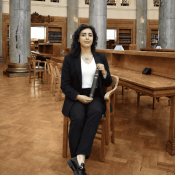
Becoming a Student Again: A New Beginning, but Not from Zero
Before coming to the UK, I had around eight years of professional experience in engineering and project management. My last job before starting this new adventure was at Unilever, in the ice cream business, where I worked in the engineering department as a Project Coordinator.
After several years of working, I decided it was time to do something different. I wanted to update the knowledge and skills I had developed during university and throughout my professional career. However, I also had a very personal motivation: I wanted to experience living in Europe, discover a different culture and see what it would be like to build a new life in another country.
I chose the UK and the University of Leeds because I found a programme that combined exactly the two areas I was looking for: Environmental Engineering and Project Management. However, making this decision also meant leaving behind, at least for a while, the professional life I already knew and becoming a student again.
Leaving Mexico made me feel a little sad, but when I arrived in Leeds, this feeling quickly changed into excitement. Everything was new: the city, the university, the language, the people and even the small things in everyday life. I was starting a completely different stage of my life, and I was doing it in the UK.
Going back to university after so many years of working was one of my first challenges. I had to get used to attending classes, studying, completing assignments and preparing for exams again. I also had to adapt to university life and to studying with younger people and classmates with different experiences and cultural backgrounds.
There were moments when it was not easy. I especially remember December. The days were getting shorter, the weather was becoming colder and, at the same time, I had several assignments and exams to prepare for. It was one of those moments when I asked myself if everything was becoming too much.
Then, one of the most important moments of my year arrived. I received my results from the first term and realised that I had done very well. For me, this was proof that I was able to adapt to academic life again after being away from university for many years. At the same time, my life in Leeds was also changing. I had made new friends, started travelling and was slowly building a life in a place that had been completely unknown to me only a few months before.
Now that I am finishing this experience, I can see how much I have changed. Professionally, I have significantly improved my English, developed new technical skills, become more disciplined and learned how to study and work in a different environment.
However, some of the most important changes happened outside the university. I learned how to live independently in another country, adapt to a different culture, connect with people from different backgrounds and build new friendships far from home.
Becoming a student again after eight years of professional experience taught me something that I want to remember after finishing my Master's: starting again does not mean starting from zero. I came to the UK with everything I had learned during my career, but this experience showed me how much more I could still learn, both professionally and personally.
- Laura Edith

My experience studying in a PhD in UK
Living in the UK was an experience that was possible thanks to the University dedicated teams for receiving worldwide students, for example the Leeds University Union. I was embarking on a STEM program that had lots of additional requirements, from getting an ATAS because my knowledge of sciences could require additional validation and also looking for funding that was really competitive with high skilled students, landing with a research group that had a diverse range of interests and projects with different agencies from the European Union.
Thereby, I recommend that you assess if your CV or expertise could really match with a short program or even a Masters, before embarking on a doctoral research that requires full-time commitment, because the UK it is a great place to live, and studying, but choosing a research project that aligns with skills that you need to apply will be the most important challenge that requires not only your engagement but also resources from third parties that put trust on you for the creation of high impact publishable products.
- Marcela Alejandra

My First Days in the UK: Deciding, Arriving, and Thriving
Choosing to move to a different country is not a simple decision; with the cost, the distance, and the process of getting a visa, there are many steps that can make it intimidating. Let me assure you, however, that if coming to the United Kingdom to study is your dream, with the right resources and support you can make it a reality!
Let me first introduce myself. I’m Josephine and I just started my Masters of International Health at the University of Leeds. I had always wanted to study abroad but I never really thought it could happen because of the cost and complexity. I won’t lie, the process was not without its challenges, but with the help of Across the Pond and my family I am now in Leeds and loving every second of it.
Getting here
If you are a non-UK student, you will require a student visa to study in the UK, and no that is not a type of credit card! If I could only give you one piece of advice, it would be to start the application as soon as possible because everything else depends on you receiving it, like booking your flight, confirming your accommodation, and really just planning your adventure! The application is not difficult, it’s just time-consuming because of all the documents you must collect. Your Across the Pond advisor will provide you with updated visa guidance in the late Spring to ensure that the process goes as smoothly as possible.
Arriving
I was so nervous when I stepped off the plane at Heathrow. What if I forgot something? What if customs asked for something that I didn’t bring, what if, what if, what if… It is completely normal to feel anxious, this is a huge move, but let me reassure you, customs is a breeze if you come prepared. I organized all my documents in an accordion folder allowing me easy and quick access to anything I might need, which really came in handy when you have a lot of documents to bring!
Thriving
I arrived in Leeds thinking that I wouldn’t start classes for two weeks because there was an international welcome week followed by freshers (aka frosh) week. However, unbeknownst to me, master’s programs start the very first day! I can’t speak for all programs, but as far as I can tell they do ease you into it, starting off with introductory classes that allowed us to get to know the course and teaching staff. They also made sure that we had enough time to acquaint ourselves with the campus and city, meaning I have been able to attend all sorts of "O-week" events such as open mic nights, barbeques, and art gallery tours. There is seriously something for everyone. I am really looking forward to the freshers’ fair, where over 300 of the school’s clubs and societies set up booths giving students a taste of what they can get involved with.
The highlight of my time so far has got to be my first night going out to the pub with new friends and knowing that this is the start of such an incredible adventure. If I can pass along just one more piece of advice, say yes to everything, especially in the first few weeks. Put yourself out there, challenge yourself to step out of your comfort zone, and jump into this experience head first!
- Josephine
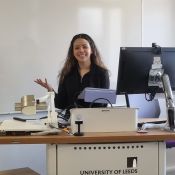
Rich history, academic excellence, and global reputation
Why did you decide to study in the United Kingdom?
The United Kingdom had always attracted me for its rich history, academic excellence, and global reputation. The prospect of pursuing a master’s degree in England seemed highly enriching, both professionally and culturally. In addition, the University of Leeds —the institution I applied to— is renowned for its diversity of people and cultures. I knew that the friendships and professional connections I would find there would provide me with a global outlook and a valuable network.
How was your experience with FIDERH, FUNED, or other support?
To achieve my goal of studying at this university, I turned to different scholarships and funding opportunities such as FIDERH, SECIHTI, and excellence scholarships awarded by the university itself. Each of these sources of support was essential, and the guidance from Across the Pond proved invaluable in helping me identify and secure them.
What did you learn and what advice would you give?
My advice for anyone who shares the goal of pursuing a postgraduate degree in the UK is simple: get informed, stay organised, and take it one step at a time. The opportunities to achieve your goals exist; it is a matter of finding them and daring to pursue them. The process can be competitive, but do not be afraid of rejection or of trying again. Remember that there are people with experience who are willing to guide and support you along the way to help you achieve the best results. By following their advice and ticking off your checklist step by step, you will find yourself living your goal sooner than you think.
- Ana