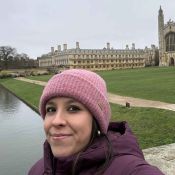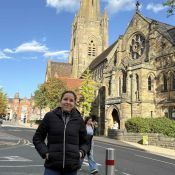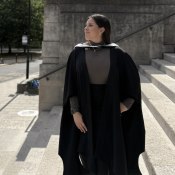





After ten years building a career across global tech, lifestyle media, and my own marketing agency, studying in the UK wasn't a whim, it was the next deliberate step. I'd spent years telling other brands' stories: first at a global technology company, then across established lifestyle media titles, and later running my own boutique agency for clients in retail and hospitality. What I didn't have yet was the formal, internationally recognized credential that would let me compete for senior marketing roles at the kind of companies I actually wanted to work for that could expose me to international markets. An MSc in International Marketing Management from Leeds University Business School was exactly that missing piece.
But knowing what I needed and being able to pay for it in pounds, as a Mexican professional without a family fund sitting around, are two very different problems. That's where FIDERH came in. I didn't want to liquidate my savings or put my career transition on hold while I "saved enough", by the time I'd saved enough, the opportunity cost of staying in the same role for another two or three years would have outweighed the loan itself. A structured credit meant I could enroll now, on my own terms, and repay it once I was already earning the return on that investment.
For me, everything lined up perfectly, and a big part of that was having Across the Pond guide me through the process and tell me exactly what documentation I needed. That support helped me tremendously in structuring my application, making sure I had everything in place to apply on time and move through each stage that followed: acceptance, financing, the visa, and all the many questions that come to mind when moving abroad.
If I'm honest, I had real doubts before I signed anything. Was I "too senior" to go back to being a student? Was I about to take on debt for a degree that might not move the needle the way I hoped? There's also a quieter fear that doesn't get talked about enough: leaving the stability of a steady job at a global company to start again, from zero, in a new country. What got me past it was reframing the loan not as a risk but as the most direct route to the career I actually wanted, and trusting that ten years of real experience made me a stronger MSc candidate, not a late one.
Without that credit, this degree simply doesn't happen on this timeline. It's what turned "I should study abroad eventually" into an acceptance letter, a flight to Leeds, and as of this year, a completed dissertation. It also meant I could actually be present for the experience: taking on a leadership role with the Women in Leadership Society, becoming Student Representative for my programme, and building my own network, instead of white-knuckling every tuition payment.
If you're a Mexican professional weighing whether a credit like this is "worth it" to study in the UK, for me, it wasn't the leap of faith it felt like at the start. It was the bridge between where I was and where I actually wanted to go.
- Abish
One of the most exciting advantages of studying in the UK was discovering how close Europe could feel. From Mexico, visiting cities such as Paris had seemed like a journey requiring considerable planning, time and a special occasion. While living in Leeds, it could suddenly become a weekend plan.
One of my best friends travelled from Mexico and was in Paris, so we decided to meet there. Neither of us had visited the city before, and being able to discover it together made the experience even more special.
After spending several months away from home, being reunited with a Mexican friend was already exciting. Doing so in one of the world's most iconic cities turned that weekend into a truly magical memory.
During those days, we walked, talked, discovered places we had previously seen only in photographs and enjoyed the excitement of experiencing the city for the first time together.
We did not need a perfect itinerary. Part of the magic was walking through the streets, admiring the architecture and sharing our first impressions. Everything was new to both of us, so every corner became part of a shared experience.
Paris had always seemed like a distant and almost cinematic city to me. Being there made me realise how much my life had changed since I decided to study in the UK. Months earlier, I had been organising applications, scholarships and documents from Mexico; now I could meet one of my best friends on the other side of the world and spend a weekend together in Paris.
What surprised me most was how easily I could make the trip and return to Leeds to continue with my normal classes and activities the following week. I did not have to interrupt my studies or plan a long holiday to have an international experience.
Leeds has its own airport, from which it was possible to travel to different destinations during my time there. I also took a weekend trip to Dublin with my partner, which confirmed that studying in this city could open many possibilities for discovering other places.
Leeds also has a very convenient rail connection to Manchester, where there is a larger international airport. Travelling by train was straightforward and, in my experience, also comfortable when I had luggage with me.
Having those alternatives allowed me to find different routes depending on the destination and organise short trips around my academic responsibilities.
Studying in the UK did not only mean learning inside the classroom. It also allowed me to understand the world better by visiting it, hearing other languages and discovering cultures and cities I had imagined from afar for so long.
Of course, travelling during a master's degree requires organisation. I always needed to check my readings, assignments and deadlines before making plans. However, with good time management, it was possible to make the most of a weekend and return to my university routine.
I left Leeds to spend a weekend in Paris and returned to my classes with photographs, memories and a new story I had never imagined I could experience so spontaneously.
- Karla
Before travelling, I researched the university, Leeds and life in the UK extensively. I arrived well informed, but no amount of research can fully explain what it will feel like to live alone, study in another language or be far from your family.
I was especially worried about loneliness, making friends, speaking to local people and adapting to a new academic system. I later discovered that none of those fears was as serious as I had imagined. The first few times could be nerve-racking, but gradually everything began to feel more natural.
What was more difficult was being away from my family, but video calls, photographs and letters helped me greatly, and it is always good to bring some of that love with you.
My recommendation for the first few days is to focus on creating a practical foundation. It is useful to arrange things such as a bank account, phone, transport and registration with a GP near your accommodation or university.
It is also helpful to learn the route between your accommodation and campus, locate the main shops and buy basic food for the first few days. You do not need to solve your entire life immediately; it is enough to prepare the essentials while you begin familiarising yourself with the city.
In my case, I wish I had researched how regular medicines worked in more detail. Before travelling, I would have checked more carefully which medicines were available in the UK, how they could be obtained and what documentation I might need. I would recommend that anyone receiving medical treatment discuss their individual situation with their healthcare professionals and consult official sources before travelling.
Choosing accommodation without having visited the city can be complicated. Location was a priority for me because I wanted to live close to the university and be able to get around easily.
I also recommend reading many reviews and looking at residents' overall experience. There may always be an occasional negative comment, but the important thing is to determine whether the overall assessment is positive. The speed and clarity with which the accommodation team answers emails before you book can also indicate the kind of service it provides.
I chose a private studio within student accommodation because I valued my independence and wanted a space of my own. It was the right decision for me, but it does not have to be right for everyone. Each student should consider their budget, personality and lifestyle.
Coming from Mexico City, the British climate represented a significant change. My advice would be to bring one good coat and a few useful items, but not fill your suitcase with winter clothing.
In my experience, many clothes purchased in the UK were designed for the local climate and proved more suitable. Once you are there, it is easier to understand what kind of coat, footwear or accessories you actually need.
I would bring almost everything I packed again, although I would leave behind several clothes and pairs of shoes that I used very little. We always need fewer things than we imagine, especially when we have to carry our entire life in a suitcase.
Living alone taught me to be more productive, manage my time better and understand that solitude is not always something negative.
The academic pace also requires considerable organisation. It is possible to travel, socialise and enjoy the UK, but every student must take responsibility for their readings and deadlines. The university offers advice, workshops, resources and support sessions; there is nothing wrong with asking for help.
If I could change one thing, I would have attended more social events from the beginning. Sometimes I felt shy about going alone or worried that I would not know anyone. Later, I realised that many of the people arriving at those events felt exactly the same.
I would tell someone about to board the plane that feeling nervous is completely normal. There will be difficult moments, days of homesickness and situations they will need to resolve without knowing exactly how. However, they will also meet new people, discover new places, learn an enormous amount and develop a more independent version of themselves.
Not everything will be perfect, but that is also part of the experience. The important thing is to take the chance.
When the time comes to look back, they will be able to remember everything they experienced instead of forever wondering, "What if I had gone?
- Karla
Before moving to the UK, I worried that I would feel lonely and not know how to make friends. I was also nervous about speaking to local people or attending events alone when I did not know anyone.
At first, I had to push myself beyond my comfort zone. I met some of my closest friends through Latin American groups and activities organised by the university. Little by little, those first encounters became a community.
I spent time with people from different parts of Latin America, the UK, China, Korea, Indonesia and beyond. Everyone had a story to tell and a different way of seeing the world. Living alongside them taught me that our customs may be very different, but respect, empathy and the desire to connect are universal.
Being away strengthened my Mexican identity enormously. Sharing my culture with other people made me value even more the traditions, food, music and expressions I had brought with me.
My friends, other Latin American students and I organised gatherings, prepared Mexican food and celebrated special occasions. On one occasion, we also created a Day of the Dead altar at the university. It was beautiful to build it together and share the meaning of this tradition with people from other countries.
Another of my favourite memories was watching Mexico's opening match at the World Cup. We gathered in a bar in Leeds city centre that had installed a giant screen. All the Mexicans wore our national shirts, we made an enormous flag and filled the venue with noise, excitement and pride.
The most entertaining part was seeing local people become excited with us. For a few hours, a space in central Leeds felt completely Mexican. We were a long way from home, but we celebrated together as though no distance existed.
Cultural differences also created amusing moments. With my British partner, for example, one of the most frequent involved time. I would use the classic Mexican word "ahorita", while he continued trying to understand why it does not always mean exactly "right now". Mexican unpunctuality could also be a small mystery to him.
Those differences became opportunities to get to know one another and learn to interpret the ways we communicate. Living in an international environment does not mean leaving your own culture behind, but learning to explain it, share it and allow it to be transformed through contact with other people.
Homesickness was one of the most difficult parts. I missed my family, and there were moments when the distance felt especially strong. Video calls helped me stay connected, while keeping photographs and letters from my loved ones with me was comforting.
My friends and partner also became a very important support network. Thanks to them, I understood that arriving alone did not mean remaining alone.
Living outside Mexico strengthened my identity, but also transformed it. I learned that it is possible to preserve a deep connection with where we come from while building relationships and experiences in another country.
I would tell anyone afraid of arriving without knowing anyone to attend that first event, begin a conversation or accept an invitation. Not every friendship appears immediately, but communities are built little by little.
Studying in the UK allowed me to discover many cultures, but it also helped me rediscover my own. I crossed the ocean with a suitcase, many nerves and great expectations; with time, I discovered that Mexico had travelled with me too.
- Karla
Before arriving in the UK, I did not know Leeds. Once I settled in, one of the first things that surprised me was how kind people were. In my experience, it is a welcoming, lively and comfortable city in which to live as a student.
I could manage much of my daily life on foot. The university, city centre and my accommodation were all within a manageable distance, which made it easier to learn the streets little by little and feel more independent.
The weather did require some adjustment. Coming from Mexico City, the cold and the need to wear several layers could be challenging. However, I have always preferred cooler weather, and over time I learned how to prepare for and enjoy it.
Leeds also has a lively social scene. In my free time, I could attend events, concerts or gatherings, as well as spend time with friends and my partner's family. The city has everything needed to enjoy it, but one of its greatest advantages is that it also provides an excellent starting point for exploring other places.
Travelling by train from Leeds allowed me to discover different parts of Yorkshire. I visited cities and towns including York, Otley, Ilkley, Halifax and Knaresborough, as well as places such as Mother Shipton's Cave.
Knaresborough became one of my favourite recommendations for a day away from Leeds. You can walk, enjoy the scenery, discover historic places and row on the river. For me, a perfect plan was to take a boat out, eat an ice cream and return peacefully to Leeds after spending the day outdoors.
These trips showed me a part of the UK very different from the familiar images of London. Yorkshire has its own landscapes, towns, architecture and stories. Living in Leeds allowed me to experience that diversity without having to organise journeys that were too complicated or costly.
Leeds's excellent connections also allowed me to visit other UK destinations. During my time as a student, I travelled to Manchester, Liverpool, London, Edinburgh, Cambridge, Oxford and Nottingham, among other places.
Every trip was special for a different reason. I made some with friends, others with my partner and others with my family when they visited. Two of my most meaningful memories were travelling to Liverpool and Edinburgh with my mum and sister. After spending so many months away from them, being able to show them part of the life I had built in the UK was very emotional.
Travelling also helped me understand the country better. The UK is not a single experience: every city has its own pace, accent, architecture and identity. Discovering those contrasts complemented everything I was learning at university.
Before arriving, I worried that living outside London might limit my opportunities to travel. In reality, I discovered that Leeds is very well connected and that I could organise trips to many places from there.
I also learned that travelling during a master's degree requires balance. The UK academic system offers some flexibility, but every student is responsible for organising their readings, essays and deadlines. It was possible to go out and explore as long as I planned my time and fulfilled my responsibilities.
My advice to future students would be not to limit their experience to the campus or the most famous destinations. It is worth discovering nearby towns, walking through Yorkshire and using weekends to explore different places.
Studying in Leeds gave me an international education inside the classroom, but travelling from the city broadened my perspective even further. Leeds was not only my destination: it became the starting point for discovering many different versions of the UK.
- Karla
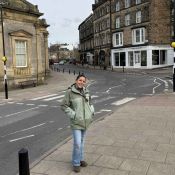
I completed my undergraduate degree and built a professional career in communication, marketing and content. Although studying outside Mexico had long been a dream, for years I worried that too much time had passed for me to return to university.
One of my greatest fears was being older than my classmates or feeling out of practice. That insecurity contributed to my postponing my plans at other points in my life. I thought perhaps I should have completed a master's degree immediately after graduating and that I had already missed my chance.
When I finally arrived in Leeds, I discovered that postgraduate students had a wide range of ages and backgrounds. Although many classmates were younger, I also met people my age and even older. That helped me understand that there is no single right time to pursue a master's degree.
Everyone had arrived with their own story. Some had come directly from an undergraduate degree; others had worked, changed professions or made important decisions before returning to the classroom. That diversity made our conversations richer.
Returning to education after working for so many years brought challenges, but my professional experience also became a strength.
I felt comfortable giving presentations, expressing my ideas and taking the lead when we worked in teams. I also knew real situations from the professional world that I could connect with the theories and cases we analysed in class.
My younger classmates also contributed different experiences and perspectives. The combination of our backgrounds meant we could all learn from one another. It was not about competing to prove who knew more, but recognising that every journey offered something valuable.
The hardest part was returning to highly academic reading and replacing my working routine with a university one. At work, I was used to different kinds of responsibilities and results. During the master's degree, I had to spend long hours reading, researching and constructing arguments before I could submit an essay.
I also had to learn to manage my time within a very independent system. The flexibility was enjoyable, but it required considerable discipline. I was responsible for deciding when to study, how much time to dedicate to each reading and how to balance my obligations with the rest of my life.
At first, there were moments when I wondered whether I had made the right decision. During my journey to the UK, I thought about my family, everything I was leaving behind and the fact that I did not know anyone. However, that feeling changed quickly once classes began and I started building a new community.
Returning to education allowed me to discover that I was still capable of learning, adapting and facing entirely new challenges. I also confirmed that I am someone who works very hard and that I should not feel guilty for wanting to seek good things for my life.
The experience did not completely change my professional interests, but it broadened my possibilities. I began to consider paths related to diplomacy, culture and international communication more seriously.
I would tell anyone who has spent several years working and thinks it is too late to study in another country not to abandon the idea solely because of age or the time that has passed. Professional experience is not an obstacle: it can become one of your greatest strengths in the classroom.
There will always be people with different backgrounds. What truly matters is arriving with curiosity, a willingness to learn and the courage to begin again. It is never too late to study, grow and fulfil a dream.
- Karla
Before arriving in the UK, I had a good level of English and had met the admission requirements. However, studying the language in Mexico was one thing; using it to complete a master's degree, navigate everyday situations and build an entire life was something very different.
I worried that I would not understand my classes, find the right words to participate or have a sufficient level to write academic texts. I was also nervous about all those small situations for which no textbook can prepare you: opening a bank account, asking for information, explaining a problem, speaking on the phone or understanding someone who spoke quickly with an unfamiliar accent.
Although I had studied English for years, my own insecurities made me doubt myself. When I arrived, I understood that real learning would begin when the language stopped being a subject and became the tool I needed to navigate every day.
During the first few weeks, almost any activity could feel like a small test. I had to ask how to use transport, buy what I needed for my accommodation, arrange services, complete administrative tasks and understand instructions that were sometimes given very quickly.
Opening a bank account, accessing a service, speaking with the reception team at my accommodation or explaining that I needed help with a problem all became challenges. Speaking on the phone could be even more difficult because I could not rely on gestures or facial expressions. At first, I mentally prepared what I wanted to say before making a call.
Healthcare also presented a challenge. Registering with a GP, discussing the medicines I used or explaining a symptom required vocabulary that was not part of my usual conversations. These experiences taught me that knowing English does not mean knowing every word in advance, but being able to explain an idea in another way, ask questions and confirm that you have understood correctly.
Even the simplest activities became opportunities to practise: ordering food, shopping at the supermarket, asking for a chai, checking a route or talking with someone who was helping me. Over time, I stopped preparing every sentence so far in advance and began to respond more naturally.
When I arrived, I discovered that the challenge was not only understanding the British accent I had heard in films or songs. The UK has an enormous variety of regional accents and, within an international university, you also hear the different ways in which students and lecturers from around the world speak.
Training my ear required time, attention and patience with myself. There were conversations I understood immediately and others in which I had to ask politely for something to be repeated. I learned that saying, "Could you repeat that, please?" did not mean my English was poor. Even native speakers can find certain accents difficult to understand.
Spending time with local people and international students helped me enormously. Every conversation taught me new expressions and ways of communicating. Little by little, English stopped feeling like a barrier I had to overcome and became the bridge that allowed me to meet people, form friendships and understand other cultures.
Academic life brought different challenges. I had to read a large amount of advanced material and learn to write essays according to UK conventions. Having good ideas was not enough: I needed to express them clearly, develop arguments and use appropriate academic language.
I also felt nervous about participating in my first classes. Students were expected to debate and share their interpretations in seminars, so remaining silent was not the best way to make the most of them.
Although I was afraid of making mistakes, I decided to take the risk. I began to raise my hand and express my opinions. One strategy that helped was reading in advance and preparing a few notes or comments. I did not need to memorise a speech; having a few written ideas was enough to start talking.
My lecturers and classmates were always respectful. I never felt excluded because I was not a native speaker. On the contrary, the international environment made linguistic differences a natural part of the experience.
Living in English taught me that communication is not about speaking perfectly. It is about listening, asking questions, explaining an idea in different ways and having the courage to continue even when we make mistakes.
Being bilingual also brings a special perspective. Thinking in two languages allows us to recognise that the same idea can be understood in different ways and helps us develop flexibility, empathy and a more open mind.
I would tell anyone with a good level of English who is afraid of studying and living entirely in that language to try. Nobody knows from the first day all the vocabulary they will need, and everyone makes mistakes, including native speakers.
My English did not need to be perfect for me to begin. I simply needed to use it, live it and allow every class, administrative task, conversation and experience to open a new door.
- Karla
Before arriving in the UK, I had worked for more than ten years in communication, marketing and content. Returning to education did not mean starting from zero, but finding new ways to understand everything I had already experienced professionally.
I have always been passionate about corporate communication, but I wanted to explore it from a broader perspective. I was interested in understanding global processes, discovering how other professional environments operate and learning to navigate international spaces more effectively.
I was also looking for a programme connected with my personal interests. I love cultures, languages and travel, so the MA in International Communication allowed me to bring together my professional experience and curiosity about the world.
One of my favourite modules was Media, Culture and Globalisation. In class, we analysed how culture influences numerous social processes, how the media participate in the construction of meaning and how identities are transformed within a globalised world.
These subjects interested me not only academically, but also personally. Studying outside Mexico constantly encouraged me to reflect on my own identity, the ideas I carried with me and the way other people perceived my culture.
One of the assignments I enjoyed most was an essay about my cultural identity. Relating the programme's theories to my own experience made learning feel relevant and close to me. I was not memorising concepts simply to receive a mark; I was using new tools to understand myself better and analyse the world around me.
The diversity of the group enriched these conversations even further. My classmates came from different countries, cultures and language backgrounds, so the same topic could generate completely different perspectives. Listening to those interpretations was one of the most valuable parts of the programme.
The main difference between studying in Mexico and completing a postgraduate degree in the UK was the level of independence. Classes were only the starting point. Afterwards, I had to dedicate many hours to reading, researching, preparing comments and developing my own ideas.
Nobody was constantly reminding me of deadlines or telling me every step to follow. I needed to understand my responsibilities, organise my calendar and begin assignments well in advance. That freedom could be very positive, but it also required discipline.
The greatest challenge was readjusting to academic texts and writing numerous essays in advanced English. At first, I needed a great deal of time to organise my ideas and ensure that I met the expectations of the UK system. By my final assignments, however, researching and developing arguments had begun to flow much more naturally.
The lecturers also played an important role. Our relationship was always respectful and cordial, and we had office hours and email communication for resolving questions. Although learning was independent, that did not mean we were alone.
Participating in class was one of the ways I began to recognise my progress. When I shared my ideas, the lecturers began to remember me and make positive comments about my contributions. Those moments helped me understand that my professional experience had a place in the classroom. I could connect theories with real situations, participate confidently, take the lead and contribute a different perspective.
As I finish the programme, I am taking away much more than academic knowledge. I strengthened my analytical skills, time management, intercultural communication and confidence in expressing my ideas. I also discovered a deeper interest in areas such as diplomacy and cultural communication.
I would recommend this programme to anyone curious about communication, culture and globalisation. It is an especially enriching experience for those who want to question their own perspectives and learn to see the world from many points of view.
- Karla
Before arriving in the UK, one of the things I was most curious about was what my everyday life as a student would really be like. I could imagine the classes, buildings and academic work, but I did not know which small habits would eventually become part of my days.
I lived in a private studio within student accommodation close to the university. I chose that option because, after several years of working, I greatly valued my independence and wanted a space of my own. My savings and the scholarships I received allowed me to do so, although I believe every student should choose accommodation according to their own preferences and circumstances.
Living close to campus made my routine easier. A typical day began with getting ready and walking to the university. Over time, that walk became the transition between my personal space and academic life, while I listened to my music.
One of my favourite stops was The Refectory, where I bought the chai that became part of my routine. It may sound like a small detail, but these everyday rituals were very important as I settled in.
I also became friends with one of the people who worked there. She was always kind, helpful and chatty. Seeing a familiar face and stopping for a few minutes to talk helped the university feel less and less like an unfamiliar place.
After that, I might have one or two classes. In the UK, students are expected to arrive prepared, participate and continue learning outside the classroom. Class time was therefore only one part of my day. Much of the experience took place while I was reading, researching, organising my ideas and preparing essays independently.
Edward Boyle Library became my main study space. It was not necessarily my favourite because of its design, but because of everything it offered in practice. It was very large, had many places to work, long opening hours, and a quiet, peaceful atmosphere that helped me concentrate.
It was also the library closest to my accommodation, so I could use it very easily. I spent countless hours there reading, writing and organising my projects. Over time, I discovered my favourite spots and where I could concentrate best depending on the work I needed to do.
Studying for several hours could be tiring, especially because my programme required me to read a large amount of academic material in English. However, having a comfortable and quiet place made a considerable difference. Edward Boyle eventually became a kind of second home on campus.
One thing I particularly enjoyed about the University of Leeds was being able to change libraries and find different atmospheres. When I wanted a change of routine, I could work in the modern Laidlaw Library, which also had many pleasant study spaces.
The Brotherton Library, inside the iconic Parkinson Building, offered a completely different experience. Its architecture is impressive and the atmosphere can be one of absolute silence. It was perfect when I needed to concentrate deeply, although not always the best option if I wanted to take a break and talk with friends.
Over time, I realised I did not have to choose a single library. I could use different spaces depending on my mood, the type of work I was doing or the people I wanted to study with. Exploring the campus was also a way of creating my own university experience.
Not every day consisted only of classes and reading. After working in the library, I could have lunch with friends, attend an activity or spend time in the Language Zone.
There, I was also the leader of a Spanish course. I organised the presentations, structure, topics and materials for each class, as well as teaching the sessions. The experience allowed me to share my language, meet people from other cultures and feel more confident speaking in front of a group.
In my free time, I also went to the gym, used the swimming pool or attended Zumba classes. On other days, I preferred to walk, attend a university event, spend time with friends, or simply stay in my cosy studio and watch a film. Finding a balance between studying, resting and socialising was essential to settling in.
Studying for a master's degree in the UK requires a great deal of organisation. Nobody is constantly reminding you what to read or when to begin an essay. You can travel, go out with friends and enjoy the city, but you are also responsible for managing your time and completing your academic work.
At first, that level of independence was challenging. Later, I learned to be more productive, understand my own rhythm and appreciate moments of solitude. Living alone did not mean being isolated; it meant having a space of my own from which I could build a routine and then go out and become part of the community.
When I remember my student life in Leeds, I do not think only about the major moments. I also remember the walks to campus, the chai before class, the quiet hours in Edward Boyle, conversations with friends and the satisfaction of finishing a productive day.
It was precisely those small rituals that made a university on the other side of the world stop feeling unfamiliar and begin to become part of my life.
- Karla
Before I began my applications, Leeds was completely unknown to me. I had never visited the UK, and everything I knew about the city came from videos, photographs, social media and information I had found during months of research.
I also applied to other UK universities and, fortunately, was accepted by all of them. Choosing my destination therefore meant comparing not only the programmes, but also the cities, funding opportunities and the way each university had communicated with me. I wanted an institution with a strong reputation, but also a place where I could imagine building a life.
The University of Leeds began to stand out during the application process. I always received clear, friendly and prompt responses. The university followed up on my application and showed a genuine interest in supporting prospective international students. That attention gave me confidence even before I arrived.
I was also drawn to its academic reputation, scholarship opportunities and the qualities of the city. Leeds seemed to offer the balance I wanted: a manageable and comfortable place to live as a student, yet large, lively and interesting enough to provide a true urban experience.
The programme was also very important to me. After more than ten years working in communication, I wanted to broaden my knowledge from an international perspective. The MA in International Communication brought together communication, culture and global processes, three areas that have always fascinated me.
Although I had done extensive research, choosing a university from another country always involves uncertainty. I did not know exactly what the city would be like, whether I would adapt or whether I would feel that I had made the right decision. I could only trust the information I had gathered and what my intuition was telling me.
No matter how many photographs I had seen before travelling, nothing compared with experiencing the campus in person. My first impression was that I had stepped into a film. The buildings, gardens and combination of historic architecture with modern spaces looked just as I had imagined, but being there gave everything a different meaning.
One of my favourite moments took place at my faculty building. I was about to walk into a class when I stopped for a moment to look at it. Its architecture has that historic, unmistakably British style, and I remember thinking, "I am really studying here." It was a simple moment, but it represented the complete fulfilment of my dream. The entire process of researching, applying, gathering documents, securing scholarships and preparing had finally brought me to that building.
I felt empowered and, at the same time, amazed that I had achieved it. After so many years of thinking about studying outside Mexico, I was no longer looking at the campus through a screen: I really was a student at the University of Leeds.
The university atmosphere also exceeded my expectations. In my experience, it was welcoming, international and dynamic. There were always societies, activities, workshops and events where I could learn something new or meet people from other parts of the world.
At the same time, there was a constant academic energy. Across the campus, students were working on projects, taking part in activities or simply enjoying the university spaces. The university also offered many resources for academic guidance, answering questions and adapting to student life.
My lecturers were respectful, approachable and willing to help. They held office hours and answered questions by email, which made me feel supported within an academic system that demands a great deal of independence.
If I could choose again, I would select Leeds once more. I enjoyed my modules, found my lecturers approachable and respectful, and felt very welcome. The university gave me the resources to grow academically, while the city also allowed me to build an entirely new life.
Leeds also gave me something I had never imagined while researching universities from Mexico: I met my British partner here. I had not come looking for a relationship and it was not part of any of my plans; it simply happened. Finding someone with whom to share this stage of my life made the city even more special.
Choosing a university from another country always involves uncertainty. I chose Leeds because of its reputation, programme and opportunities. When I arrived, I discovered that I had chosen much more than a place to study: I had found a campus that inspired me, a city that welcomed me with open arms and the setting in which I would begin a new life.
- Karla
Privacy & Data Protection Policy | Cookies Policy | Anti-Slavery & Human Trafficking Statement | Terms & Conditions | Agent Quality Framework (AQF) | Vacancies
2026
Copyright © Across the Pond - Study in Britain Ltd. All rights reserved.