





Image


Studying for a postgraduate degree in the United Kingdom had been a dream of mine for a long time, but for years I also saw it as something that might be out of reach. I knew that an international academic experience could transform my professional career, but the cost of studying abroad was a significant challenge.
My main motivation was to continue developing in an area I am genuinely passionate about: scientific research, particularly cancer biology and translational medicine. After completing my Biotechnology degree in Mexico and gaining my first experiences in research, I knew I wanted to take the next step. The UK, with its strong scientific tradition and world-class universities, was where I wanted to do it.
That is how I decided to pursue an MSc in Cancer Biology and Therapeutics at the University of Sheffield. However, making that plan a reality required finding a financially viable solution. That was when I discovered FIDERH.
Applying for the loan involved gathering documentation and meeting several requirements, but the process ultimately felt much more manageable than I had initially expected. Having access to clear information and support throughout the process gave me the confidence to keep moving forward. For me, knowing that there was an institution willing to invest in the education and professional development of Mexican students was incredibly important.
Before arriving in the UK, I had many of the same fears that I imagine other students experience: Would I really be able to adapt to living in another country? Would I be able to succeed academically in English? Had I taken on something that was too big? Would the financial commitment be worth it?
Over time, those fears became opportunities for growth. Moving to Sheffield meant stepping completely outside my comfort zone: adapting to a new culture, studying in another language, meeting people from all over the world and facing academic challenges that pushed me further than I expected. I also learned that many of the things that seemed intimidating before coming here became some of the most valuable parts of the experience.
FIDERH was a key part of making that leap possible. More than simply helping me finance a postgraduate degree, it gave me the opportunity to pursue something that otherwise would have been much more difficult to achieve. Because of that support, I was able to focus on making the most of my academic experience, developing new skills and experiencing a stage of my life that I am certain will have a lasting impact on my professional future.
If I could give one piece of advice to someone considering a similar path, it would be not to dismiss the possibility simply because it seems financially impossible at first. Researching funding options, making a realistic plan and being willing to take the first step can completely change what you believe is possible.
I have not started repaying my loan yet, so that is still a part of the journey ahead of me. However, so far, I can confidently say that deciding to study in the UK has been one of the best decisions I have made. FIDERH did not walk the path for me, but it helped make it possible for me to take that first step.
Looking back at everything I had to do to get here, I have realised that sometimes the first step is not knowing exactly how you are going to achieve something. It is simply deciding that it is worth trying.
- Juan Manuel

Studying in the UK was not an easy decision. In fact, it was a dream that took me more than a decade to turn into a real plan.
At the time, I was living and working in Canada on a temporary permit. When I started rethinking what I wanted for my future, I realised that leaving Mexico had brought me closer to something I had wanted for many years: studying for a master’s degree in Europe.
But having a dream and actually deciding to pursue it are two very different things.
I had to consider the language, the culture, job opportunities, universities, tuition fees, the cost of living, available scholarships and something that was also very important to me: the possibility of building a life in that country after graduation.
My permit in Canada also had an expiry date. I had to decide whether to extend my stay there or use that moment in my life to finally pursue the dream I had postponed for so many years.
The problem was that I had no idea where to start.
I began by messaging friends who had studied somewhere in Europe, and one of them recommended Across the Pond. That recommendation completely changed my application process. Little by little, I realised that the UK met almost everything I was looking for.
Then came the next question: which university should I apply to and, most importantly, how was I going to finance it?
With the support of Across the Pond, I worked through the application process step by step and eventually received offers from all three universities I applied to.
However, there were still many challenges to overcome.
Because of the timing of my application, I was no longer able to apply for some of the scholarships I had considered, and my master’s programme was not covered by SECIHTI, formerly CONAHCYT. My university offers were also still conditional because I needed to meet the English language requirement.
That was when FUNED and FIDERH became a fundamental part of my financial plan.
At first, I was nervous about taking out a loan to study. Like many people, I associated debt with starting a new chapter of life under immediate financial pressure.
But I gradually learned to see it differently.
I was not simply borrowing money to pay for a university degree. I was looking for a financial tool that would allow me to invest in my education without having to base every decision during my MBA solely on how much money I had available that month.
My friends had warned me that funding applications required documents, time, patience and a lot of organisation.
They were right.
What made my experience even more challenging was the personal situation I was dealing with at the same time.
I was living in Canada, working two jobs, studying for my English exam and, at the same time, my father was hospitalised in Mexico with a serious health condition.
Even my choice of university changed during that period. I had originally decided to study at the University of Edinburgh, but my family circumstances made me reconsider what was best for me, and I eventually chose the University of Sheffield.
There were moments when everything felt overwhelming: university applications, paperwork, the English exam, financial decisions and a difficult family situation were all happening at once.
Having guidance throughout the process made an enormous difference.
My experience taught me that you do not need to have absolutely everything figured out from day one. You just need to start, organise each stage and move forward one document and one decision at a time.
With the support of FUNED and FIDERH, I was able to complement the scholarship I received from the University of Sheffield and have access to funding that helped cover not only my academic commitments, but also the expenses involved in moving to and living in another country.
That was when I realised something I had not fully considered while preparing my budgets in Canada:
Having access to funding also gives you the peace of mind to make better decisions.
Before moving abroad, we calculate almost everything: accommodation, food, transport, university costs and personal expenses. But living in another country always brings unexpected situations.
Knowing that I had financial support allowed me to focus much more on my MBA and experience this stage without the same level of financial pressure that I saw some students around me facing.
Of course, I am very aware that this is money I will need to repay. However, the repayment terms and conditions of these financing options meant that, for me, they became a way of spreading the cost of an important investment over time rather than having to carry the entire financial burden while I was still studying.
Receiving the funds in instalments also helped me manage my money more carefully throughout my postgraduate studies.
One of the best pieces of advice someone gave me before I started was:
“Enjoy your year as a student, because time does not come back, and eventually we all return to working life.”
I tried to remember that throughout my MBA.
Having greater financial peace of mind allowed me to enjoy the experience outside the classroom as well.
I travelled to different cities across the UK, met people from many nationalities, joined language exchange groups, tried food from cultures I knew very little about, discovered new hobbies and, for the first time in a long while, gave myself the space to stop and think clearly about what I wanted for my future.
After many years of working, that time also gave me the opportunity to focus on myself again.
That is something I could never have fully appreciated while I was completing applications and calculating budgets from Canada.
Living and studying abroad is a significant investment, and applying for financing can be intimidating.
It was for me too.
But today, I see FUNED and FIDERH as tools that helped turn something that had been only a dream for many years into a real experience.
They did more than simply help me pay for a postgraduate degree. They gave me the financial breathing room to focus on learning, adapt to another country, take advantage of the opportunities that appeared along the way and enjoy a stage of my life that I knew would not happen again in quite the same way.
And if I could say something to the version of myself who was in Canada, working, studying English, worried about her family and wondering whether she could really manage all of this, it would be very simple:
Start. You do not need to know how to solve everything from day one.
Thank you to FUNED and FIDERH for helping make this chapter possible, and to Across the Pond for supporting me through a process that, at the beginning, felt far more complicated than I thought I could manage.
In the end, completing my MBA in the UK was not only about fulfilling my dream of studying for a master’s degree in Europe.
It was about proving to myself that the dream I had postponed for so many years could still become a reality.
- Carolina

When I started looking for student accommodation in Sheffield, I thought the most important things were simple: price and distance from the university.
I was wrong.
Moving to another country makes you realise that the place you choose to live can influence almost every part of your student experience: how much time you have, how easily you meet people, how comfortable you feel, how much you spend outside your rent, and even how well you cope with stressful university weeks.
For me, finding Vita Student Accommodation in Sheffield turned out to be one of the best decisions I made during my MBA.
Unlike many international students, I was fortunate enough to stay with friends when I first arrived in Sheffield. This gave me time to explore the city before choosing somewhere to live.
And I quickly discovered something I had definitely not considered while looking at maps from abroad: Sheffield has hills. Lots of them.
A place that looked conveniently close to the university on Google Maps could feel very different when you actually walked there.
That experience changed the way I looked at accommodation. Location was no longer simply about distance. I started thinking about transportation, convenience, safety, facilities and what my everyday routine would actually look like.
That is how I found Vita.
At first glance, Vita was not the cheapest accommodation option I considered. But I quickly realised that comparing rent alone did not tell the whole story.
During my stay, my accommodation included things that I would otherwise have had to organise and pay for separately: breakfast on weekdays, coffee, a gym, university transportation, room cleaning, social activities and several communal spaces.
There were areas to study and socialise, games, laundry facilities, a cinema room and even a large kitchen that residents could use for gatherings with friends.
My studio was also completely private, with my own bathroom and kitchen.
As an international student adjusting to a new country while doing an intensive postgraduate degree, having everything in one place made my life much easier.
This was probably the biggest lesson I learned about choosing student accommodation.
Some of my friends paid less rent than I did, but their everyday experience was very different.
Some regularly paid for public transport or taxis. Others had gym memberships. Some shared kitchens with several flatmates and eventually preferred eating outside because keeping a communal kitchen clean was difficult.
I began to realise that accommodation should not be evaluated only by the number you see on the booking page.
Once I considered transportation, food, the gym, facilities, convenience and—perhaps most importantly—my time, Vita made much more sense financially and practically for me.
Sometimes the cheapest room is not necessarily the option that gives you the best value.
The part of Vita that surprised me most was not my room or the facilities.
It was the events.
There were cooking classes with chefs, fitness sessions with instructors, creative workshops, cocktail-making activities and many other opportunities to try something different.
People attended for different reasons. Some wanted to meet new friends. Some came for the food. Others wanted to exercise or simply have fun.
For me, they became something else.
MBA life can be intense. There were days when I would return home after classes or hours of working on assignments and discover that there was a painting or pottery activity happening downstairs.
Being able to walk into a room, put my laptop away and spend some time making something with my hands gave me a mental break that I did not realise I needed.
That is one of those things that is difficult to put a price on.
When you move abroad, you leave behind more than your house. You leave your routines, familiar places, family, friends and all those little things that normally make you feel at home.
That is why I believe choosing accommodation as an international student is about much more than finding somewhere to sleep.
You are choosing the place you will return to after a difficult exam, where you will make dinner after a long day, where you may meet some of your first friends and where a significant part of your experience abroad will happen.
Vita started as simply the building where I was going to live while completing my MBA.
Eventually, it became the place where I exercised, studied, relaxed, met people, tried new things and created memories completely unrelated to university.
Somewhere along the way, it stopped feeling like student accommodation.
It became my home in Sheffield.
My advice to anyone choosing accommodation from another country is simple: don't look only at the rent and the distance on a map. Think about the life you want to have once you arrive.
Sometimes where you live becomes one of the most important parts of studying abroad.
- Carolina

As much as I love a sunny day…the answer is yes! In fact, you might end up getting used to the rain, maybe even liking it! Studying in the UK was definitely a winning trade-off. Leaving the comfort of home can be hard, but for me it came with the chance to reinvent myself, expand my knowledge in top-world universities and meet people from around the globe. I had the amazing opportunity to study an integrated Masters in Chemistry with a placement in Industry in Scotland, that set the ground for me to be able to move to Sheffield to pursue an industry-funded PhD project in collaboration with AstraZeneca at the University of Sheffield.
1. The Experience
I learned very quickly that university here is about the whole experience, rather than just learning and exams. Doing a degree in Spain is seen as a full-time job. UK universities prioritise learning, but always leave room for personal growth.
This approach can be seen through several examples:
A vibrant student life: with a range of societies and sports clubs.
A solid support network: with numerous support channels available for students.
A balanced timetable: with lecture schedules that allow time to rest.
It is not about memorising thousands of words and writing them on a paper in an exam. But rather, about receiving the tools you need to learn and develop the skills you will require for the future; leaving time for you to work part-time, socialise, meet new people, and develop not only as a student, but also as a person.
2. The Skills
The structure of the integrated Masters is divided into 3 years of typical undergraduate degree with one placement year, followed by a final year that includes some extra master courses. This means that after 5 years you end up not only with a degree and a masters, but also with a full year of working experience. I did my placement year in a pharmaceutical industry, which meant I was paid for my work, while I completed a research project. Finishing a masters with one full year of experience in your CV is extremely valuable.
After finishing my masters I moved to Sheffield to do a fully-funded PhD, for which I get a stipend from UKRI and that includes a placement in industry. The professional skills UK universities have allowed me to learn are insuperable.
During the first few months, what helped me feel less away of home was finding out that I was not the only student that had moved abroad to study. I quickly became part of the Spanish Society, where I met people I could speak Spanish with and celebrate my culture. I also started immersing myself into the varied cultural landscape, for example going to a ceilidh organised by the Italian Society. The great thing about studying abroad is that you will end up building a second home.
- María

I still remember standing in the airport in Mozambique, surrounded by suitcases that somehow contained everything I thought I would need for a new life. Family members hugged me goodbye. Friends wished me luck. Everyone seemed excited. I was excited too. But underneath the excitement was something else: fear.
In a matter of hours, I would be moving thousands of miles away to study Chemical Engineering at the University of Sheffield. I was leaving behind the people who had known me my entire life, the places that felt familiar, and the comfort of always knowing where I belonged. I had dreamed of studying abroad for years. It represented opportunity, adventure, and the chance to build a future for myself. What I hadn’t fully appreciated was that growth often begins with discomfort. As the plane took off, I wasn’t just travelling to a different country. I was stepping into the unknown.
When I arrived in Sheffield, everything felt new. The weather was the first shock. Growing up in Mozambique, I had a very different relationship with the sun. Suddenly, I found myself checking weather forecasts, carrying umbrellas, and learning that “a bit chilly” means very different things in the UK than it does back home. Then there were all the small things nobody really prepares you for. Learning public transport. Managing my own finances. Doing food shopping without relying on anyone else. Figuring out how to survive as an independent adult while also trying to keep up with university deadlines.
For the first time in my life, there was nobody reminding me what needed to be done. It turns out adulthood arrives much faster when you’re living on another continent. There were moments that felt magical too. One of my favourite memories was seeing snow for the first time. As a child in Mozambique, snow existed only in films, photographs, and imagination. The first time I watched snowflakes fall from the sky in Sheffield, I probably looked ridiculous standing outside staring upward with the excitement of a five-year-old. I didn’t care. Some childhood dreams deserve to be enjoyed properly.
Of course, not every day felt magical. There were evenings when I missed home intensely. Sometimes it was triggered by something obvious, like a family celebration I couldn’t attend. Other times it was something much smaller: hearing a familiar song, craving a meal from home, or realising that everyone around me was carrying on with life while I was thousands of miles away. During those moments, video calls became invaluable. So did cooking food from home. There is something incredibly comforting about recreating a familiar meal when everything around you feels unfamiliar. Those small connections helped me stay grounded while building a new life in Sheffield.
Academically, university challenged me in ways I had never experienced before. Chemical Engineering quickly taught me that intelligence alone is not enough. Success requires discipline, consistency, and the willingness to keep going when things become difficult. The workload was demanding. The expectations were high. There were times when assignments, labs, and deadlines seemed to arrive all at once.
Like many students, I occasionally questioned whether I was doing enough. Yet those challenges forced me to grow. I became better at managing my time, organising my responsibilities, and pushing through obstacles that initially felt overwhelming. But if university taught me anything, it is that some of the most important lessons happen outside lecture theatres.
One of the best decisions I made was saying yes to opportunities beyond my degree. At first, joining societies seemed like a simple way to meet people. Looking back, it became one of the most important parts of my university experience. Through societies and university events, I met people from different countries, cultures, and backgrounds. Some of my closest friendships began through conversations that almost never happened. A random event. A shared interest. Sitting next to someone and deciding to introduce myself. Those experiences made Sheffield feel less like a city I was studying in and more like a place I belonged.
As my confidence grew, I began challenging myself to step further outside my comfort zone. That is how I became a student ambassador. What started as a way to gain experience became one of the most rewarding parts of my time at university. Today, I often find myself speaking with prospective students who are asking the same questions I once asked myself. Will I fit in? Will I make friends? Will I be able to do this? Every time I hear those questions, I see a little of my younger self.
Being able to reassure students from my own experience is incredibly meaningful. I remember how uncertain I felt before arriving in Sheffield. If sharing my story helps even one student feel more confident about taking that leap, then it is worth it. The experience has also transformed my confidence. If someone had told me before I left Mozambique that I would one day stand in front of groups of prospective students representing the University of Sheffield, I would have laughed. Then I would have asked if they had the right person. Yet here I am.
Another experience that shaped me was becoming an academic representative. Through this role, I learned how important it is to speak up, listen carefully, and advocate for others. Acting as a bridge between students and staff showed me that positive change often starts with ordinary people who are willing to contribute their voice. It also gave me something unexpected: confidence in conversations. Whether speaking to lecturers, university staff, or fellow students, I became more comfortable engaging with people from all walks of university life.
Volunteering also became an important part of my journey. Supporting community initiatives, including events for St Luke’s Hospice, reminded me that university is about more than personal success. It is also about contributing to something larger than yourself. Volunteering had always been important to me, and continuing that commitment in Sheffield helped strengthen my connection to the city. The more I gave back, the more Sheffield began to feel like home.
Looking back now, the most surprising part of my university experience is not what I learned in Chemical Engineering. It is how much I have changed as a person. When I first arrived in Sheffield, I thought university was primarily about earning a degree. I still care deeply about my studies. But university has given me something far greater than academic knowledge alone. It has taught me confidence. It has taught me resilience. It has taught me leadership. It has introduced me to people and experiences that have challenged my assumptions and expanded my perspective. Most importantly, it has shown me that growth often happens when you say yes to opportunities that scare you.
The student who arrived from Mozambique was excited, hopeful, and uncertain. The person writing this today is still excited and still hopeful. But he is also more confident, more independent, and more willing to embrace the unknown. That transformation did not happen overnight. It happened through countless small moments: joining a society, starting a conversation, volunteering at an event, speaking in front of a group, making mistakes, learning from them, and trying again. So, if I could offer one piece of advice to anyone considering studying abroad, it would be this: Say yes. Say yes to opportunities. Say yes to new experiences. Say yes to conversations with people you have never met before. Your degree matters, but some of the most valuable lessons you will learn at university happen beyond the classroom. When I left Mozambique, I hoped to gain an education. What I found in Sheffield was a community, a second home, and a version of myself I had not yet discovered. And for that, I will always be grateful.
- Abdul
Where do you live when studying abroad? Do universities in the UK offer student housing? How much does student accommodation cost? Did you know that as an international student, you are guaranteed on-campus accommodation for the first or all your years studying at most of our UK universities? You will need to apply by the housing application deadline, and of course the best student accommodation in the UK goes first - so that is a good reason to apply early! There are several different student accommodations, price levels and facilities to choose from!
Most students choose to live on campus in their first year. This is social and a fantastic way to get to know students from all over the world! After that, most students choose to move into privately rented accommodation with their new friends. We recommend everyone to live in university accommodation in their first year, as it is a great way to get to know other students (and not just those on your degree).
Learn more about the different options, on-campus accommodation, how to arrange private accommodation and everything you need before applying for student accommodation in the UK via this webinar!
Do you want to study in the UK and are wondering if you need a visa? Maybe you have applied to British universities already, or are considering applying to university in London or elsewhere in the UK, but would like to know more about the UK student visa for European students? This webinar recording is about the UK Student Visa for students who will be starting their studies at a British university and are from European countries. We cover everything regarding the CAS, the application process, cost and other practicalities worth thinking about when applying for a student visa.
Did you know that all non-UK students need a visa to study in the UK? How much does a student visa cost? Is it difficult to get a student visa if you want to study in England, Scotland, Wales or Northern Ireland? For most European students in the UK, a student visa is now a fact.
After the UK left the EU, student visas have now become a reality for the vast majority of international students. It is therefore important to familiarise yourself with this process as early as possible, so that you are well prepared when the time comes to submit an application for a student visa. In this webinar recording, we will go through useful information about student visas, when to apply, what you need for the application, costs, and other tips and tricks that can make the process easier. This webinar is suitable for those who have already applied, those who have accepted an offer, but also those who are considering studies in the UK and want to know more about the visa process.
We have the information and tools most people need to be able to go through the visa process without the need for individual follow-up/advice beyond the general information and guide from us. Remember that Across the Pond cannot provide individual advice on your visa application, only certified immigration staff can. In this webinar recording, you will learn about a number of important points that are good to be aware of when you familiarise yourself with the visa process.


Have you ever wondered how studying abroad could change your life? In my case, I never imagined the turns that life would take with this decision, but it is a fact that I have reflected on over the years.
The first important step I took was to attend an Europosgrados fair and there I met my advisor from Across the Pond. This was the turning point: when this dream began to materialize.
In total, the preparation process to study abroad took me a year, during which I:
In my experience, having an advisor was very helpful because she encouraged me and was an excellent guide, she definitely helped make the process much easier.
As an architect, I always knew that I wanted to study something that would allow me to develop projects in a broader context, so initially I was looking for courses related to Urbanism or Landscaping, as usual, life tends to surprise us and adjusts on its own; in the year I was preparing to leave, I had the opportunity to participate in a very important Landscaping project and it helped me be completely sure this is what I wanted to study.
There are many reasons why I chose this course, but among the main ones I can mention:
And I can definitely say that it by far exceeded my expectations!
Now, it is true that there are several universities that offer studies in Landscape, but the University of Sheffield was the one for me because:
I have to admit that when I started my classes my notes were in Spanglish and with many diagrams, but little by little they evolved to be more in English. When I had to write essays or research, the same thing happened to me: after doing a lot of research, sometimes the ideas came in Spanish, other times in English, and my first draft used to contain two languages.
Eventually, in some moments of daily life, I missed speaking Spanish. Just like now, I miss speaking English.
In the day to day at school, I had a fairly defined routine. Get up early, get ready to go to class and walk to school. My house was a 10–15-minute walk to school and it gave me the chance to enjoy at least 3 parks before arriving, this gave me the opportunity of finding surprises along the way, from a blossoming cherry tree to a friend to chat with on the way. Taking public transport is an excellent idea on a snowy or rainy day, since it is super punctual and clean.
I would take classes from 9 am to 5 pm approximately and when we finished, many times my friends and I would meet at the pub. Afterwards, I would return home to do chores, homework or rest.
Also, I had many sleepless nights in the Arts Tower (after approving the necessary trainings) in which we worked on our projects after school. This helped us to socialize a little more, share knowledge and help each other. Also, we used to take a break and go to the Student's Union to relax for an hour or so and have dinner, before continuing with work.
Among the things that I loved about the English education system, is that we all had a tutor assigned from the beginning of the course. All tutors get to know their advisees. This tutor is very helpful in case of setbacks, if you have problems at home or something goes in an unexpected way. If you need support, you can always discuss with your tutor the possibilities to follow.
For me, the classes were always very exciting, and I felt that I was learning actively, with a repertoire of real cases and on sites. We would go outside of the classroom to draw, study and experiment. We made scale models with creative techniques and learned different methods of representation. We studied the sites thoroughly and with different perspectives. My master's degree left me with great analytical and representation skills.
In addition, guest speakers were often invited to classes and conferences were held with experts in the field. Even during lunch breaks, small workshops were organized by students about tools that we used every day, these were optional, but extremely useful.
The atmosphere, the facilities, the equipment, everything is top quality. I never thought that I would like to go to work so much or study in a library or simply get together in the workshop with my colleagues to spend an all-nighter.
But not everything is about studying, even in a very demanding course, there is free time and free days to enjoy.
England is a place where there is a lot of nightlife, you can find a variety of concerts, visiting djs and music festivals. In Sheffield you can annually enjoy the 'Tramlines' and 'Peace in the Parks', to mention a few.
I loved walking around the city and enjoy its places and architecture. Also, getting together with my friends for picnics or barbecues (especially during summer). As well, we often went to the pub or organized excursions to York, London, Bath, and many other places. We would rent a car, took a bus or train. You can also go to weekend getaways to nearby places or plan a vacation to another part of Europe: my favorite method was to look for cheap plane tickets, oh the surprises I got!
Sheffield is a student city, so you will find many people who are in a similar situation to you. Whether you're pursuing your bachelor's, master's, or Ph.D., it's easy to meet acquaintances and friends, starting in your classroom or research department.
Among the unique attractions, they have the Paternoster (a kind of elevator that circulates slowly and does not stop) of the Arts Tower which is 1 of the 2 that exist in the world, believe it or not, it is a great attraction and really meets its functions in daily use.
It is a super green city, with many parks in addition to the Peak District. The City Center is very dynamic and beautiful, especially in the winter season when you can enjoy the Christmas Market. They also have a tram, which is used to get to a super large mall with cinemas, bowling, etc.
Another excellent point is that Sheffield has a beautiful train station, it's a great welcome on arrival. It's also near to airports with international destinations: it is only 1 hour by train from Manchester and around 3 hours to London.
In my stay of almost 2.5 years, I always stayed in private accommodation, which I shared with other students. My first flat was shared with 8 people (Wow!) and conveniently located near the university, very close to the best Indian food and an excellent Fish and Chips. I shared the flat with Mexicans, Spanish, South-Koreans and British students, both undergraduates and postgraduates. I won't deny that sharing a home with so many people was a bit challenging, but it was definitely fascinating.
When I left my home country, I knew that I was going to get certain things like an excellent education and a little bit of traveling, but definitely among the things that I never imagined I would get from this experience are the great friendships that developed in those years. Today I have created unbreakable bonds with some people who crossed my path.
To keep up to date, I am part of the school's alumni group and there is even a chat for former Mexican students managed by Sheffield University.
Regarding what I did expect, the knowledge I received was wonderful. The tools that my master's degree gave me still help me a lot in my professional life and were perfectly translated to my environment, thanks to the teachings of my professors. Likewise, the experience that living abroad gave me helped me expand the way in which I see and appreciate the world and those who are part of it.
Did any of what I mentioned sound familiar to you? Did something catch your attention? Do you want to study in UK? If you answered yes to any of these questions, don't hesitate any longer and take the first step in this life-changing experience.
- Veronica


My process to study in England started more than two years ago, but everything took a long time, and my motivation was getting lost with time. I had the opportunity to come and study English in England and I was amazed by the quality of education here, and how important it is for universities to look after the well-being of the student. Therefore, because of the quality of the education, the support I received in the application and my previous knowledge of the language, I decided to study at the University of Sheffield.
At the moment I am in the city of Sheffield doing my Masters in Public Health and I am very happy to have made it this far. I did my medical degree in Colombia, the classes in the UK differ from Colombia, but it has only taken me a few days to adapt. In the beginning, it was a bit hard to communicate because of the accent from the north of England, but everything passes with the days when your ear learns to adapt to the new language and accent. It's all a matter of a little effort and keeping the goal in mind. As for the university, I have been pleasantly surprised with the friendliness of all the teachers and fellow students, the amount of sporting and social activities we have (there are almost 200 societies you can get involved in), and most importantly, the academic and personal support you receive from the university. All this has made my adaptation to my new country and city easier.
In my spare time, I've done archery with the university team, travelled to cities such as Cambridge, Liverpool, Manchester, York and the Peak District (a mountain range very close to Sheffield, where there are lots of walks to do), and been involved in various social activities such as yoga, Zumba and contemporary dance. There is always an activity available to do. I also joined the Latin American Society, where I was able to make my first friends and they continue to be an important part of my life as they feel so close to home.
As for accommodation, I decided on private accommodation very close to the university, it is a studio with a private kitchen and bathroom, which is perfect for someone who prefers privacy. It is student accommodation, so there are also social activities, study areas, games and TV areas where you can meet your neighbours or hang out with your friends.
- Maria
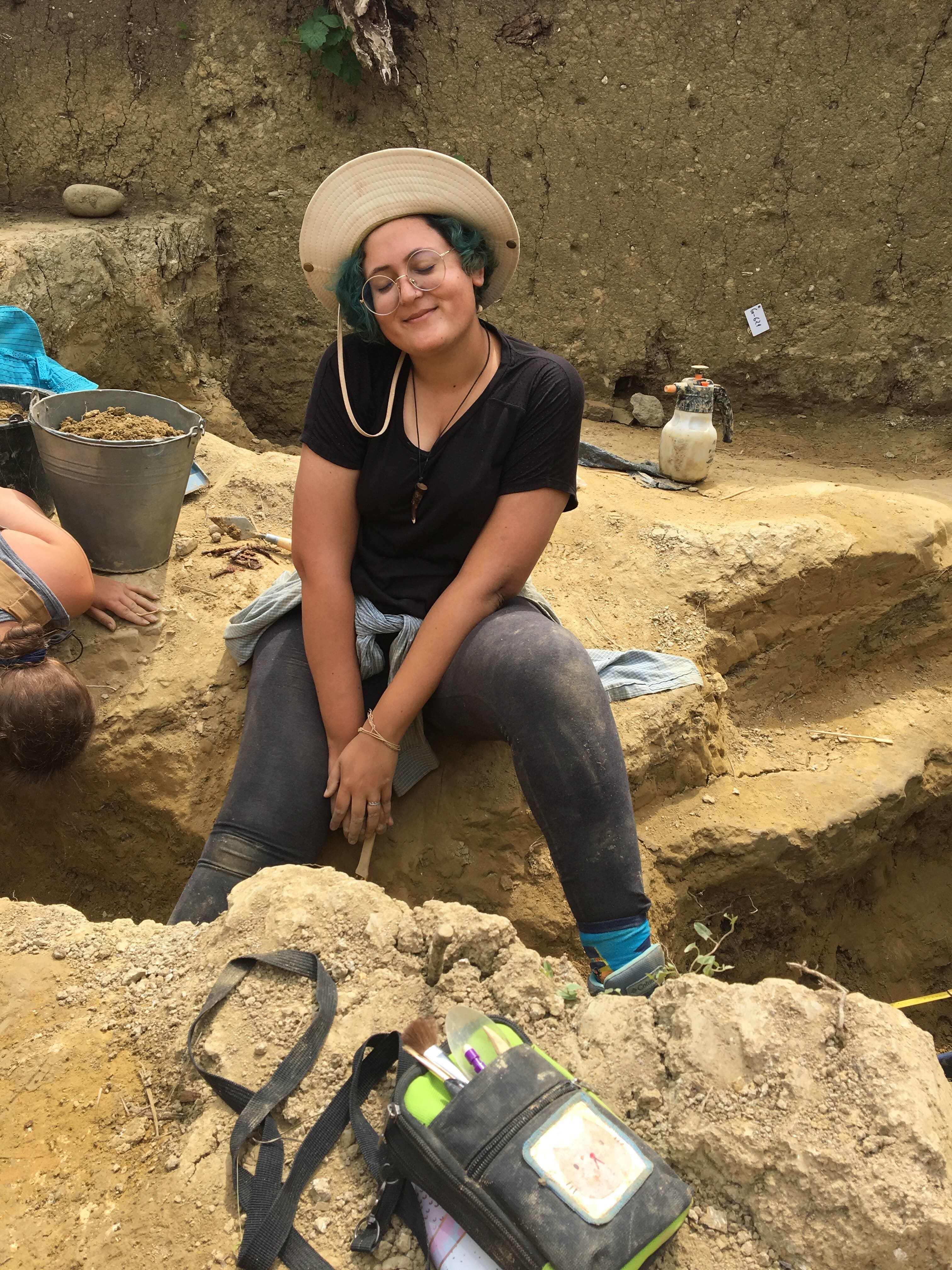
I am very passionate about Archaeology, and in order to continue pursuing my research interests I decided to get a postgraduate degree.
I love how hands-on the coursework is and the fact that we don’t just read and talk about methods. We actually learn how to execute them properly.
The diverse research interests of the professors, especially those of my advisor, and the city itself.
The culture of graduate/postgraduate study outside of the US is very different, and I’ve found the change to be very positive.
The International Merit Postgraduate Scholarship
It’s fantastic! My professors are all very engaged and excited to teach; plus being a postgraduate student makes everything more personal, and you really get to know everyone. I’ve also made a lot of great friends!
I plan to pursue work in the field for a year or two while I decide what specific subject I would like to study for my PhD.
I’ve been given so much advice and encouragement, and the faculty here has shown a great interest in my future success.
I love the city itself, especially because it’s so pedestrian-friendly. I also love how dedicated Sheffield is to the arts. The accessibility to local history is very exciting.
Missing friends and family back home.
Don’t be afraid! While things may take time to become accustomed to, there will always be people to help, and you’ll make amazing friends here. Additionally, this is a world-renowned department with friendly and engaged faculty. Studying here will be very advantageous to your future career.
- Rhianna

Privacy & Data Protection Policy | Cookies Policy | Anti-Slavery & Human Trafficking Statement | Terms & Conditions | Agent Quality Framework (AQF) | Vacancies
2026
Copyright © Across the Pond - Study in Britain Ltd. All rights reserved.