





Image

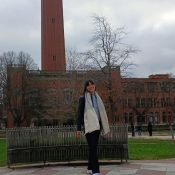
When I decided to do a master’s degree in the UK, I knew exactly what I wanted to study, but I still had to decide which funding options best suited my circumstances.
I researched different scholarship and funding options in Mexico. I considered applying for a SECIHTI scholarship; however, the commitment to return to Mexico upon completing my postgraduate studies did not quite fit in with my plans. I wanted to keep the option open to apply for a Graduate Visa and make the most of my time there to gain more professional experience in Birmingham before returning.
That’s how I ended up at FIDERH. Their payment terms suited my short - and medium - term plans better, and I also discovered a significant advantage: thanks to their partnership with the University of Birmingham, I could access an additional scholarship and combine it with the one I’d already received from the university itself.
The trickiest part wasn’t filling in the application form, but getting all the timelines to line up. To apply for funding, I needed a letter of admission. I applied to six universities, each with different requirements and deadlines, so organisation was key. Having several offers ended up being an advantage: I was able to take my time comparing programmes, opportunities and costs before deciding which was really the best option for me.
My advice? Check the dates and get started well in advance. University applications, funding, the English language test, the visa and the start of term can all be surprisingly close together.
Once I’d received my acceptance letters, everything moved much faster than I’d expected. One of the things I was most worried about was the English language test. I chose to sit the TOEFL and prepared by practising the format and watching videos online. In the end, it turned out to be much more manageable than I’d imagined.
And then the visa arrived. If you look up the process online, you might end up convinced that you need to turn up with a small library of documents under your arm. The process turned out to be much simpler than I’d expected, and many of my printed documents weren’t even needed. Even so, having all those papers gave me great peace of mind.
Applying to universities, securing funding and applying for a visa seems overwhelming when you view it as a single, massive task. When you break it down into steps — researching options, checking deadlines, preparing applications and organising documents — it no longer seems impossible.
For me, FIDERH was a tool that allowed me to organise the investment involved in studying for a postgraduate degree abroad much more efficiently, whilst retaining the flexibility I was looking for in my future plans. If I could give one piece of advice to anyone just starting this process, it would be simple: start early, draw up a comprehensive timetable and compare all your options before making a decision.
And I’d probably tell you not to print out so many documents for the visa.
- Fernanda Lorena
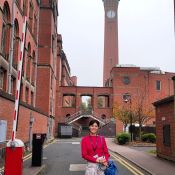
Before arriving in the UK, I imagined that doing a MA degree would mainly involve attending lectures, studying a great deal and submitting assignments. (Of course, that is the main part.) But it didn’t take me long to discover that British university life extends far beyond the lecture theatre.
Studying for a MA in Art History and Curating at the University of Birmingham meant (fortunately) that the museum literally became our classroom. We went on group trips to various museums, such as the Courtauld Gallery and the Birmingham Museum of Art and Gallery, and had lessons right in front of the very artworks we were studying. After so many years of learning art history through books and photographs, being able to discuss and analyse a piece that was right in front of us was one of my favourite moments.
I attended talks where lecturers shared the results of their research and took part in activities organised by our own department. I even took part in a Christmas quiz organised by the Department of Art History, Curatorial Studies and Visual Studies. My team came second! The prize? A box of Oreo biscuits and a giant chocolate bar!
I also discovered that the UoB was the perfect place to try things I’d never done before. I signed up for climbing classes, took part in activities organised by the Japan Club and learnt how to make mochi, went to events where I learnt things like making Christmas decorations, painting, making bracelets or decorating plant pots, and attended the Student Union’s FAB parties. Some activities allowed me to discover new interests, whilst others simply gave me the chance to meet loads of people.
Even my student accommodation had its own exclusive events. At Shackleton, they organised several fairs with fairground rides, doughnuts, ice cream and burgers. I also visited the university’s Christmas market and discovered that the campus can be completely transformed depending on the time of year.
Before I came, I was really worried about what the structure of the classes would be like and whether I’d be able to keep up with the academic pace. I wish I’d known that studying at a British university doesn’t mean spending all your time between a lecture theatre and the library. Some of my fondest memories are of standing in front of a work of art, hanging like a monkey from a climbing wall, trying to make mochi, or discussing absurdly important answers with my team during a Christmas quiz.
The master’s degree taught me a great deal about Art History and Curating, but the university also gave me something I hadn’t expected: a space where I could continue learning even when I wasn’t in class.
- Fernanda Lorena
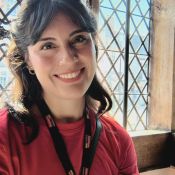
As a student at the University of Birmingham, students are encouraged to go out into the real world and put what they have learnt into practice. As a student on the MA programme in Art History and Curating, I came across opportunities I could never have imagined.
I worked as a volunteer for the Shakespeare Birthplace Trust, assisting visitors at the house where William Shakespeare was born and grew up, and explaining the cultural significance of the site to people from all over the world. It was particularly rewarding to meet people who spoke my own language and to be able to explain everything to them in it. I realised that my Spanish was not a weakness, but a strength. I also discovered how a love of knowledge can bring together a huge group of volunteers from very different backgrounds, all willing to go the extra mile every day to offer visitors a memorable experience.
Similarly, over the summer I collaborated with Nook Gallery, a contemporary art gallery in Birmingham, on an exhibition to mark its third anniversary, the central theme of which revolved around how we think about nature. In this exhibition, not only was I able to put into practice what I had learnt about writing curatorial texts and engaging with different audiences, but I also got stuck in to help set up the exhibition. Both experiences have enabled me to meet people from different cultural backgrounds and to gain a much better understanding of the place I now call home.
Both experiences made me realise that working with diverse audiences requires us to be more understanding, open-minded and inclusive. I also discovered that my language and my own cultural background were not obstacles I had to overcome, but rather tools I could contribute.
- Fernanda Lorena
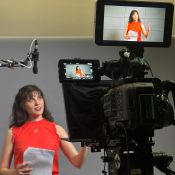
The incredible collections in London’s museums have been a great source of inspiration to me for as long as I can remember. When I finally finished my degree in history, I knew exactly where I wanted to go to do my master’s degree.
I applied to several universities in the UK, and after researching the cultural institutions they had to offer, I decided to accept a place to study for a MA in Art History and Curating at the University of Birmingham, in the very year it was celebrating its 125th anniversary. One of the main reasons I chose it – apart from the undeniable value of the research carried out by its lecturers in the Department of Art History, Curating and Visual Studies – is the opportunity it offers its students to work with the collections held by the Barber Institute of Fine Arts.
It is a magnificent institution founded by Lady Barber, who was driven by a desire to share the most significant works of art and music with the university community and the wider region. As a student, I had the opportunity to study in its magnificent library and its extensive archives, and to engage with the works that make up its collections.
As a student, I was able to enjoy one of my favourite experiences to date: taking part in the online exhibition ‘Pocket-Size Power: A Feminist History of Portrait Miniatures’. The project involved working with staff from the Barber Institute alongside those from the Victoria and Albert Museum, visiting their collections and learning directly from specialists and from the objects themselves. After so many years of gazing at the pieces from behind the display cases, being able to engage with them from the archives – whilst wearing the appropriate protective gear, of course – was extraordinary.
I worked on this project from scratch, alongside colleagues from both the UK and other countries such as Korea and China. We pooled the topics we were most passionate about to bring to life an exhibition comprising miniature portraits, exploring the role of women as artists and as patrons, as well as their experiences within the colonial context. (I actually held a portrait of Elizabeth I in my hands!) Our visits to both archives allowed us to see and handle items that rarely see the light of day, to discuss and research new topics, and to get involved in aspects we hadn’t previously considered. One example of this was promoting the exhibition, for which we produced videos and various social media posts.
The project allowed me to discover that an exhibition begins long before the public can see it: in the archives, in the questions we ask of the objects, in the discussions within a team, and in the decisions about which stories we want to tell. Having gone through that whole process, I feel much better prepared to apply what I’ve learnt in the professional world.
- Fernanda Lorena
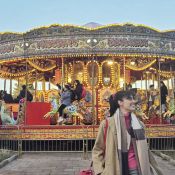
Once I’d managed to secure my offer to study for a MA in Art History and Curating at the University of Birmingham, I thought the lectures would be the toughest challenge I’d face. And whilst it’s true that all my skills and experiences up to that point really put me to the test academically, I discovered that living on the other side of the world involves so much more than just learning the language.
Once you get past the first few days of adjusting to the accent and start to understand the cultural differences (I realised that ‘you alright’ isn’t a question inviting you to pour your heart out, but simply a ‘hello’), you begin to realise that, somehow, you fit in there: amongst your classmates, the people you live with, and the new friends you’re making.
Other challenges I face may seem minor from the outside, but they are not. I learnt that British politeness has its own codes and that sometimes you have to learn to read between the lines; that football is a sport experienced with a spirit very similar to that of Mexico; that the sea off Wales is freezing, but still enjoyable; that eating fish and chips in a pub is quite a ritual; and that day and night cannot be gauged simply by looking out of the window.
I didn’t just learn about UK culture. Some of my friends come from places as diverse as India, China, Kazakhstan, Korea, Thailand and Japan. I’ve had the chance to celebrate important occasions with them, try their traditional recipes and ask them every question imaginable about their lives and their countries. Comparing their experiences with mine has been one of the most enriching experiences of this year. I’ve learnt a great deal from them, but also about myself, and I’ve learnt to appreciate my own heritage in new ways.
There are many things I wish I’d known before arriving in Birmingham: that the rain isn’t torrential like it is in Aguascalientes, but falls almost imperceptibly, so that it feels as though you’re breathing it in whilst walking through the mist; that even though it gets dark at 3 o’clock in the afternoon, life doesn’t come to a standstill; and that in summer, an eye mask saves you from waking up at 4 in the morning; or that the secret to surviving the winter isn’t to wear the thickest jumper in the world, but to learn to dress in (multiple) layers and have a good waterproof jacket.
However, I realised that there are some things nobody can fully prepare you for. You have to discover them for yourself. I’ve struggled, I’m still learning and I’m still picking up new things, but I wouldn’t have it any other way. I packed rather poorly for the British weather; I had no waterproof clothing, nor any shoes that wouldn’t get soaked, and to my surprise, I discovered that the British heat is so humid that 26 degrees can feel as intense as 36 degrees in Mexico (to the point where all the trains stop running!), but, fortunately, I came much better prepared for everything else than I’d imagined.
I arrived thinking mainly about everything I wanted to learn about art and museums; almost a year on, I realise that I’ve also learnt to live on my own in another country, to get by in cultures different from my own, and to trust much more in the education I’d brought with me from Mexico.
- Fernanda Lorena

When I was 19, I visited London with my favourite aunt. I’ve always loved history and art, but touring the city’s museums made me realise, for the first time, that one day I wanted to be a historian. When I finally finished my degree, I decided it was time to return to the place where it all began.
I chose to study for a MA in Art History and Curatorship at the University of Birmingham, a programme that is quite rare even within the UK. One of the main reasons was the opportunity to work directly with such an important cultural institution as the Barber Institute of Fine Arts, which forms part of the university, and to learn through collections of international significance. (They have works by artists such as Elisabeth Vigée Le Brun, Édouard Manet, Edgar Degas, Thomas Gainsborough and Bartolomé Esteban Murillo!)
At first, I was daunted by the thought of studying at a university ranked amongst the top 100 in the world. Just securing a place felt like a huge achievement, and I arrived wondering whether I would be up to the challenge. I was pleasantly surprised to find that I was indeed prepared. My education in Mexico gave me solid tools to tackle the demands of the master’s programme, and I soon realised that I wasn’t just there to learn from an internationally renowned institution, but that I also had my own knowledge, experiences and perspectives to contribute.
Almost a year after my arrival, I look back and think of that visit when I was 19. I remember spending the whole day wandering through the galleries of museums such as the British Museum, Tate Britain and the National Gallery, and weeping with emotion at the magnificence of what I saw. Years later, I returned to the UK and had the opportunity to conduct research directly from the collections of the V&A and the Barber Institute, to talk to specialists and to get up close to objects I’d never imagined existed behind the scenes, waiting to be researched and to uncover new narratives of which they might form part.
At the age of 19, I gazed at those collections, wondering what it would be like to devote my life to art and history. Returning years later allowed me to discover not only that I could learn from them, but also that I had something of my own to contribute.
- Fernanda Lorena
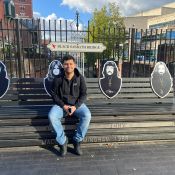
Hi, I’m Juan Carlos from Chile, and a year ago I decided to take a big step. I put my life on hold in Chile, my job, my family and my friends, to pursue a dream and study in the United Kingdom. It wasn’t an easy decision, but I wanted to deepen my knowledge of finance in one of the most renowned countries for it, immerse myself in a completely different culture, adapt to new challenges and discover new ways of seeing the world. That’s how I arrived at the University of Birmingham to study the MSc Financial Management, and I can say with absolute certainty that it has been one of the best decisions of my life.
Preparing my application was a huge challenge. I was working full time and had to balance my responsibilities with the application process. There were moments of uncertainty, but thanks to the support of Across the Pond everything became much easier. Their guidance at every stage gave me the confidence I needed to take this big step. Today, I can say the effort was worth it. I have learned so much, made friends from all over the world and lived experiences I will never forget.
The University of Birmingham impressed me with its vibrant campus, excellent academic resources and the quality of its professors. But the most enriching part has been the diversity, meeting people from different cultures, sharing experiences and learning from unique perspectives. This journey has opened my mind and prepared me for a globalized world.
Before arriving, I was worried about finding accommodation, but there were plenty of options at reasonable prices, which gave me peace of mind from day one. And when it comes to Birmingham, it is a city full of life. As a Latin American, the nightlife is something you cannot miss, there are parties every week and always something new to discover.
If you are thinking about studying in the UK, go for it. There will be fears, but the experiences, friendships and opportunities you will gain will far outweigh any uncertainty. Come with an open mind, enjoy every moment and if you can, rely on Across the Pond, they will make your journey so much easier.
- Juan Carlos
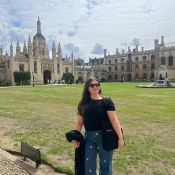
After working for six years, and facing the uncertainty of leaving my professional and financial stability, I decided to take the leap and pursue my dream of living abroad. I felt ready to take the next step in my career, as I have always wanted to continue growing and developing both professionally and personally. I was mainly looking for an English-speaking country to practice the language, and what better choice than the United Kingdom? The country where my favourite book and movie series, Harry Potter, was created, and the home of great musicians like Oasis and Dua Lipa, whom I also love. Additionally, there are daily direct flights from here to Chile, so my parents and family could visit easily. Last but not least, the academic excellence of UK universities and their internationally recognised prestige offered an incredible opportunity to develop in a highly competitive and multicultural environment.
Everything in the UK has been a unique and unforgettable experience. I won’t lie, academic life is demanding if you want to achieve distinction, but everything at the university has been amazing. From the facilities to the academic quality, everything is spectacular. The university provides high-tech facilities, events, talks, emotional support, and everything is so well organised that you can focus fully on your studies and enjoy your time. On a personal level, it has been a journey of significant growth. Even at 30, I have always been very close to my parents, and being away from my family was something I had to manage. However, communication through social media and WhatsApp today makes the distance much easier to handle. Time has flown so quickly—it feels like I just arrived, and now this journey is already coming to an end. Culturally, I have learned a lot. The UK is a country with a large immigrant population from all over the world. I have friends from India, China, and the Arab world, and it has been amazing. I’ve tried foods I never imagined eating, learned a few words in Chinese and Hindi, and experienced cultures very different from my own firsthand, which has been incredibly enriching. Finally, being here also allows you to travel easily to other parts of the UK and even Europe, which is amazing.
My experience in the UK has been incredibly enriching. Academically, it allowed me to approach accounting and finance from a critical perspective, developing the ability to analyse practices I had never questioned before. Personally, living alone abroad taught me to be more independent, to face problems on my own, and to appreciate cultural diversity. Practicing English in everyday life helped me gain confidence and fluency, while stepping out of my comfort zone allowed me to make friends and seize new opportunities.
I wish I had known about the StudentBeans app, which offers discounts at many stores and apps of all kinds.
- Ivania
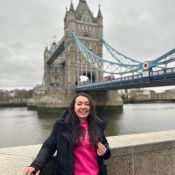
Studying in England has been one of the best experiences of my life, not only because of the knowledge I gained from studying at such an important university but because of all the people I met, the experiences I lived and the personal and academic growth that this adventure left me with. When I arrived I didn't know what to expect from my new life, but I was surprised by how different it is from Mexico, from the way of teaching and evaluation, to the food, architecture, climate, and customs!
I chose Birmingham because of the prestige of the University (it is ranked 80th worldwide in the QS World University Rankings), because of the course they offer and because the language, culture and accent seem incredible to me. Besides, having a master's degree in my second language is a way to show myself what I am capable of while expanding my possibilities when entering the job market.
The campus is beautiful, it looks like a museum. It is huge and has the best technology and infrastructure. I was amazed by everything the university has, from one of the largest libraries to bars and cafes on campus! The library is open 24 hours during assessment period and there are even blankets in case you get cold! Aside from academic activities, there are events all the time, for example, a carousel at Christmas or ice cream vans with free ice cream in the summer.
The way of teaching and grading is different from that in Mexico because the guidelines are different. For example, grades go from 0 to 100 but 70 and above is outstanding, something that personally surprised me. I liked that there are students from so many cultures that each class is made up of different points of view and cultural backgrounds.
There are student societies, which are clubs where you can do activities from academic to religious and social. For example, there is the pasta society, Latinos, Christians, darts, volunteering, comics, pole dancing, karate, rugby, Harry Potter, insulin appreciation, etc. There are more than 300 to choose from!
Birmingham being one of the largest cities in England has thousands of things to do. Living in this city not only helped me experience English culture but opened the door to different cultures. I made friends from India, China, Korea, Japan, Ecuador, and Turkey and even from countries I had never heard of like Tonga. So I could say that studying in England opened the doors to the world for me.
When I arrived I found a job where I was also able to meet many people who became a key part of my life in this country. Since I could only work 20 hours, I had a good balance between student, work and social life.
In this job I learned a lot about how English labour laws and rules work and it motivated me to try to find a full-time job once I graduated.
The accommodation was one of the things I liked the most. I lived in Jarratt Hall, a student residence. The online process was very easy to do. What I found very convenient is that when I booked the place, I answered a personality and interests questionnaire and they placed me with like-minded people. Thanks to that, I was able to make friends and enjoy my stay with a very low risk of having conflicts with my roommates. As for security, I found it perfect because there is a 24/7 reception, also if something breaks down and stops working, the repair is very fast once it is reported to maintenance.
The location was very convenient because the campus was a 6-minute walk away and the shops, bus stops, gyms, restaurants and parks were very close.
In order to finance my studies, I took out a student loan through FIDERH, a support from the Mexican government. The best thing is that they have an agreement with the University of Birmingham with which they discounted 20% of my tuition fee. Thanks to my part-time job, I was able to pay my rent, food, and extra expenses like social activities and gym membership.
In conclusion, if you are thinking of coming to England to study, rest assured that it will be an unforgettable experience that will help you grow not only academically but also personally because leaving your comfort zone takes you to a world full of possibilities. Studying abroad is not just about learning from books but about discovering new perspectives, growing in ways you never imagined, and making your future and possibilities reach a global scale.
- Izta
Where do you live when studying abroad? Do universities in the UK offer student housing? How much does student accommodation cost? Did you know that as an international student, you are guaranteed on-campus accommodation for the first or all your years studying at most of our UK universities? You will need to apply by the housing application deadline, and of course the best student accommodation in the UK goes first - so that is a good reason to apply early! There are several different student accommodations, price levels and facilities to choose from!
Most students choose to live on campus in their first year. This is social and a fantastic way to get to know students from all over the world! After that, most students choose to move into privately rented accommodation with their new friends. We recommend everyone to live in university accommodation in their first year, as it is a great way to get to know other students (and not just those on your degree).
Learn more about the different options, on-campus accommodation, how to arrange private accommodation and everything you need before applying for student accommodation in the UK via this webinar!

Privacy & Data Protection Policy | Cookies Policy | Anti-Slavery & Human Trafficking Statement | Terms & Conditions | Agent Quality Framework (AQF) | Vacancies
2026
Copyright © Across the Pond - Study in Britain Ltd. All rights reserved.